
Passports and Entry for Overseas Vietnamese Buying Housing are foundational legal factors deciding real estate ownership rights in Vietnam for Vietnamese residing abroad. Strictly executing passport and entry regulations helps ensure transactions are transparent and lawful. In this article, Long Phan Consulting Company provides in-depth guidance on considerations related to passports and entry when Overseas Vietnamese buy housing.
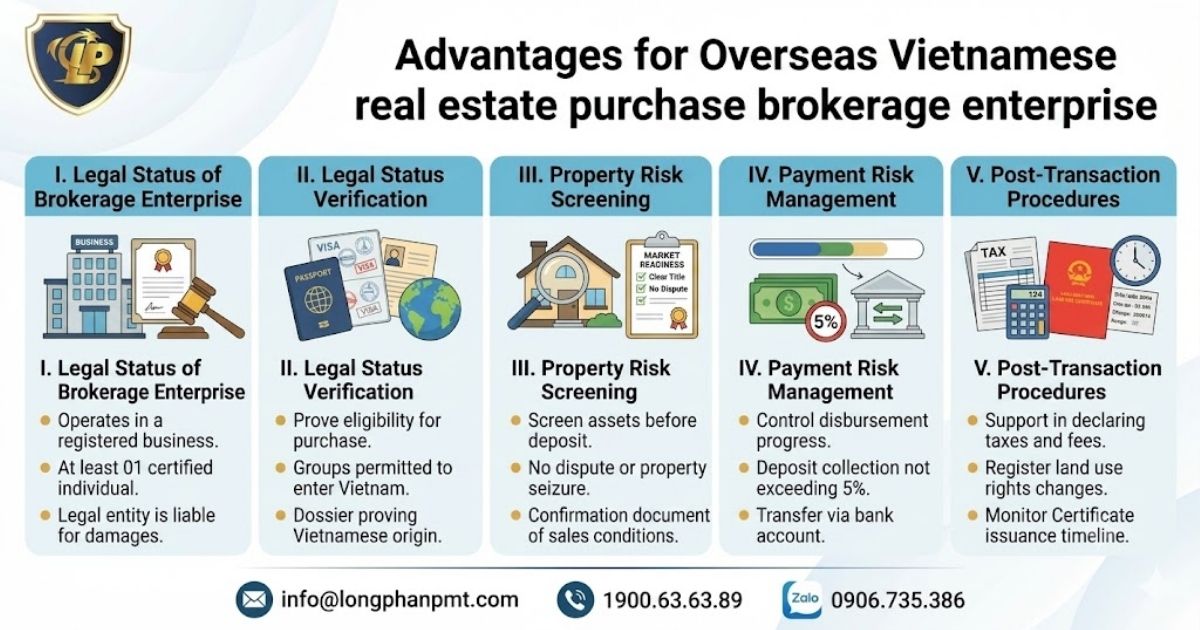
Real estate transactions require transparency regarding residency and identity dossiers, especially as functional agencies increasingly scrutinize requirements tied to passports and entry for overseas Vietnamese buying housing. A clear understanding of the legal framework helps clients avoid procedural errors. Below is a detailed analysis of the role of documentation, legal status, and the relevant subject groups involved.
A passport is the document defining your nationality and residency rights, playing a crucial role in demonstrating compliance with regulations on passports and entry for overseas Vietnamese buying housing under current law. Functional agencies rely on this document to assess eligibility for property ownership. Presenting a valid passport is a mandatory requirement when signing a notarized contract, and any transaction lacking proof of lawful entry will not qualify for a title transfer.
The legal status of Overseas Vietnamese is determined based on passport information and documents proving origin, in which compliance with rules on passports and entry for overseas Vietnamese buying housing serves as a prerequisite for establishing ownership. Under Article 8 of the 2023 Housing Law, Vietnamese residing abroad must fall within the category permitted to enter Vietnam. State agencies rely on this information to issue ownership certificates, and the passport remains the core legal evidence within the dossier.
Vietnamese law clearly distinguishes between overseas Vietnamese who retain Vietnamese citizenship and individuals of Vietnamese origin holding foreign citizenship, which results in differing compliance obligations related to passports and entry for overseas Vietnamese buying housing in each case. Those who retain Vietnamese citizenship enjoy the same property ownership rights as domestic citizens, whereas individuals of Vietnamese origin with foreign citizenship must satisfy specific residency conditions. Accordingly, each group is subject to distinct documentation requirements.
>>>See more: Vietnam Visa Types from July 1, 2026
To exercise ownership rights, Overseas Vietnamese must strictly comply with regulations governing their legal status. A thorough understanding of the applicable conditions—particularly those concerning passports and entry for overseas Vietnamese buying housing—is essential to ensure transactions are carried out safely and in accordance with the law. The content below clarifies standards related to nationality, entry eligibility, and ownership restrictions.
Under Article 8 of the 2023 Housing Law, Vietnamese residing abroad must prove their origin and meet conditions related to passports and entry for overseas Vietnamese buying housing to be recognized as eligible. These documents form the basis for determining legal status.
For Overseas Vietnamese (Retaining Vietnamese Nationality): Individuals who are Vietnamese living abroad but have not renounced their Vietnamese nationality enjoy many preferential policies and favorable conditions when investing in domestic housing. Under Point b, Clause 3, Article 3 of Decree 95/2024/ND-CP, to establish real estate ownership, this group must:
For People of Vietnamese Origin (No Longer Holding Vietnamese Nationality): Individuals of Vietnamese origin who no longer hold Vietnamese nationality may still invest in real estate in Vietnam, but they are subject to stricter conditions, particularly those associated with passports and entry for overseas Vietnamese buying housing. Under Point b, Clause 2, and Point c, Clause 3, Article 3 of Decree 95/2024/ND-CP, these conditions include:
Clients must enter Vietnam lawfully in accordance with the Law on Entry, Exit, Transit, and Residence of Foreigners, as compliance with passports and entry for overseas Vietnamese buying housing is a key condition for eligibility. Entry stamps or valid visas serve as proof of lawful residence. Under Clauses 2 and 3, Article 3 of Decree 95/2024/ND-CP:
Not all Overseas Vietnamese are eligible to buy and own housing. Individuals who are not permitted to enter Vietnam under current laws will be restricted, particularly where they fail to satisfy requirements relating to passports and entry for overseas Vietnamese buying housing. It is essential to verify your legal status before entering into any transaction, as the absence of documents proving Vietnamese origin may also result in refusal of ownership. Vietnamese law further excludes certain special subject groups from property ownership, including:
>>>See more: Real Estate Brokers Manage Houses for Overseas Vietnamese
The 2023 Housing Law clearly regulates the types of housing that Overseas Vietnamese are entitled to own, in which eligibility is assessed in conjunction with conditions relating to passports and entry for overseas Vietnamese buying housing. Clients may own houses associated with residential land use rights, but ownership limits can apply depending on the project or area as stipulated in Article 19 of the 2023 Housing Law.
Foreign organizations and individuals specified in Points b and c, Clause 1, Article 17 of this Law may ONLY buy, lease-purchase, receive donations, inherit, and own no more than 30% of the apartments in a single building. For individual houses (villas, townhouses), in an area with a population equivalent to a ward, they can own no more than 250 houses.
>>>See more: The Process of Analyzing the Needs of Homebuyers
The passport is a fundamental prerequisite for carrying out all housing sale procedures, particularly when assessing eligibility under passports and entry for overseas Vietnamese buying housing. Using the correct type of passport can help expedite notarization and title transfer processes. Attention should also be given to its validity and supporting documents to ensure full legal compliance.
Using a Vietnamese passport is the simplest way to carry out real estate transactions, particularly due to the more flexible framework governing passports and entry for overseas Vietnamese buying housing for those who still retain Vietnamese citizenship. Clients must ensure that their passport remains valid in accordance with legal regulations, as it serves to confirm citizenship within transaction dossiers and is the key document for streamlining administrative procedures.
For foreign nationals, a foreign passport must be accompanied by documents proving Vietnamese origin and must align with the legal framework governing passports and entry for overseas Vietnamese buying housing to ensure eligibility for the transaction. Supporting documents such as birth certificates or confirmations from competent authorities are essential, as notary offices will carefully verify their authenticity. Without these documents, determining eligibility becomes difficult.
A 5-year visa exemption certificate serves as an effective alternative to a visa for Vietnamese residing abroad, particularly in demonstrating compliance with passports and entry for overseas Vietnamese buying housing when using a foreign passport. When presented together with a foreign passport, it confirms lawful residence status. Clients should pay close attention to its validity period to avoid disruptions during transactions, as this document offers a flexible solution for long-term real estate activities.
An expired passport will invalidate legal eligibility in real estate transactions, particularly when it no longer satisfies standards related to passports and entry for overseas Vietnamese buying housing. Clients should always verify the remaining validity of their passport before signing any agreement, and promptly correct any discrepancies between passport details and other documents. Maintaining a valid passport is essential to safeguarding their legal rights.
Proving lawful entry is a mandatory requirement to complete ownership registration procedures, particularly as it forms part of the assessment criteria for passports and entry for overseas Vietnamese buying housing. These documents enable authorities to determine residency duration and legal status, while thorough dossier preparation helps minimize potential legal risks.
The entry verification stamp serves as the most direct evidence of lawful entry and is commonly reviewed by notary agencies when assessing compliance with passports and entry for overseas Vietnamese buying housing during contract signing. The absence of this stamp may result in the dossier being returned, so it is essential to ensure that the verification stamp is obtained at the border gate upon entry.
Visas issued for the correct purpose help you legitimize your stay. Using the appropriate visa ensures you do not violate residency regulations. Check the visa type to ensure it permits executing real estate transactions. A valid visa is the basis for state agencies to accept title transfer dossiers.
This certificate allows long-term stays and the execution of civil transactions, minimizing complex administrative procedures. It is the optimal choice for those frequently returning to the country for transactions.
When entering with a foreign passport, pay attention to residency declaration regulations. The housing purchase dossier will require additional documents proving lawful presence in Vietnam. Retain these documents carefully throughout the transaction.
>>>See more: The Process of Analyzing the Needs of Homebuyers
The home buying process requires close coordination between all parties to ensure legal compliance. Clients need to follow each step from checking eligibility to registering ownership. Thorough preparation will help clients protect their property and rights.
Before making a deposit, customers need to verify their ownership status according to the Housing Law 2023. Carefully check the regulations related to the project and the real estate area. This helps customers avoid projects that do not meet the legal requirements. Seeking legal advice early is an effective way to minimize financial risks.
Customers need to prepare a complete set of documents including passport and proof of legal entry. The notary will verify these documents against the actual information. Any minor errors in the documents can cause delays in the transaction. Please ensure all documents are valid and translated if necessary.
The contract must be signed at an authorized notary office. Clients must be present in person or authorize a representative as required by law. The sales contract must clearly state the client’s personal information as it appears on their passport. This ensures that the client’s rights are accurately recorded in the legal document.
After notarization, customers need to submit the transfer of ownership documents to the land registration agency. This procedure requires accurate documentation proving nationality and immigration. Customers should closely monitor the progress of their application to promptly supplement any missing documents. Obtaining the land use right certificate is the final step in the transaction.
If you are unable to travel to your home country in person, authorization is necessary. The authorization contract must be drawn up in accordance with the provisions of the Civil Code. The authorized person must have full legal capacity to represent you in transactions. Please note the requirements for consular legalization of authorization documents from abroad.
Legal risks can cripple transactions if clients are not well-prepared. Understanding weaknesses in the process helps clients avoid unnecessary losses. Below are important points to consider to protect your legal rights.
Expired passports are a leading cause of rejected real estate transactions. Clients should pay particular attention to the passport’s expiration date before each transaction. An invalid passport not only causes delays but can also result in the loss of contractual rights. Always carefully check your passport’s status before beginning the home buying process.
The lack of entry stamps poses a significant challenge for notaries in verifying residency. Clients must ensure that all entries are fully recorded in the system. If any issues arise at the border, clients must request assistance promptly to obtain supporting evidence. Transparency regarding entry stamps is crucial for the approval of their application.
For Vietnamese nationals holding foreign citizenship, the inability to prove their Vietnamese ancestry is a major obstacle. Clients need to carefully prepare documents such as birth certificates or confirmations from competent authorities. Lack of this proof can lead to the denial of eligibility for home ownership. Prior preparation gives clients more confidence in legal negotiations.
Errors in personal information or passport documents are a common reason for transaction delays. Customers should carefully compare the information in their passport with other relevant documents. Even minor discrepancies need to be corrected to ensure the legal validity of the entire application. Carefulness helps customers avoid unnecessary administrative complications.
>>>See more: Guide to Identifying Legal Risks When Buying Real Estate
Long Phan Consulting Company provides comprehensive legal solutions regarding passports and entry when Overseas Vietnamese buy housing. We structure our professional support into the following key area:

Here are some frequently asked questions regarding passport and immigration advice for overseas Vietnamese purchasing property. Please feel free to refer to them if you have any questions:
According to Clause 1, Article 17 of the 2023 Housing Law, the subjects eligible to own housing in Vietnam include:
According to Article 18 of the Housing Law 2023 and Article 3 of Decree 95/2024/ND-CP, foreigners wishing to own housing in Vietnam must meet the following conditions:
According to Clause 2, Article 17 of the 2023 Housing Law, the types of real estate that foreigners are permitted to own in Vietnam are as follows:
According to Points c and d, Clause 2, Article 20 of the 2023 Housing Law, the ownership period for housing in Vietnam is:
When overseas Vietnamese (Vietnamese people living abroad or people of Vietnamese origin) buy a house in Vietnam, the taxes and fees they have to pay are basically the same as those for domestic citizens. Specifically, these include:
According to Article 9 of the Law on Entry, Exit, Transit, and Residence of Foreigners 2014, as amended in 2019, the DT visa issued to investors has the longest validity period in the visa system, with a maximum duration of no more than 5 years.
Strict compliance with passport and entry regulations is the foundation for ensuring your asset’s safety. To optimize the ownership process, you need professional support regarding passport and entry conditions under the law. Please contact Long Phan Consulting Company immediately via Hotline 1900636389 to resolve any entanglements regarding passports and entry when Overseas Vietnamese buy housing in Vietnam.