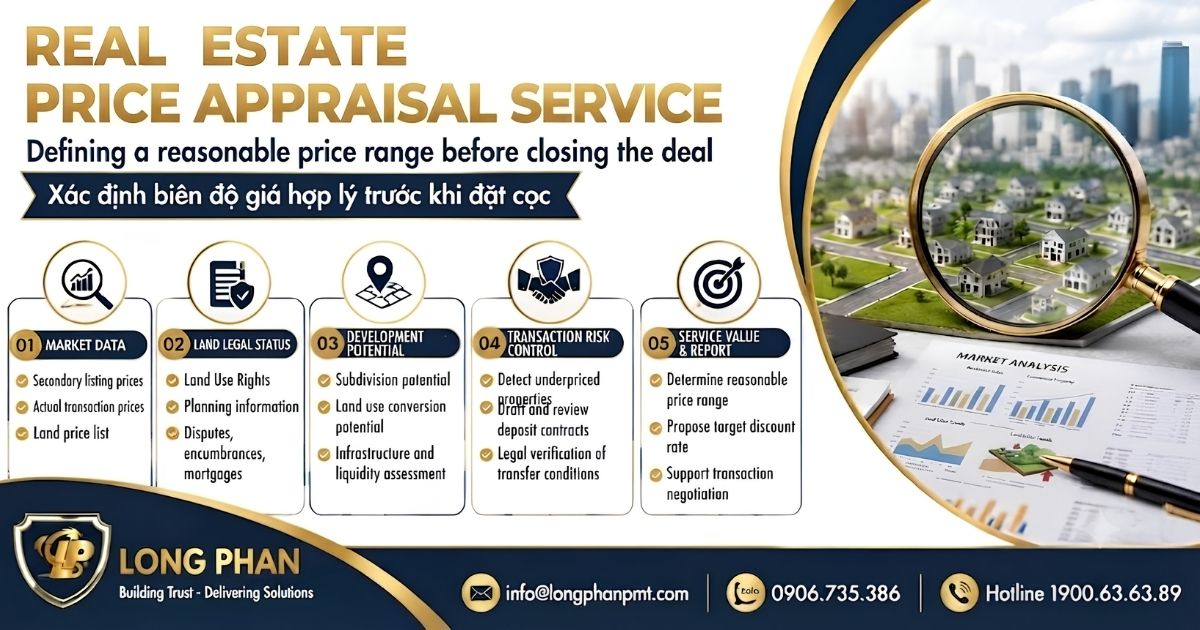

Real Estate M&A in Vietnam has emerged as the premier strategic vehicle for multinational corporations seeking rapid market entry while bypassing the protracted administrative timelines of greenfield investments. However, the regulatory transition under the Land Law 2024 and Law on Real Estate Business 2023 introduces significant volatility for foreign capital. Structural complexities in land dossiers and inconsistent local enforcement often result in stagnant projects or post-closing disputes. Executing comprehensive [legal due diligence for Vietnam real estate] is therefore a non-negotiable requirement to validate asset origins, financial obligations, and project feasibility. The following analysis from the specialists at Long Phan Consulting Company outlines the critical risk mitigation strategies necessary to secure your investment in this high-stakes landscape.

The influx of foreign direct investment (FDI) into Vietnam is increasingly concentrated within industrial real estate and high-end residential segments. Currently, multinational corporations from South Korea, Japan, and Singapore dominate the market in both transaction volume and deal value. These investors prioritize “clean” land banks and legal transparency to optimize project yields. This section delineates current investment waves, transaction structures, and the unique legal characteristics of Real Estate M&A in Vietnam.
South Korean investors typically focus on satellite urban areas surrounding Hanoi and Ho Chi Minh City to capitalize on regional expansion. Conversely, Japanese enterprises often favor joint venture partnerships, leveraging the local expertise of Vietnamese counterparts to navigate administrative hurdles. Singaporean firms maintain a strategic focus on Grade A office spaces and premium commercial centers in central business districts. The sustained presence of these investors continues to elevate local project management standards toward international benchmarks.
Investors must select a structure that aligns with their risk tolerance and operational goals. Asset Deal (Project Transfer): Allows the purchaser to exert direct control over specific real estate assets. Share Deal (Equity Acquisition): Offers flexibility regarding ownership structures and tax optimization by acquiring the project-owning entity. Joint Venture Development: Involves establishing a new legal entity to distribute risks and leverage the capital strengths of all participating parties. Each structure requires a bespoke verification process to ensure legal feasibility and compliance with local regulations.
The legal system governing land and real estate business in Vietnam is highly specialized. Land ownership remains vested in the entire population, with the State acting as the representative owner and unified manager. Under the Land Law 2024, foreign investors are granted land use rights subject to specific statutory restrictions. Furthermore, overlapping regulations between various laws often result in longer project approval timelines compared to other regional markets.
Foreign investors often encounter significant obstacles due to the rapid evolution of local regulations. A lack of specialized knowledge regarding regional legal applications can lead to critical errors in project valuation. Discrepancies between official documentation and the actual physical state of the land frequently result in severe financial repercussions. To mitigate these issues, investors must analyze the following factors:
Legal System Divergence and Local Application
Competent state authorities across different provinces may interpret legal documents inconsistently. Foreign investors often mistakenly apply international legal frameworks to transactions that are governed by Vietnam’s specific statutory requirements. This creates a compliance gap between the purchaser’s expectations and the target company’s actual standing. Failure to master local administrative procedures results in significant time delays and high opportunity costs.
Inconsistency Between Dossiers and Field Reality
Many projects possess seemingly complete legal dossiers that are, in reality, hindered by site clearance complications. Common issues include:
Neglecting physical site measurements during the verification stage often leads to intractable disputes regarding the actual usable land area.
>>>See more:
Risks from Protracted Project Legal History
Real estate projects in Vietnam typically undergo multiple approval stages spanning several years. Consequently, each phase is governed by different versions of laws effective at that specific time. Potential liabilities often arise if previous developers delayed their financial obligations to the State. Furthermore, historical changes in regional zoning and planning can directly impact the investor’s original development objectives.
Land Use Rights (LUR) represent the core asset but also the primary source of liability in any transaction. Verifying land classification, tenure, and planning alignment is a mandatory prerequisite before capital disbursement. Investors must pay close attention to the legality of land origins and specific restrictions on foreign capital. The following analysis focuses on LUR legitimacy, land-use purpose risks, and accessibility constraints.
Legal counsel must rigorously audit the Land Use Rights Certificate (LURC) in accordance with Article 135 of the Land Law 2024. The term of land use for projects involving foreign-invested organizations whether through State allocation, lease, or recognition of rights is specifically regulated under Article 172 of the Land Law 2024 and typically does not exceed 50 years. Investors must verify whether the land is held via State allocation or an annual rental lease. Notably, the annual rental payment form restricts the developer’s rights to mortgage or contribute the land as capital.
Projects must be implemented strictly according to the land-use purpose approved in the Investment Policy Approval. Article 121 of the Land Law 2024 mandates an extremely rigorous procedure for converting land-use purposes. If local land-use planning shifts, the project faces the risk of suspension or revocation. It is essential to cross-reference the 1/500 detailed planning with the annual district-level land-use plans.
Foreign entities may only access land through the specific forms prescribed in Article 44 of the Land Law 2024. Direct acquisition of land use rights from individuals or households is strictly prohibited. Foreign investors must instead operate through equity acquisitions in local enterprises or by receiving project transfers from organizations. Furthermore, statutory requirements for investment security deposits serve as an additional barrier that requires careful planning.
To be eligible for a transaction, a project must meet stringent criteria regarding investment approvals and technical infrastructure. Deficiencies in construction permits or inconsistent zoning will inevitably paralyze development timelines. Investors must audit the conditions for project transfer and any outstanding financial obligations. The following analysis examines transfer conditions, site realities, and licensing issues.
The transferor must possess a valid decision on land allocation or land lease from the competent state authority. Pursuant to Article 39 of the Law on Real Estate Business 2023, the project must be free from any disputes regarding land use rights. The existing developer is required to have fulfilled all land-related financial obligations, including land use fees. Furthermore, the project must not be subject to any distraint or blockage to ensure judgment enforcement or tax debt recovery.
Projects that have not completed site clearance will present significant challenges during the physical handover of land. If the authority has not issued a written confirmation of completed technical infrastructure, the transfer may be deemed legally void. Investors must verify the minutes of site boundary handovers and check for illegal encroachment by local residents. Entanglements in compensation, support, and resettlement often result in protracted delays and inflated investment costs.
The 1/500 detailed planning serves as the most critical legal basis for implementing construction items. Investors must cross-reference the Construction Permit with the actual work performed on-site to identify any violations. Any adjustments to building density or floor height require a new round of approvals from functional agencies. Discrepancies between the basic design and national technical standards carry the high risk of administrative penalties and mandatory rectification.
Unpaid financial obligations of the previous developer often represent an unforeseen burden for the purchaser. Explicitly defining transfer taxes and responsibility allocation mechanisms within the contract is essential to protect investment capital. Investors must clarify land-related financial duties, tax exposures, and the succession of liabilities post-acquisition. The following sections analyze land use fees, transaction taxes, and risk allocation mechanisms.
Land use fees and land rental fees must be fully settled according to notices from local tax authorities. Investors must audit for any late payment interests or administrative fines within the land sector. The determination of specific land prices for calculating use fees often differs from initial estimates, creating potential funding gaps. Furthermore, any outstanding tax debts held by the former developer will block the registration of land changes at the authority level.
The transfer of capital or project interests triggers a Corporate Income Tax (CIT) liability at a standard rate of 20%. Investors should be mindful of anti-transfer pricing regulations when executing transactions between related parties. Additionally, the application of Double Taxation Avoidance Agreements (DTAA) between Vietnam and other nations requires expert assessment. Errors in tax declarations carry the risk of retroactive tax collection and severe damage to corporate reputation.
The M&A contract must clearly stipulate the exact moment of financial responsibility transfer between the buyer and the seller. We recommend establishing indemnity clauses for any tax obligations arising from the pre-closing period. A robust risk allocation mechanism protects the purchaser from “hidden” debts that do not appear on official financial statements. Utilizing an Escrow account is a highly effective solution to ensure payments are only released after the completion of all tax duties.

Selecting between a share acquisition or an asset acquisition directly impacts the level of control over the project. Risks involving internal disputes and the veto rights of minority shareholders must undergo specialized verification. Investors should evaluate appropriate structures, corporate legal risks, and post-transaction governance mechanisms to safeguard their interests.
A Share Deal allows the investor to inherit all existing licenses and projects held by the target enterprise. However, this form necessitates that the purchaser assumes all contingent liabilities and potential legal debts. Conversely, an Asset Deal enables the purchaser to selectively acquire “clean” assets for the transaction. Investors must assess the advantages and disadvantages of each option regarding timeline and tax costs before proceeding.
Investors must audit the actual capital contribution status of the founding shareholders within the target company. Failure to fully contribute charter capital as registered will invalidate the capacity for share transfers. Furthermore, internal disputes among shareholder groups often paralyze project management and operations. The presence of “hidden” shareholders or nominee ownership arrangements poses a significant legal threat to the transaction.
Corporate governance mechanisms after the M&A closing must be formalized in the Shareholders’ Agreement (SHA) and the Company Charter. Investors should establish veto rights over critical decisions, such as changes to the project’s purpose or securing new loans. Appointing key leadership positions allows the purchaser to control cash flows and physical implementation progress. Minority shareholder protection clauses must also be scrutinized if the investor does not hold 100% of the charter capital.
Third-party disputes can result in project assets being frozen by court orders, while gaps in legal audits may lead investors to overlook existing guarantees or mortgages. It is imperative to identify potential litigation, third-party obligations, and risks stemming from concealed records. The following analysis covers administrative complaints, existing contracts, and the necessity of the legal audit process.
Real estate projects in Vietnam frequently face lawsuits from customers due to delays in handovers. Disputes with contractors regarding construction volumes and payments are also common issues. Furthermore, administrative complaints related to land recovery decisions or planning approvals carry the risk of project suspension. Investors must conduct thorough searches for dispute information at competent courts and judgment enforcement agencies.
Investors must verify land use right mortgage contracts at banks to ensure that the assets have not been earmarked for debt recovery. Often, a target company’s guarantee obligations to third parties are not clearly documented. Therefore, reviewing previously signed service and consultancy contracts is essential to identify outstanding costs. Any commitments made to former customers regarding construction progress and quality must be inherited and scrutinized with caution.
Legal Due Diligence (LDD) is an indispensable step for a comprehensive assessment of the health of the enterprise and the project. Incomplete dossiers or information intentionally concealed by the seller will lead to inaccurate verification results. Consequently, investors must cross-reference documents provided by the seller with archival data at state management agencies. Failures in the LDD process often lead to financial losses that far exceed the original deal value.
Establishing a comprehensive review list allows investors to maintain strict control over every facet of Real Estate M&A in Vietnam. Multi-layered verification from land dossiers to financial standing and corporate structure is essential. Below are the critical document groups that require rigorous inspection:
Land Dossier Group:
Project Dossier Group:
Financial and Tax Dossier Group:
Corporate Dossier Group:
Effective risk mitigation requires a synergy between specialized auditing and robust contractual protections. Designing a secure transaction structure allows investors to remain agile amidst market fluctuations. We recommend utilizing payment retention mechanisms and conditions precedent to bind the seller’s liabilities. The following strategies are essential for maximizing the protection of foreign interests in Vietnam.
The verification process must be conducted by legal experts who possess both local insight and an understanding of international standards. Investigations should span three dimensions: corporate entity status, land dossiers, and project implementation progress. Investors must demand access to a comprehensive Data Room to cross-reference all disclosures. The results of the LDD serve as the primary leverage for price negotiations or the establishment of indemnity terms.
Investors should prioritize structures that grant management control even if 100% ownership is not yet achieved. Price Adjustment clauses are vital to modify the transaction value if discrepancies are discovered post-audit. Furthermore, Representations and Warranties (R&W) from the seller must be explicitly detailed in the final agreement. Staggering payments according to the completion of specific legal milestones significantly reduces the risk of capital loss.
We advise the use of Escrow accounts at reputable banks to retain a portion of the payment for potential post-closing liabilities. Conditions Precedent (CP) must mandate that the seller completes all missing administrative procedures before receiving funds. Similarly, investors should stipulate clear Indemnity mechanisms for any seller defaults occurring prior to the closing date. For high-value transactions, purchasing M&A insurance is a strategic option to consider.
In the complex landscape of Real Estate M&A in Vietnam, professional legal support is the definitive factor in neutralizing latent risks. The specialized team at Long Phan Consulting Company assists investors through the following dedicated services:

Long Phan Consulting is pleased to provide a list of common questions regarding real estate M&A in Vietnam. We invite our valued clients to refer to the following information:
The developer must possess a valid decision on land allocation, land lease, or land-use purpose conversion from the competent State authority. Per Clause 1, Article 39 of the Law on Real Estate Business 2023, the project must be free of disputes, not subject to distraint, and have fulfilled all land-related financial obligations to the State.
No. Foreign investors are not eligible to receive land use rights directly from individuals or households in Vietnam. Under Article 44 of the Land Law 2024, foreign entities must operate by receiving a project transfer from an organization or by acquiring shares in an enterprise that already holds legitimate land use rights.
Foreign organizations and individuals are restricted to owning no more than 30% of the total units in a single apartment building. This regulation, stipulated in Clause 2, Article 19 of the Law on Housing 2023, is designed to manage foreign ownership in areas essential for national security and defense.
Investors using land with annual rental payments do not have the right to mortgage the land use rights themselves; they may only mortgage assets under their ownership that are attached to the land. According to Point b, Clause 1, Article 34 of the Land Law 2024, only projects with one-time (lump-sum) rental payments are entitled to mortgage land use rights at authorized credit institutions in Vietnam.
Yes. The Land Law 2024 allows land users currently paying annual rent to switch to a one-time rental payment for the remaining lease term. This provision under Article 30 helps investors increase asset value and expand disposal rights, such as the ability to mortgage or transfer the rights.
The 1/500 planning is the highest legal basis for determining technical parameters such as building density, land-use coefficients, and height. Any deviation between actual implementation and this planning results in administrative penalties or forced demolition. Investors must audit this planning to accurately calculate the Gross Floor Area (GFA) and the project’s financial feasibility.
Real Estate M&A in Vietnam offers substantial economic rewards but is inherently tied to complex legal risks. Mastering the conditions for project transfers and conducting rigorous due diligence on land use rights are the keystones of success. Investors must be proactive in building secure transaction structures and robust financial guarantee mechanisms. Performing a comprehensive Legal Due Diligence (LDD) is essential to identify and preempt potential disputes before signing. To protect your legal interests and optimize investment efficiency, please contact our experienced team today. We are ready to assist with all specialized legal inquiries. Hotline: 1900636389 Direct consultation from Long Long Phan Consulting Company.