
Titling Strategies for Overseas Vietnamese is the optimal solution to protect assets in Vietnam. The 2024 Land Law has expanded ownership rights for Vietnamese residing abroad. You need to identify safe transaction structures to limit asset dispute risks. Choosing a direct ownership model or using a legal entity affects liquidity. The following content provides practical solutions for the issue of real estate titling for Overseas Vietnamese from the Long Phan Consulting Company brand.

Building a solid legal foundation is a mandatory requirement in the real estate titling strategy for Overseas Vietnamese. You must analyze the differences between long-term strategies and single transactions to limit risks. The following sections clarify why a transaction structure must be built and identify common violations.
Overseas Vietnamese should establish a methodical real estate titling strategy to ensure consistency in asset management. When transactions are executed sporadically, they often lack cohesion regarding cash flow evidence and ownership rights. A clear strategy minimizes overlaps during the title transfer and tax declaration processes, optimizing financial obligations to state agencies.
Choosing the wrong property ownership structure for overseas Vietnamese can lead to the risk of losing all assets in the event of a dispute. Transactions involving relatives acting as nominees often lack a legally notarized commitment document, making their legal validity fragile. In such cases, clients may face the risk of the nominee unilaterally transferring or mortgaging the property. When disputes arise, the process of seeking court protection of rights is often lengthy and difficult due to a lack of clear evidence.
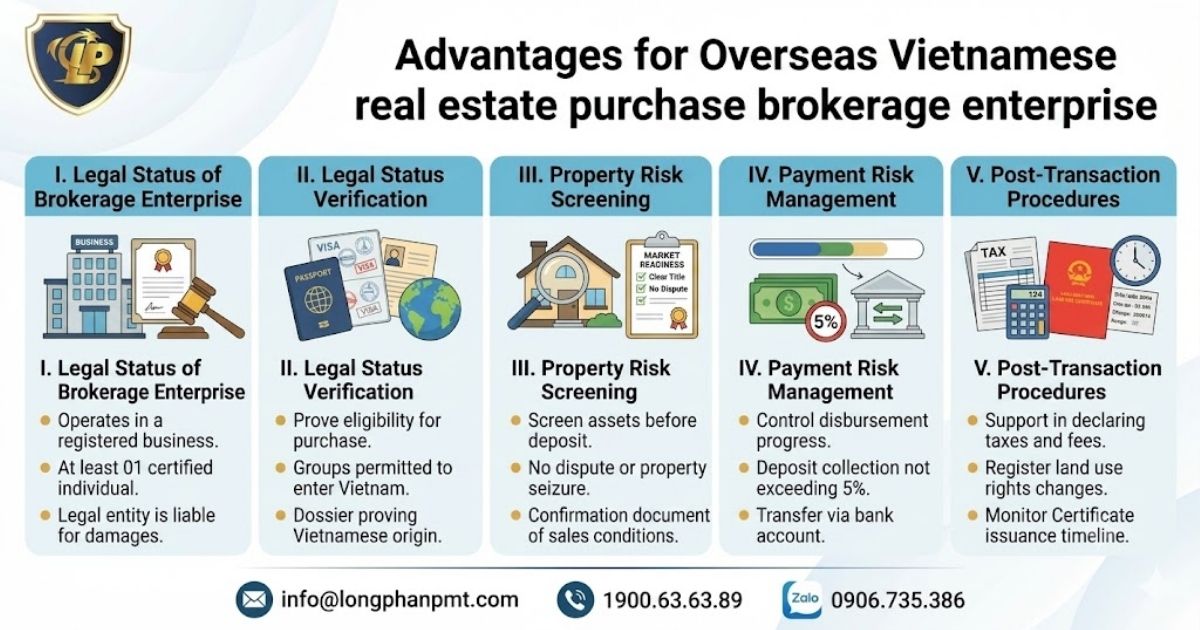
Your right to own a home, especially when registering property in the name of an overseas Vietnamese citizen, directly depends on documents proving your Vietnamese origin. According to Article 8 of the 2023 Housing Law, the eligible owner must have the right to legally enter Vietnam. Furthermore, your nationality status also determines the scope and type of land you are permitted to acquire through transfer. Therefore, completing all necessary personal legal documents before proceeding with any real estate transaction is essential to ensure your rights are protected.
Clients need to understand the legal standards to build a secure asset ownership roadmap. Comparing current documentation with legal regulations helps eliminate administrative obstacles.
To hold a real estate title, you must fully meet the legal standards to establish ownership in Vietnam. Current regulations focus on verifying the subject’s status via valid entry documents and nationality status.
Article 8 of the 2023 Housing Law regulates the subjects and conditions for owning housing in Vietnam:
Those eligible to own housing in Vietnam include:
The conditions for owning a home in Vietnam include:
According to Article 3 of Decree No. 95/2024/ND-CP, the documents required to prove eligibility and conditions for owning houses in Vietnam are as follows:
Documentation for Organizations:
Documentation for Individuals:
Documentation Proving Conditions for Ownership:
The 2024 Land Law allows overseas Vietnamese to acquire land use rights in development projects. However, you must still comply with the limitations regarding security and defense zones as stipulated. Certain types of land, such as forest land and agricultural land, still have specific restrictions. You should check the detailed planning at the local environmental and natural resources agency.
If you do not meet the entry documentation requirements, direct ownership will be denied. In this situation, you must seek indirect transaction structures to hold the assets. Using power of attorney agreements or through legal entities are viable alternatives. However, each of these options requires a robust risk control mechanism.
Understanding ownership requirements helps you filter investment options effectively. You should prepare consistent personal documents to ensure a smooth registration process.
>>> See more: Overseas Vietnamese Invest in Real Estate Short-Term or Long-Term
You are now familiar with the legal requirements regarding documentation and ownership. Real estate ownership strategies for overseas Vietnamese: which transaction structure is safer? This depends on your specific circumstances. Models include direct ownership, reliance on relatives, or establishing a business in Vietnam. The following section provides a detailed analysis of the advantages and risks of each specific structure.
For overseas Vietnamese, the strategy of directly registering real estate in their name is considered the safest model. You hold the Land Use Right Certificate and have full rights to dispose of your personal property. Article 44 of the 2024 Land Law guarantees your right to sell, lease, or inherit the property. You own the property as an individual as stated on the Certificate. Absolute transparency eliminates any risk of disputes over actual ownership.
Advantages: transparency, full ownership rights.
Registering your property in your name provides absolute protection of your property rights. You have full to conduct transfer or mortgage transactions at the bank. This method completely eliminates the risks arising from having someone else’s name on the title.
Disadvantage: dependent on individual legal circumstances.
Customers must meet the requirements for passports and certificates of Vietnamese origin. The lack of valid entry documents will prevent the registration and transfer of ownership. Customers need to complete their citizenship application to proceed with this transaction.
This structure carries the highest legal risk for real estate investors. Advantages: flexibility when not yet eligible.
This structure allows clients to complete real estate transactions quickly. Clients do not need to go through the initial, complex citizenship verification procedures in person. This is how clients can secure prime land locations in a timely manner.
Disadvantages: risk of disputes, difficulty in proving actual ownership
A person acting as a nominee may develop intentions to seize the property when its value increases dramatically. Current law does not recognize secret agreements that contradict the content of the issued land title certificate. Clients often lose control if they lack a system of proof of payment transactions. This type of transaction is easily declared invalid if it lacks a robust system of legal evidence.
You and your relatives can both be named on the Land Use Right Certificate. This creates a dual oversight mechanism in the property management process.
Advantages: sharing rights and reducing unilateral risks
Co-ownership helps prevent one party from unilaterally engaging in illegal transactions. Both parties share responsibility and benefits from the shared exploitation of the property. This form of ownership enhances the security of real estate ownership strategies for overseas Vietnamese.
Disadvantage: Disputes may arise when disposing of property
Any decision to sell or mortgage property requires the consent of all parties. Disputes arise when co-owners cannot agree on a business plan. Clients face a legal impasse if one party refuses to cooperate and sign the agreement.
You can establish a legal entity in Vietnam to register real estate in your name. This is a professional structure suitable for large-scale and long-term investment activities.
Advantages: Optimized asset management, suitable for long-term investment
The company helps to separate your personal assets and business risks. You manage your real estate through the company’s charter and capital contribution ratio. This structure facilitates raising capital from credit institutions.
Disadvantages: high operating costs, high legal compliance requirements
Clients are responsible for annual taxes and operating costs of the business. Compliance with accounting and auditing regulations requires a high level of professionalism. Clients should also be aware of restrictions on the land use purposes of the legal entity.
Clients use authorization documents to manage assets from overseas. This method ensures high flexibility in the use and exploitation of land.
Advantages: flexibility in management and use
Clients can change their property manager quickly and easily. This structure allows clients to complete administrative procedures without returning to their home country. This is a powerful tool for maintaining the status and value of their assets.
Disadvantage: limited legal validity in case of disputes
The power of attorney agreement may be terminated in accordance with Article 569 of the 2015 Civil Code. Internal agreements are not enforceable against third parties acting in good faith. Clients may be at a disadvantage if they do not have accompanying security measures in place.
Each naming convention has its own advantages and disadvantages in terms of administration. You should base your decision on your specific circumstances to choose the model that best suits your needs.

The safety of each transaction structure is evaluated through the ability to enforce ownership rights in reality. You must fully identify the latent risks corresponding to each specific ownership model.
The strategy uses legal criteria as a security foundation. Ownership must align with Article 4 of the 2024 Land Law regarding land users. You must ensure the asset’s antagonistic nature against third-party disputes. Asset control is crucial to maintain disposal rights under Article 44 of the 2023 Housing Law. Holding original documents is key to protecting rights. Transferability reflects liquidity under the 2023 Law on Real Estate Business.
>>>See more: Overseas Vietnamese Need to Register for Temporary Residence When Buying a House
The strategy of directly owning real estate in the name of overseas Vietnamese has the lowest risk index. Property rights are protected according to the provisions of Article 4 of the 2024 Land Law. Clients control the transaction without depending on the will of a third party. The risk lies in the initial preparation of citizenship confirmation documents.
Having relatives register the property in their name carries a high risk of losing assets. The law does not recognize tacit agreements regarding your actual ownership rights. The person holding the property in their name can arbitrarily mortgage or transfer the asset. You are likely to fail in legal proceedings due to a lack of bank payment records.
Co-ownership and business models require specialized risk management mechanisms. The 2023 Real Estate Business Law stipulates strict requirements for legal entities. Clients may face difficulties in making decisions if there is a lack of mutual agreement. Operating costs and tax compliance are factors that clients need to carefully consider.
Understanding the risks helps you screen effective investment options. You should prepare consistent personal documents to ensure a smooth registration process.
The choice of ownership structure should be based on individual legal status and investment objectives. Clients need to compare their actual records with legal regulations to optimize their benefits. Identifying the correct model helps protect assets and minimize administrative obstacles.
Customers holding valid Vietnamese passports should prioritize direct ownership registration. This is currently the safest real estate ownership strategy for overseas Vietnamese. Article 4 of the 2024 Land Law allows overseas Vietnamese to receive property transfers just like domestic citizens. Customers retain full rights to dispose of and manage the property without needing an intermediary.
For large-scale business purposes, you should establish a business in Vietnam. Article 10 of the 2023 Law on Real Estate Business stipulates the form of economic organizations. This model helps you optimize tax costs and manage investment cash flow. A legal entity ensures continuity and stability for your commercial real estate portfolio.
If you wish to partner with family members, a co-ownership structure is a reasonable option. Article 27 of the 2024 Land Law stipulates the issuance of land use certificates to multiple owners. You and all parties involved will sign the land title certificate to monitor all transactions. This option balances flexibility and the security of your actual rights.
Clients should identify errors early in the process of establishing property ownership structures. Timely adjustments help prevent unnecessary financial and legal losses.
>>>See more: Overseas Vietnamese Buying Houses Online via Brokers
The most serious mistake is having relatives register assets in their name without a written agreement. Customers often rely on trust rather than solid legal evidence. The law does not recognize informal agreements lacking legal validity. Customers face the risk of losing all their assets if the person registering in their name defaults.
Using unofficial money transfer services undermines proof of investment funds. Clients need to make bank transfers to establish the legitimate source of funds. Bank documents are crucial for resolving disputes in court. Cash payments make it difficult to prove actual ownership.
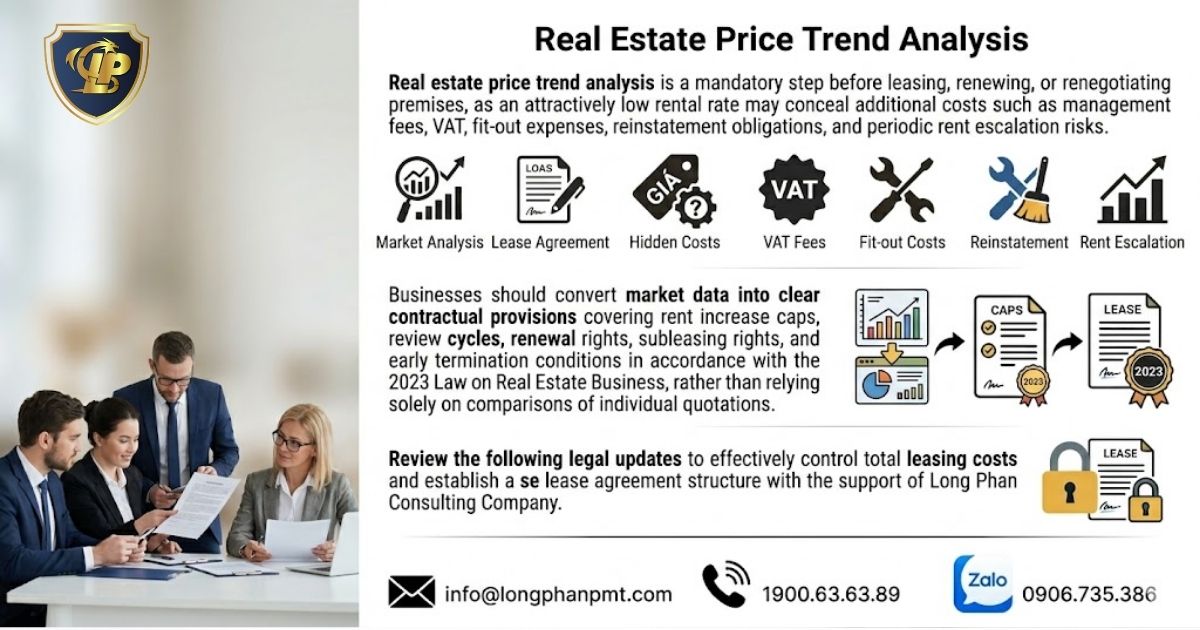
Many clients fail to assess the legal status of a property before making a transaction. Ignoring planning checks or disputes leads to bottlenecks during the application process. Clients should check for any restrictions or restrictions at the land management agencies. Carelessness in the document review process can result in significant financial losses.
Identifying potential mistakes helps clients proactively avoid investment risks. Clients need to prepare all necessary documents to safely implement a real estate ownership strategy for overseas Vietnamese. The following sections provide detailed instructions on the required documents and procedures for each ownership option. These steps ensure the absolute legality of your assets in Vietnam.
Having complete documentation is a prerequisite for a successful property transfer. This process requires accuracy in personal identification documents and financial proof. The following content provides a list of documents for direct ownership transfer and other structures. Customers must follow these steps to ensure absolute legal compliance.
The ownership documents are registered in your name to ensure optimal ownership rights for our valued customers. You need to provide a valid Vietnamese passport. If you use a foreign passport, you must have a certificate of Vietnamese origin. This document must be issued by a diplomatic mission or an identity card management agency.
Article 8 of the 2023 Housing Law clearly stipulates the conditions for owning a house. Applicants must have documents proving their permission to enter Vietnam. The list of essential documents includes the following:
The notary office will verify the original documents before signing the contract. The strategy of registering real estate under the name of overseas Vietnamese requires accurate personal information. Clients should verify the legal validity of the documents before proceeding with the transaction. This will help shorten the time spent on procedures at government agencies.
When you choose a property structure where a relative is the registered owner or co-owner, transparency in the agreement is crucial to protecting your rights. Clients should prepare thorough legal documentation to mitigate potential risks from third parties.
The list of essential documents includes:
Important note for our valued customers:
You need to prepare the necessary documents for establishing a business as a foreign investor. These documents must clearly demonstrate the source of investment capital and the specific real estate project. Essential documents include:
Important note for our valued customers:
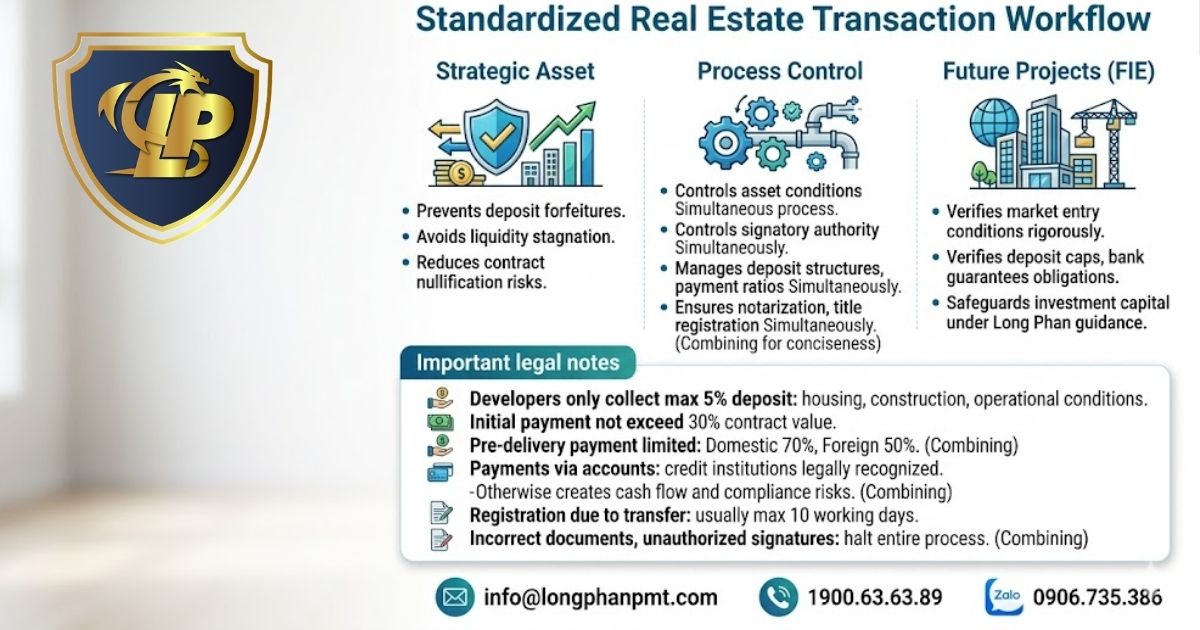
Step 1: Contract Notarization: The Notary checks the legality of documents, planning status, and disposal rights.
Step 2: Financial Obligation Declaration: Submit Personal Income Tax (seller) and Registration Fee (buyer) declarations.
Step 3: Title Transfer Registration: Submit the full dossier to the district-level Land Registration Office branch to update the cadastral book and issue a new Certificate. Processing typically takes 15 to 30 working days.
Please note for our valued customers:
Completing the registration marks a significant milestone in finalizing the strategy of owning real estate in the name of overseas Vietnamese. After obtaining the Certificate of Ownership in your name, you should carefully store the original documents for long-term property management.
>>>See more: Overseas Vietnamese Signing Electronic Contracts to Buy Houses
Use official transfer channels
You must execute transactions via licensed commercial banks in Vietnam. Absolutely do not use underground services or “hand-delivered cash,” as these are massive barriers when resolving legal disputes in Court.
Retain all transfer receipts
Each transaction must be accompanied by a transfer order (MT103) or bank statement, including
Comply with investment capital account regulations
For establishing an enterprise or large-scale investments, the law requires opening a direct or indirect investment capital account.
Transparent transfer purpose
Clearly declare the purpose as “Real estate investment” or “Capital contribution.” Inaccurate declarations (like “gifts” or “personal loans”) cause immense difficulties when proving ownership.
You are familiar with the ownership structures and filing procedures, but maintaining the long-term security of your assets requires a proactive risk management system. Below are key legal defenses to protect your interests in Vietnam.
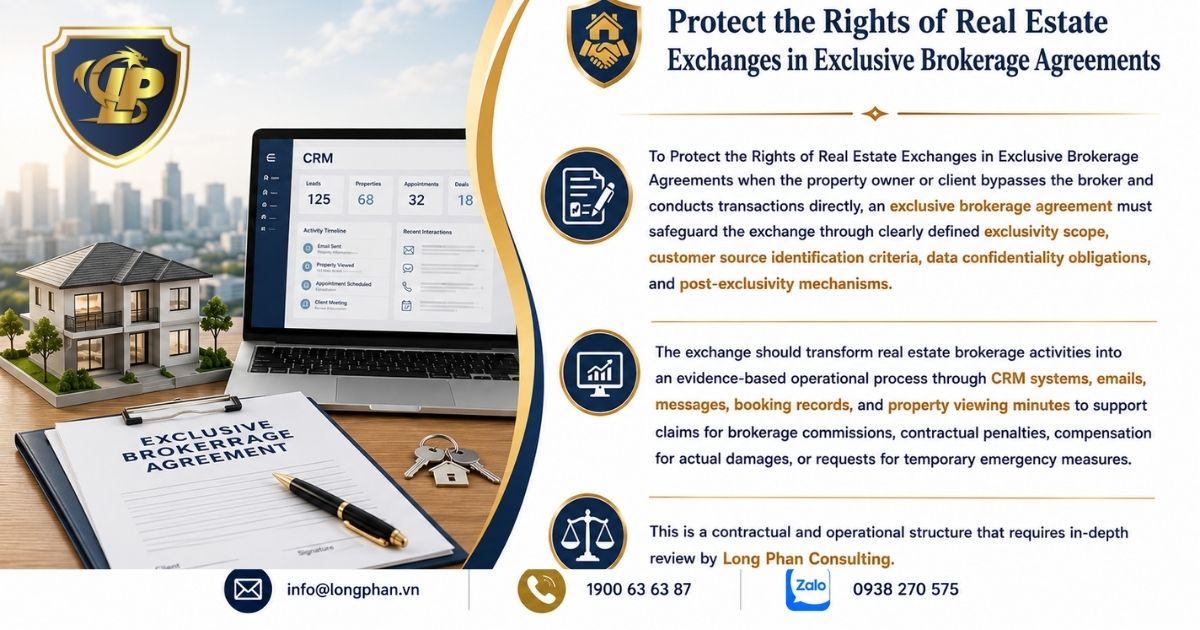
Clients must retain all transaction history and bank transfer receipts from Vietnamese banks. The strategy of registering real estate under the name of overseas Vietnamese requires transparency regarding the source of funds. Handwritten agreements regarding the registration of property must be documented with a notarized certificate or notarized document. A robust evidence system helps clients protect their assets against breach of trust by the registered owner.
A notarized contract is the most legally binding document for establishing property rights. You should include clauses outlining the obligations of the person acting as nominee in the contract. Clearly stating the purpose of the transaction helps prevent acts of misappropriation of real estate. The notary plays a crucial role in verifying the legality and voluntary agreement of all parties involved.
When disputes arise regarding the registration of real estate in the name of overseas Vietnamese, clients should prioritize mediation through legal representation to minimize conflict. If an agreement cannot be reached, clients can exercise their right to sue in the competent People’s Court. Simultaneously, requesting an injunction will help freeze assets promptly to protect their rights. For maximum effectiveness, clients need to develop a litigation strategy based on a well-prepared evidence system.
>>>See more: Property Buyer Finding Services for Real Estate Owners
You should periodically check the legal status of your property at the land registration office. Staying updated on the new regulations of the 2024 Land Law will help you adjust your ownership structure. You should convert ownership to direct ownership as soon as you meet the necessary conditions. Proactive management helps you preserve the value of your property sustainably in Vietnam.
Effective risk management ensures peace of mind for investors and asset developers in their home country. Clients should collaborate with professional consultants to build a legal safeguard. Below are the services a lawyer will provide to protect you.
For Overseas Vietnamese, titling real estate in Vietnam involves not just ownership rights but a profound understanding of legal regulations and optimal options. We provide comprehensive strategic consulting solutions to help clients choose the suitable titling form, limit risks, and ensure long-term rights. We structure our professional support into the following key area:

Below, Long Phan Consulting Company provides some frequently asked questions related to the procedures for developing a real estate ownership strategy for overseas Vietnamese. We invite interested clients to refer to this information:
Holders of Vietnamese passports enjoy the same rights as domestic citizens, while holders of foreign passports need to provide additional documentation proving their Vietnamese origin and are subject to stricter entry requirements at the time of transaction.
Our company helps you separate personal assets from business risks, while allowing you to account for property management and operating expenses as business expenses to optimize your corporate income tax obligations.
A separate direct investment capital account is opened to facilitate the legitimate flow of investment funds, making it easier for you to demonstrate the source of funds to authorities when you wish to transfer profits or divest capital abroad.
Yes, according to Clause 4, Article 3 of the 2008 Vietnamese Nationality Law and Point b, Clause 2, Article 8 of the 2023 Housing Law, Vietnamese citizens residing abroad who are permitted to enter Vietnam are entitled to own houses attached to land use rights in Vietnam; and have the right to use residential land acquired through the transfer of land use rights in housing development projects as stipulated in Article 44 of the 2024 Land Law.
Customers should request the seller to provide planning information or directly check with the local Department of Natural Resources and Environment based on the information disclosure provisions in Article 6 of the 2023 Law on Real Estate Business. This verification ensures that the property being transacted meets the condition of “not being prohibited from transaction by law” and is safe for the customer’s long-term use.
Real estate project developers are only allowed to collect a deposit of no more than 5% of the selling price or lease-purchase price of future-built housing when agreeing on a deposit as stipulated in Clause 5, Article 23 of the 2023 Law on Real Estate Business. If you are dealing with an individual (for existing housing), the deposit amount will be mutually agreed upon by the parties, but it should not exceed a safe margin to avoid the risk of capital misappropriation.
>>>See more: What are the Conditions for Overseas Vietnamese to Invest in Real Estate Projects in Vietnam?
Building a real estate titling strategy for Overseas Vietnamese is the prerequisite step to protect assets sustainably. Establishing cash flow evidence and choosing a transparent transaction structure helps eliminate the risk of losing investment capital.
If you require in-depth support, please contact Hotline 1900636389 to receive professional consulting from Long Phan Consulting Company.