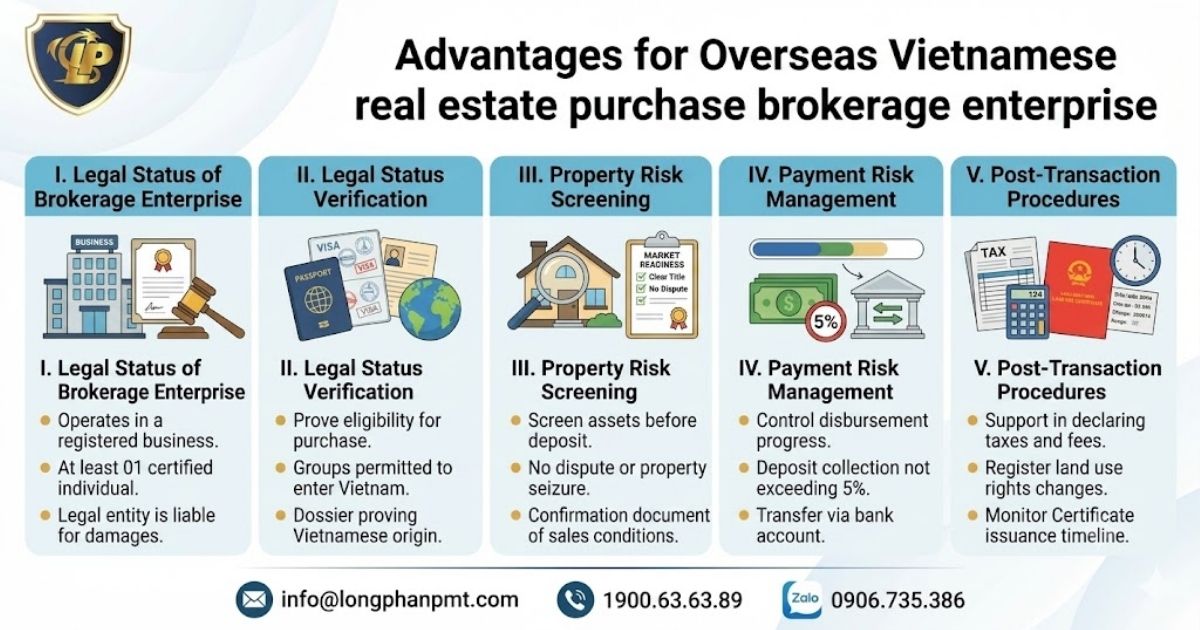

The housing purchase dossier checklist for Overseas Vietnamese in Vietnam supports clients in establishing real estate ownership accurately. Clients use this checklist to control the transaction’s legality. Below is detailed information regarding the housing purchase dossier checklist for Overseas Vietnamese executed by Long Phan Consulting Company.
Under Clause 3, Article 3 of the 2008 Law on Vietnamese Nationality, Overseas Vietnamese (Vietnamese residing abroad) include two distinct groups, which also form the basis for identifying eligibility requirements outlined in the housing purchase dossier checklist for Overseas Vietnamese:
Eligible Subjects for Housing Purchases in Vietnam
Ineligible Subjects and Restrictions Fundamentally, all Overseas Vietnamese who meet entry conditions can buy housing. However, note these restrictions on real estate types for people of Vietnamese origin without nationality:
The core requirement is that the applicant must be legally permitted to enter Vietnam at the time of the transaction. In addition, depending on whether they retain Vietnamese citizenship or are of Vietnamese origin, different documentation requirements may arise—an issue typically clarified when consulting the housing purchase dossier checklist for Overseas Vietnamese. Therefore, accurately identifying which category you belong to is the first and most important step in answering the question “What documents are needed for overseas Vietnamese to buy a house in Vietnam?”.
Nationality and origin requirements
According to the 2008 Vietnamese Nationality Law, overseas Vietnamese (Vietnamese people residing abroad) are divided into two groups with different rights and obligations when buying real estate in Vietnam, a distinction that is also reflected in the housing purchase dossier checklist for Overseas Vietnamese:
Legal entry requirements
This is a mandatory condition applicable to both groups of overseas Vietnamese. According to point b, clause 2, Article 8 of the 2023 Housing Law and Decree 95/2024/ND-CP, overseas Vietnamese wishing to own a house in Vietnam must have legal entry permits—one of the fundamental criteria highlighted in the housing purchase dossier checklist for Overseas Vietnamese. Specifically:
This means that, without returning to Vietnam or obtaining a valid entry stamp, overseas Vietnamese are not eligible to directly sign a house purchase contract—a restriction that is also clearly addressed within the housing purchase dossier checklist for Overseas Vietnamese.
>>> See more: What Conditions Must Overseas Vietnamese Meet When Conducting Real Estate Business?
The checklist categorizes dossiers based on actual nationality status, as outlined in the housing purchase dossier checklist for Overseas Vietnamese. A valid passport and entry stamp are mandatory: individuals retaining Vietnamese nationality use a Vietnamese passport, while those of Vietnamese origin must present a foreign passport accompanied by a document certifying their Vietnamese origin.
This is the most crucial document defining your group and subsequent rights.
Substitute documents proving Vietnamese origin include:
Note for difficult cases: If you have no old documents left, you can still apply for a Certificate of Vietnamese Origin at:

Personal documents determine the legal validity of real estate transactions under the 2024 Land Law. Preparing and reviewing your paperwork against the housing purchase dossier checklist for Overseas Vietnamese helps verify your ownership eligibility and ensures compliance. You should carefully compare your personal documents with this checklist to avoid potential errors. The documents included in the housing purchase dossier checklist for Overseas Vietnamese are outlined below.
To help ensure a smooth application process and avoid omissions, here is a complete set of required documents—compiled in the housing purchase dossier checklist for Overseas Vietnamese—that overseas Vietnamese should prepare when buying a house in Vietnam:
Depending on the situation:
Depending on the specific nationality and legal status, the required documents will vary. For clarity and ease of implementation, these variations are systematically organized within the housing purchase dossier checklist for Overseas Vietnamese, as detailed below.
Case 1: What documents do overseas Vietnamese who still hold Vietnamese citizenship need to buy a house?
Case 2: What documents do overseas Vietnamese (people of Vietnamese origin) who no longer hold Vietnamese citizenship need to buy a house?
Important note: In both cases, the entry stamp must remain valid at the time of signing the notarized contract, as emphasized in the housing purchase dossier checklist for Overseas Vietnamese. If you are entering under a 15–30 day visa-free stay, you should ensure that the contract is signed before your temporary stay expires.
>>> See more: Overseas Vietnamese Land Investment: A Guide
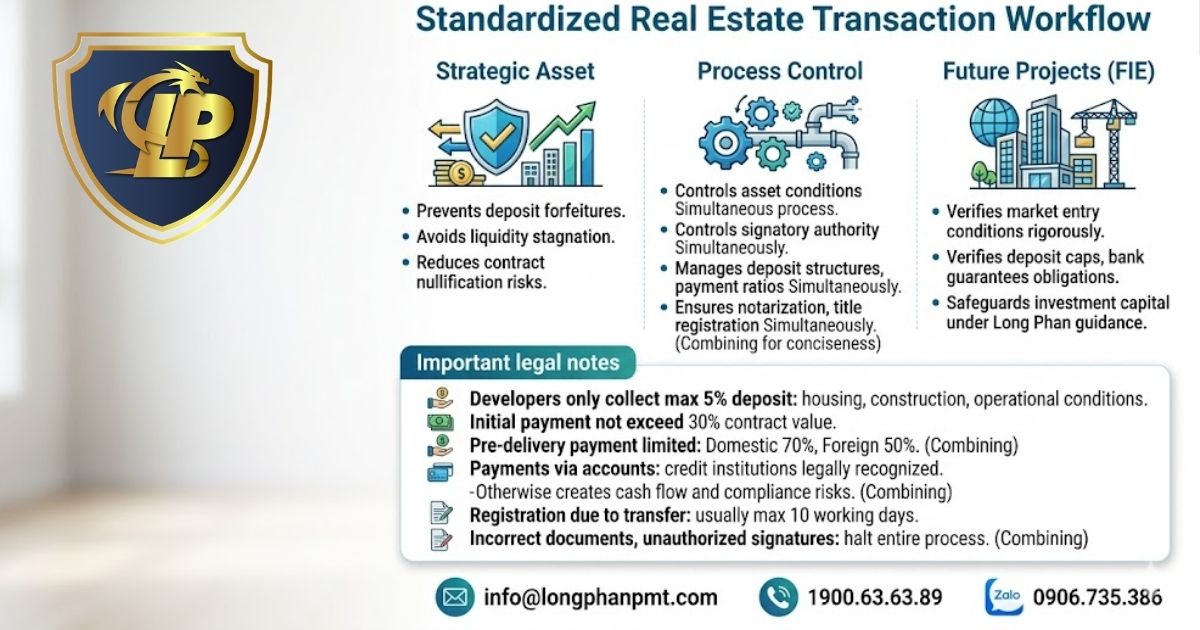
The checklist mandates a strict five-step real estate transaction process, as clearly structured within the housing purchase dossier checklist for Overseas Vietnamese.
Step 1: Check Conditions and Documents: Check your personal conditions (passport, entry stamp, proof of origin) and the real estate’s legal status (seller’s Red Book must be lawful, dispute-free, unmortgaged, not distrained, and not under recovery planning). For off-plan housing, request foundation acceptance minutes, bank guarantee contracts, and sales permits.
Step 2: Sign the Sale Contract: Executed at a notary office. Prior to this, an optional deposit contract (5-15% of value) can be signed. If you cannot return to Vietnam, establish an authenticated Power of Attorney at the Vietnamese Embassy abroad for a representative to sign locally.
Step 3: Notarization: Mandatory at a competent notary organization. Requires original Red Books, original IDs, marital status proofs, and origin proofs. Foreign documents must be translated and consularly legalized.
Step 4: Pay Taxes and Fees: Buyers pay the Registration Fee (0.5% of value) and appraisal fees. Sellers typically pay Personal Income Tax (2%), though parties often agree the buyer covers this. Retain all receipts for title transfer.
Step 5: Red Book Title Transfer (Sang tên sổ đỏ): Submit the notarized contract, tax receipts, buyer’s IDs, and seller’s original Red Book to the Land Registration Office. Processing usually takes 10-15 working days.
Customers should pay special attention to common mistakes arising from neglecting proper documentation guidance, as outlined in the housing purchase dossier checklist for Overseas Vietnamese, which can lead to wasted time and even the risk of losing ownership rights. Failing to clearly identify one’s legal status or relying solely on brokers while overlooking this checklist is a major cause of ownership disputes. To safeguard your assets, it is essential to conduct a thorough legal review of the property and strictly follow the housing purchase dossier checklist for Overseas Vietnamese in order to minimize potential risks.
Not preparing all the necessary documents from the start.
This is one of the most common mistakes and a key reason why many transactions face delays, especially when buyers fail to consult the housing purchase dossier checklist for Overseas Vietnamese at an early stage. Many individuals only begin reviewing the required paperwork after they have already paid a deposit or signed a purchase agreement.
Without essential documents—such as proof of Vietnamese origin or a valid entry permit, both of which are clearly specified in the housing purchase dossier checklist for Overseas Vietnamese—the transfer of ownership may not be completed. This often results in wasted time correcting documentation and increases the risk of additional costs or disputes with the seller.
Ask a relative or acquaintance to register the property in their name.
Due to paperwork difficulties, many overseas Vietnamese choose to have relatives register the property in their names to “circumvent the law,” often instead of properly following the housing purchase dossier checklist for Overseas Vietnamese. However, this approach creates one of the most significant risks in real estate transactions.
From a legal standpoint, the individual named on the land title certificate is recognized as the lawful owner. As a result, if disputes or conflicts arise, it becomes extremely difficult to protect your rights—even if you have fully paid for the property—highlighting the importance of complying with the housing purchase dossier checklist for Overseas Vietnamese from the outset.
Not conducting a legal check on a property before buying it.
Many people focus only on price, location, or recommendations from brokers, neglecting the legal verification step. This is especially dangerous when buying a house in Vietnam, where there are many types of real estate with varying legal statuses.
Without thorough inspection, you might end up buying a house that is ineligible for transaction, involved in a dispute, or cannot be issued a land title. In such cases, dealing with the consequences will be much more complicated and costly than if you had checked everything from the start.
Not sure which legal group I belong to.
Another mistake is not clearly defining whether one belongs to the group of “retaining Vietnamese citizenship” or “people of Vietnamese origin holding foreign citizenship.” This directly affects the type of documents needed as well as the right to own a house.
Confusing these two groups can lead to incorrect documentation, repeated requests for additional information, or even disqualification from owning the property.
Trusting brokers too much without verifying the information is unacceptable.
Real estate brokers can assist you in the search and transaction process, but the information they provide isn’t always complete or legally accurate.
If you rely solely on brokers without verifying the information, you can easily end up buying unsuitable properties or making legal mistakes.
Experts at our unit execute the following professional tasks to support your dossier checklist. We structure our professional support into the following key area:
Mastering the checklist for home purchase documents for overseas Vietnamese in Vietnam helps clients proactively acquire property safely and transparently in accordance with the latest legal regulations. To optimize administrative processes and prevent disputes, clients should accurately apply the checklist for home purchase documents for overseas Vietnamese in Vietnam at each stage of the real estate transaction..

Here are some frequently asked questions regarding our home purchase checklist service for overseas Vietnamese in Vietnam. We invite interested customers to refer to them:
Before returning to Vietnam to buy a house, customers shouldn’t wait until they arrive to start researching. Instead, preparing early will save you a lot of time and prevent you from being caught off guard.
Most importantly, customers should review all personal documents, especially those proving Vietnamese nationality or origin. If any are missing, customers should proactively apply for or have them certified before returning to Vietnam, as some procedures can take considerable time.
In addition, customers should also research in advance the types of houses they are allowed to buy, the area they intend to invest in, and the legal status of the project. Having this information readily available will help customers avoid being completely dependent on brokers when they come to Vietnam.
It’s possible, but you shouldn’t rely on them completely. Real estate agents can save you time searching, introduce you to suitable properties, and assist with some basic procedures. However, not all agents have in-depth knowledge of the legal aspects for overseas Vietnamese.
Therefore, customers should view brokers as a reference channel rather than the sole source of information. Important information related to paperwork, ownership rights, or home purchase conditions should be verified from official sources or legal experts.
Overseas Vietnamese are not required to hire a real estate agent when buying a house in Vietnam; however, in many cases, using this service is necessary to ensure safety and efficiency.
First of all, for those who don’t live in Vietnam regularly or are unfamiliar with the market, a real estate agent can assist in finding suitable properties, providing information on prices and locations, saving time and avoiding risks.
Additionally, if you are unfamiliar with the legal process, buying and selling procedures, or related regulations, a broker can act as an intermediary to assist with paperwork, legal checks, and connecting you with relevant parties such as the homeowner, bank, or notary public.
In high-value or complex transactions (such as projects, properties with multiple owners, or those requiring zoning checks), hiring a reputable broker becomes even more crucial to minimize disputes and errors.
Yes. According to Clause 1, Article 44 of the 2024 Land Law, Vietnamese people of overseas origin who are permitted to enter Vietnam have the right to own houses attached to land use rights in Vietnam through forms such as buying or lease-purchasing commercial housing.
No, Vietnamese expatriates have certain limitations on real estate ownership in Vietnam. People of Vietnamese origin who no longer hold Vietnamese citizenship are only permitted to own houses attached to land use rights in commercial housing development projects that allow for transfer, according to Article 44 of the 2024 Land Law. Vietnamese expatriates who still hold Vietnamese citizenship have broader ownership rights, equivalent to those of domestic citizens.
A visa exemption certificate allows multiple entries, but each stay is limited to a maximum of 180 days, and an extension must be applied for to stay longer. Conversely, a temporary residence card allows continuous residence in Vietnam for the entire validity period (2 to 10 years) without requiring periodic renewal; however, it is only issued to specific groups such as investors, workers, or those sponsored by relatives.
New regulations from the 2024 Land Law and 2023 Housing Law create favorable conditions regarding the housing purchase dossier checklist for Overseas Vietnamese in Vietnam. You can proactively own assets transparently and safely by complying with legal procedures. Long Phan Consulting Company is always ready to accompany you through every real estate transaction stage. If you need in-depth legal support, please contact Hotline 1900636389 for timely assistance.