Real estate title transfer process for absentees has become significantly more convenient today, thanks to clear legal regulations and the support of professional services. Even without being physically present, transacting parties can swiftly complete the procedure by grasping the basic steps and preparing the correct necessary dossiers. In this article, Long Phan Consulting Company provides a detailed guide on the entire real estate title transfer process for absentees and the documents required to ensure a smooth and safe title transfer.

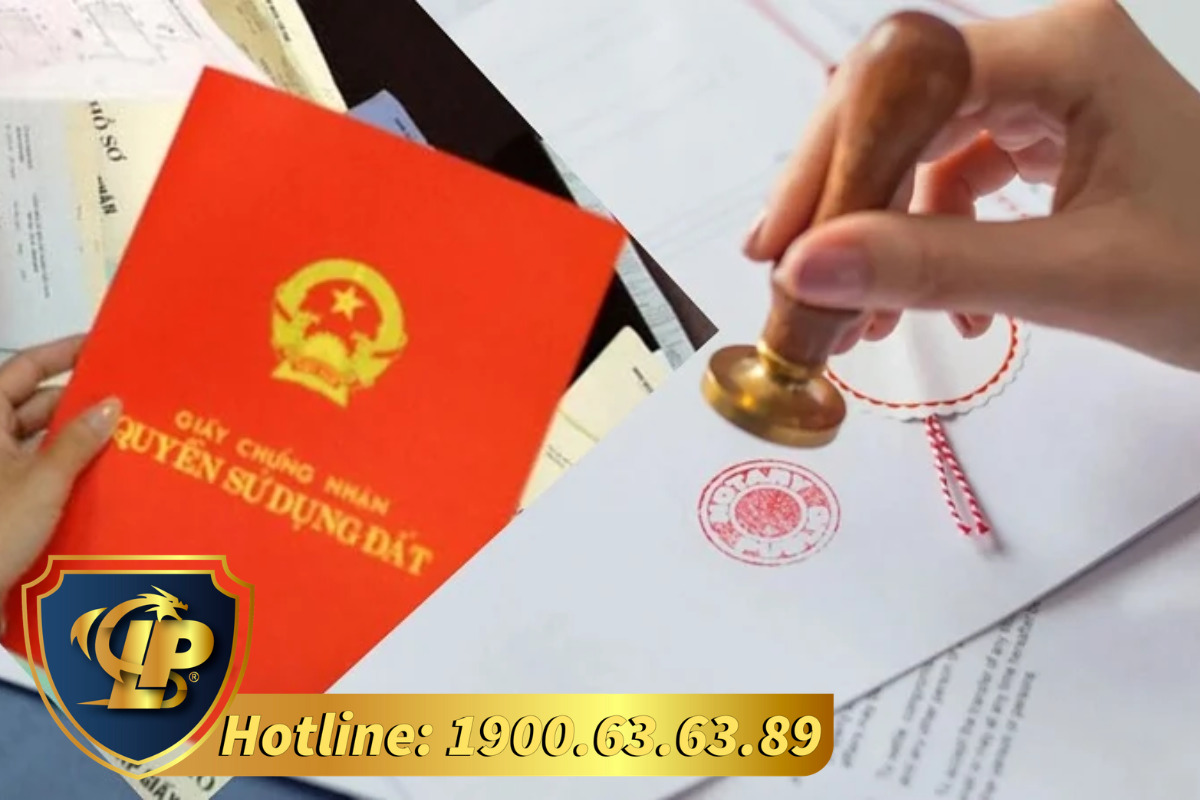
“Red Book title transfer” is the common term used by citizens to refer to the procedure of registering land changes (fluctuation registration) when transferring land use rights, or land use rights and land-attached assets, through transactions such as sales, donations, or inheritance. This is a mandatory legal procedure to record the change of user or owner under land laws.
Pursuant to Clause 2, Article 133 of the 2024 Land Law, when transferring a Red Book, the transferee or donee will have the change confirmed on the issued Certificate or be granted a new Certificate of Land Use Rights. Specifically:
Real estate title transfer process for absentees can still be executed smoothly if you understand the sequence and choose the appropriate method. This process is deployed through coordination between notarization practice organizations and the land registration agency, prescribed in Clause 3, Article 27 of the 2024 Land Law and Article 42 of the 2024 Notary Law, helping parties complete the transaction without needing to be physically present at every stage. The specific steps include:
Step 1: Preparing Necessary Dossiers and Documents
Participating parties (transferor, transferee) must fully prepare identification documents and papers related to land use rights and ownership of land-attached assets. The dossier can consist of original copies for cross-referencing or authenticated copies as prescribed.
Step 2: Establishing the Transfer, Donation, or Inheritance Contract
Depending on the absentee’s residency status, contract establishment is done via two common scenarios:
Step 3: Notarizing the Contract
After establishing the contract, the parties proceed with notarization to ensure the transaction’s legal validity:
Step 4: Declaring and Fulfilling Financial Obligations
Once the contract is lawfully notarized, parties declare and pay arising financial obligations at the competent agency where the real estate is located. These include Personal Income Tax, registration fees, and other related charges. After fulfilling these, the executing party receives tax payment receipts to add to the transfer dossier.
Step 5: Submitting the Land Change Registration Dossier
The title transfer dossier is submitted at the Land Registration Office or the district-level One-Stop-Shop where the property is located. The dossier includes the notarized contract, the Certificate of Land Use Rights, tax receipts, and related documents. If valid, the new owner’s information is updated in the cadastral records.
Step 6: Monitoring and Receiving Results
The executing party tracks the resolution progress. Upon the deadline, the submitter retrieves the Certificate of Land Use Rights updated with the new owner’s name or a newly issued one. This is the official legal basis confirming the transfer is complete.
The legal dossier is the basis for the competent state agency to review and resolve the procedure. Accurate preparation prevents requests for supplementation or dossier rejection. Under Clause 1, Article 42 of the 2024 Notary Law, the following document groups must be prepared:
When executing a real estate title transfer process for absentees, transacting parties are obligated to complete taxes and fees as prescribed. These financial obligations include:
Real estate title transfer process for absentees harbors multiple risks due to limitations in physical inspection and dossier control. Some common risks include:
>>> See more: Land Title Transfer for Overseas Vietnamese
For real estate title transfer process for absentees, utilizing professional services ensures the process complies with regulations, limits risks, and saves time. With practical experience in land and real estate transactions, Long Phan Consulting Company provides comprehensive solutions to safely and effectively complete procedures for clients afar. We structure our professional support into the following key area:

Below are common inquiries regarding real estate title transfer process for absentees:
People living far away can exercise their right to access land information by submitting a request form to the Land Registration Office or searching on local online planning portals. Additionally, authorizing professional consulting firms to conduct on-site inspections is the safest option to avoid potential legal risks.
It is not mandatory in all cases. Transferring land ownership to someone residing far away does not require authorization; the person with land use rights can still directly carry out the procedure if present at the competent authority, or complete the necessary steps by signing and certifying documents at a consular office abroad. The competent diplomatic representative office can notarize, certify, and legalize documents to allow the person residing far away to complete the application, but it does not impose a mandatory obligation to authorize someone else to act on their behalf.
(Legal basis: Clause 1, Article 5 of Circular 03/2023/TT-BNG, amended and supplemented by Circular 05/2025/TT-BNG)
Typically, in property transfer transactions, especially the transfer of real estate or land use rights, the transferor (seller) is obligated to declare and pay personal income tax on the income generated from the transfer. However, the law allows the parties to agree otherwise on who is responsible for paying the tax. Therefore, if the parties agree that the buyer will pay the tax on behalf of the seller, this agreement is still acceptable if clearly stated in the contract.
(Legal basis: Clause 5, Article 3 of the Personal Income Tax Law 2025, effective from July 1, 2026)
Cases where personal income tax is exempted when transferring ownership of real estate:
(Legal basis: Article 4 of the Personal Income Tax Law 2025, effective from July 1, 2025)
It is not mandatory to issue a new Certificate in all cases. Depending on the specific situation and the documentation, the competent authority may confirm the changes directly on the issued Certificate or issue a new Certificate of land use rights and ownership of assets attached to the land in accordance with the law.
(Legal basis: Clause 2, Article 133 of the 2024 Land Law)
Real estate title transfer process for absentees demands a thorough understanding of legal standards and practical dossier processing skills. Long Phan Consulting Company commits to accompanying you through every stage, from entity appraisal to finalizing the change updates.
To protect your real estate ownership rights and optimize the administrative process, please contact Hotline 1900636389 for professional support.
>>> See more: Guide to Foreign Investor Property Transfer