The conditions for Overseas Vietnamese selling real estate in Vietnam are a critical legal matter that individuals of Vietnamese descent residing abroad must understand before executing any transaction. The transfer of houses and land in Vietnam requires compliance with regulations concerning ownership rights, legal documents, and administrative procedures under current law. This article provides a detailed analysis of the legal conditions that Overseas Vietnamese must adhere to when selling real estate in Vietnam.
Conditions for Overseas Vietnamese selling real estate
General Conditions for Selling Real Estate in Vietnam
For a real estate transaction in Vietnam to be legally recognized, the parties involved must meet several mandatory conditions. It is necessary to consider both the eligibility of the transaction participants and the legal status of the land parcel being transferred.
For Sellers and Buyers
The process of Overseas Vietnamese selling real estate must comply with the Land Law 2024, the Law on Housing 2023, and related guiding documents. Below are the basic legal conditions for both seller and buyer.
Conditions for the Seller:
Must have full civil act capacity according to Vietnamese law.
If authorizing another person to conduct the sale, a legally valid power of attorney must be established and notarized or certified.
Must be the person named on the Certificate of Land Use Rights, Ownership of Housing, and Other Land-Attached Assets.
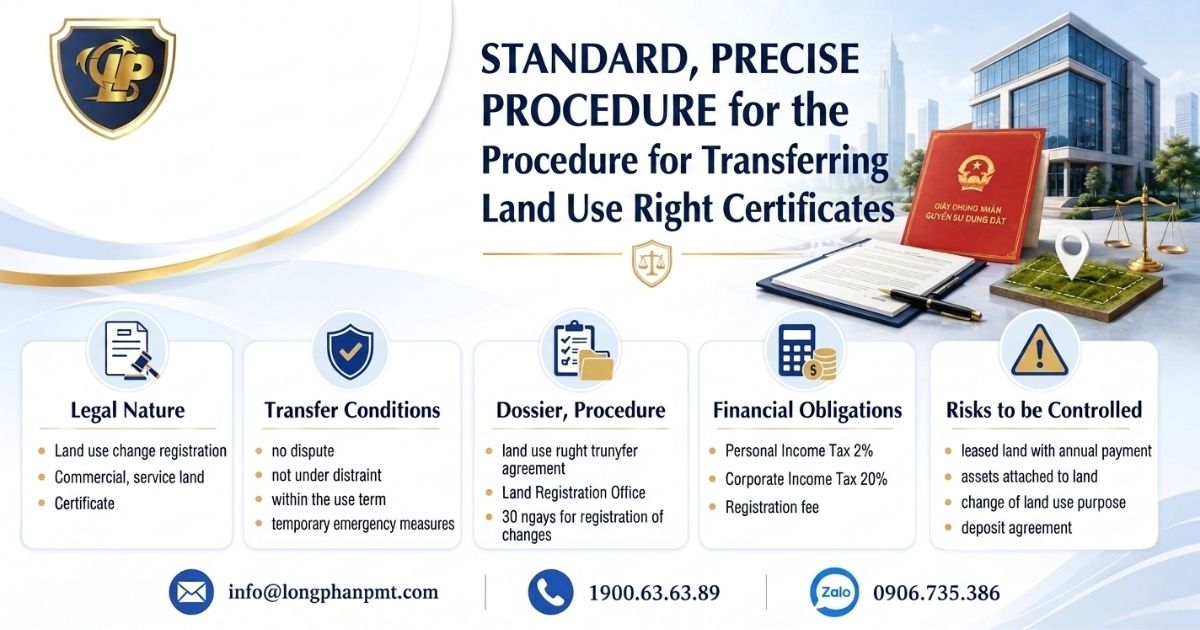
The property must not be subject to distraint for judgment enforcement or any temporary emergency measure.
Conditions for the Buyer:
Must not fall into the categories prohibited from receiving land transfers under Article 45.8 of the Land Law 2024, which include:
Economic organizations are not allowed to receive transfers of special-use forest land or protection forest land from individuals (unless the land use purpose is changed according to planning).
Individuals not residing in protection or special-use forest areas are not allowed to receive transfers or gifts of residential land or other land in these areas.
Organizations, individuals, communities, religious organizations, Overseas Vietnamese, and foreign-invested organizations if not permitted by law.
Ensuring all legal conditions for both buyer and seller are met is fundamental for a legally recognized transaction and for avoiding future risks.
For the Real Estate Property
To ensure legality and safety during the transaction, buyers must be aware of specific requirements corresponding to each type of property and its intended use.
For Existing Property (Formed, with Title Certificate):
Must have a valid Certificate of Land Use Rights, Ownership of Housing, and Other Land-Attached Assets (Red or Pink Book) in the name of the seller or their legal representative.
The land parcel and house must not be involved in any disputes, complaints, or lawsuits regarding use or ownership rights.
The property must not be subject to distraint for civil judgment enforcement, frozen, or under any preventive measures by a competent authority.
The sale must be documented in a written contract and notarized or certified as required by the Law on Notarization and the Civil Code.
The property must not be located in an area subject to a land recovery, clearance, or demolition decision by a competent state agency.
For Off-Plan Property (Future Formation):
Conditions related to disputes and land recovery do not apply in the same way to off-plan housing. However, if a dispute has been accepted and is being resolved by a competent authority, the transfer may be restricted to protect the legitimate rights and interests of all parties. Proof of eligibility for the transaction is governed by detailed government regulations.
Specific Conditions for Overseas Vietnamese Selling Real Estate
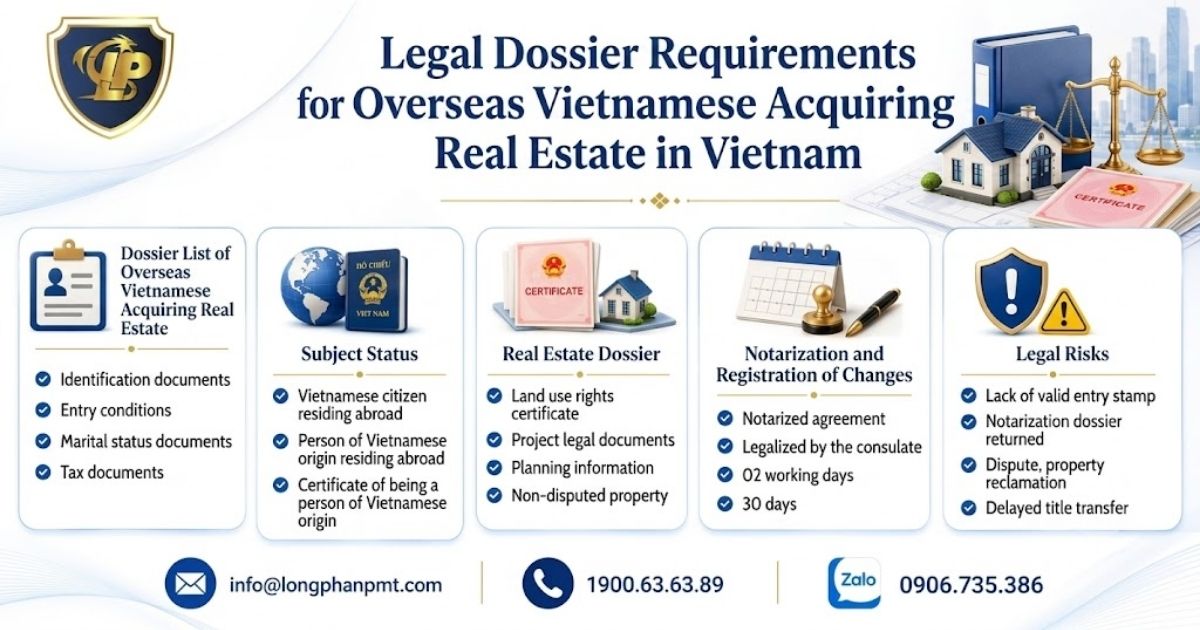
Overseas Vietnamese—whether they still hold Vietnamese citizenship or not—must meet distinct legal conditions when conducting an Overseas Vietnamese selling real estate transaction. A clear distinction between individuals of Vietnamese origin without citizenship and those who retain it is crucial for determining rights, obligations, and procedures.
For Individuals of Vietnamese Origin (Without Vietnamese Citizenship)
According to Decree 95/2024/ND-CP, individuals of Vietnamese origin who no longer hold Vietnamese citizenship must meet the following conditions to sell property in Vietnam:
Possess a valid foreign passport or an equivalent legal document.
Hold a Certificate of Vietnamese Origin issued by a competent Vietnamese authority.
Have a valid entry stamp into Vietnam at the time of signing the transfer contract.
Have full civil act capacity as per Vietnamese law.
Have legitimate financial resources to cover transaction-related activities (taxes, fees, ownership registration).
Under Article 44.1 of the Land Law 2024, eligible individuals of Vietnamese origin can own a house attached to residential land use rights within housing development projects where transfers are permitted.
For Individuals with Vietnamese Citizenship
For Overseas Vietnamese who still hold Vietnamese citizenship, the law provides more favorable conditions for Overseas Vietnamese selling real estate transactions:
Possess a valid Vietnamese passport with a legal entry stamp at the time of contract signing.
Have documents proving Vietnamese nationality, such as a citizen identity card, Vietnamese passport, or other legal papers.
Have full civil act capacity, being 18 years of age or older as per Vietnamese law.
Can prove legitimate financial sources for payment obligations and taxes/fees (via bank statements, personal income records, or asset ownership documents).
Vietnamese citizens are not limited in the number of houses they can own, can use land on a long-term stable basis, and can participate in transactions such as buying, selling, gifting, inheriting, or investing in housing development projects in Vietnam.
What conditions do overseas Vietnamese need to meet to sell real estate?
Guide to Overseas Vietnamese Selling Real Estate in Vietnam
The process for Overseas Vietnamese selling real estate must follow legal procedures to ensure the transaction’s legality and protect the rights of all parties. This process involves several steps.
Step 1. Verify Property Type and Legal Status: The first step is to identify the type of property being transferred (house, residential land, apartment, etc.) and verify its legal status.
Step 2. Prepare the Seller’s Personal Dossier: The Overseas Vietnamese seller must prepare a complete set of personal documents based on their citizenship status:
For those with Vietnamese citizenship: A valid Vietnamese passport, legal entry stamp, and proof of Vietnamese nationality (e.g., citizen ID card).
For those of Vietnamese origin without citizenship: A valid foreign passport, a Certificate of Vietnamese Origin, and a legal entry stamp into Vietnam at the time of the transaction.
Step 3. Place a Deposit: While not mandatory, making a deposit is highly recommended to secure commitment between the parties. Under Article 328 of the Civil Code 2015, a deposit serves as a security measure, typically 10–30% of the transaction value. The deposit agreement should be in writing and specify all terms.
Step 4. Sign and Notarize the Transfer Contract: Both parties will sign the real estate transfer contract at a competent notary office in the locality where the property is located. The seller must bring their personal identification, the property’s title certificate, and other documents as required by the notary.
Step 5. Fulfill Financial Obligations and Transfer Title: As the seller, the Overseas Vietnamese is responsible for financial obligations arising from the transaction, including:
Personal Income Tax: 2% of the transfer price stated in the contract.
Registration Fee: 0.5% (paid by the buyer). Timely payment of taxes is a prerequisite for completing the title transfer procedure for the buyer.
Step 6. Handover Property and Finalize Payment: After completing notarization and tax obligations, the parties proceed with the property handover and final payment as agreed in the contract. The handover should be documented in a clear record.
Consulting Services at Long Phan Consulting Company
The process of Overseas Vietnamese selling real estate is a complex legal procedure, not just a simple civil transaction. Many Overseas Vietnamese face difficulties due to a lack of understanding of ownership rights, required documents, and procedural steps.
To ensure transactions are conducted legally, transparently, and effectively, Long Phan Consulting Company offers a comprehensive consulting service package designed to protect the client’s legal interests. Our services include:
Advising on the legal conditions for an Overseas Vietnamese selling real estate.
Guiding the preparation of personal legal dossiers.
Reviewing the legal status of the real estate property.
Drafting and/or reviewing transfer contracts to protect the seller’s rights.
Advising on financial obligations.
Providing end-to-end support from preparation to handover and payment.
With a team of experienced legal professionals specializing in real estate, Long Phan Consulting Company is committed to providing reliable, accurate, and timely consulting services.
Consulting service on real estate buying and selling conditions for overseas Vietnamese at Long Phan Consulting
Frequently Asked Questions
Here are answers to common questions about the conditions for Overseas Vietnamese selling real estate.
Do Overseas Vietnamese need to return to Vietnam to sell property?
Yes, the Overseas Vietnamese must be present in Vietnam to sign the transfer contract at a notary office or legally authorize another person to act on their behalf.
How long does the selling process take for an Overseas Vietnamese?
The processing time varies depending on the completeness of the dossier and the complexity of the transaction, typically taking from a few weeks to several months.
Can I authorize a relative in Vietnam to sell property for me?
Yes, you can authorize a relative through a power of attorney that is legally notarized or certified, either abroad or in Vietnam.
Which agency issues the Certificate of Vietnamese Origin?
This certificate is issued by Vietnamese representative missions abroad (Embassies, Consulates) or by the Department of Justice in Vietnam.
How is personal income tax calculated on a property sale?
Personal income tax is 2% of the transfer price stated in the contract or the state-prescribed price, whichever is higher.
How can I verify if a property has an ongoing dispute?
This information can be checked at the local Land Registration Office or the Department of Natural Resources and Environment. A legal consultant can also assist with verification.
Is a Vietnamese bank account required to receive sales proceeds?
While a Vietnamese bank account is convenient, it is not mandatory. You can agree on other payment methods with the buyer.
Can I sell the property if the title certificate is lost?
If the title certificate is lost, you must first apply for a re-issuance of the Certificate before you can proceed with the sale.
Conclusion
The process of Overseas Vietnamese selling real estate demands a firm grasp of complex legal conditions and administrative procedures. Professional consultation is essential to ensure a smooth and lawful transaction. Long Phan Consulting Company is ready to assist Overseas Vietnamese in conducting real estate transactions safely and effectively. Contact our hotline at 1900.63.63.89 for a detailed consultation.
Facebook
Linkedin
Twitter
Pinterest
Luật sư Nguyễn Thu Hương
Lawyer Nguyen Thu Huong is a leading expert in the field of investment and licensing for foreigners. With extensive knowledge of investment laws and the complex regulations related to licensing procedures, she has successfully assisted numerous businesses and foreign investors in establishing their operations in Vietnam.