The procedure for Land Title Transfer for Overseas Vietnamese who hold Vietnamese citizenship to acquire real estate, exercising rights equivalent to domestic citizens. This analysis details the legal requirements, documentation, and procedures for property title transfer by overseas Vietnamese, grounded in the Land Law 2024.
Procedure for land title transfer for overseas Vietnamese
Eligibility for Land Title Transfer
To execute a land title transfer, individuals must meet specific legal conditions concerning the buyer, the seller, and the property’s legal status, as stipulated by the Land Law 2024 and associated regulations.
For Overseas Vietnamese (with Vietnamese citizenship):
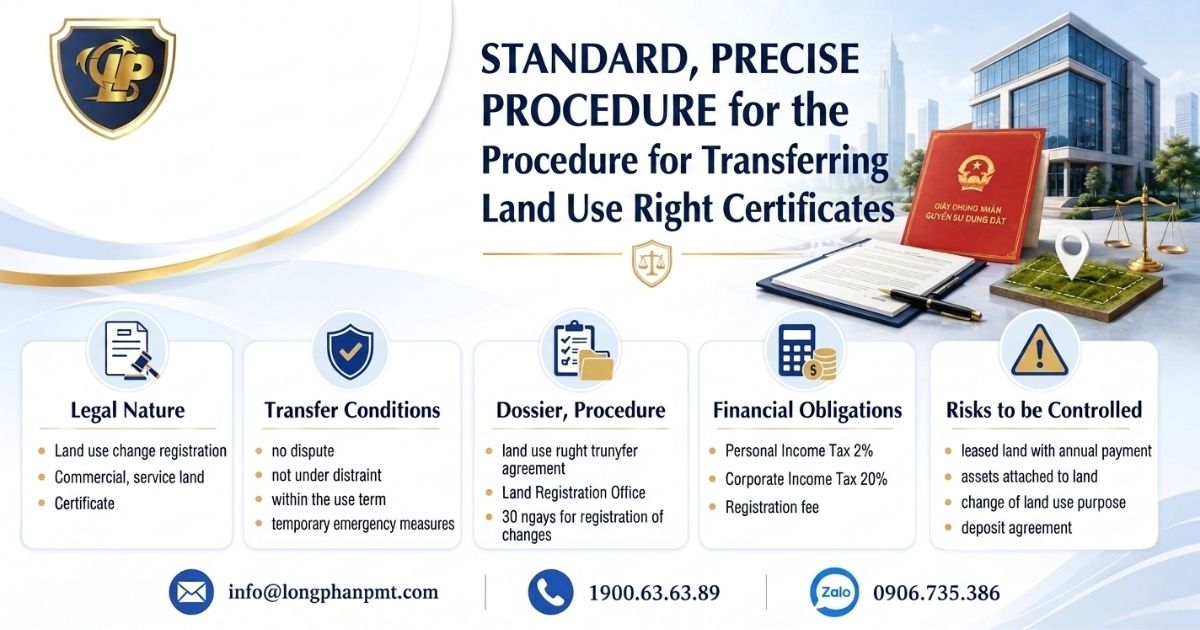
Under Article 4, Clause 3 of the Land Law 2024, Vietnamese citizens residing abroad have the same land-related rights and obligations as domestic citizens. These rights include receiving transfers, leases, subleases, inheritances, gifts, mortgages, and capital contributions using land use rights. The transfer conditions, as per Article 45, Clause 1 of the Land Law 2024, are:
The transferor must possess a valid Certificate of Land Use Rights.
The land must be free from disputes.
The land use rights must not be subject to seizure or measures for judgment enforcement.
The land use term must be valid.
The land is not subject to any temporary emergency measures.
Any existing dispute must be resolved by a competent authority with a legally effective judgment or decision.
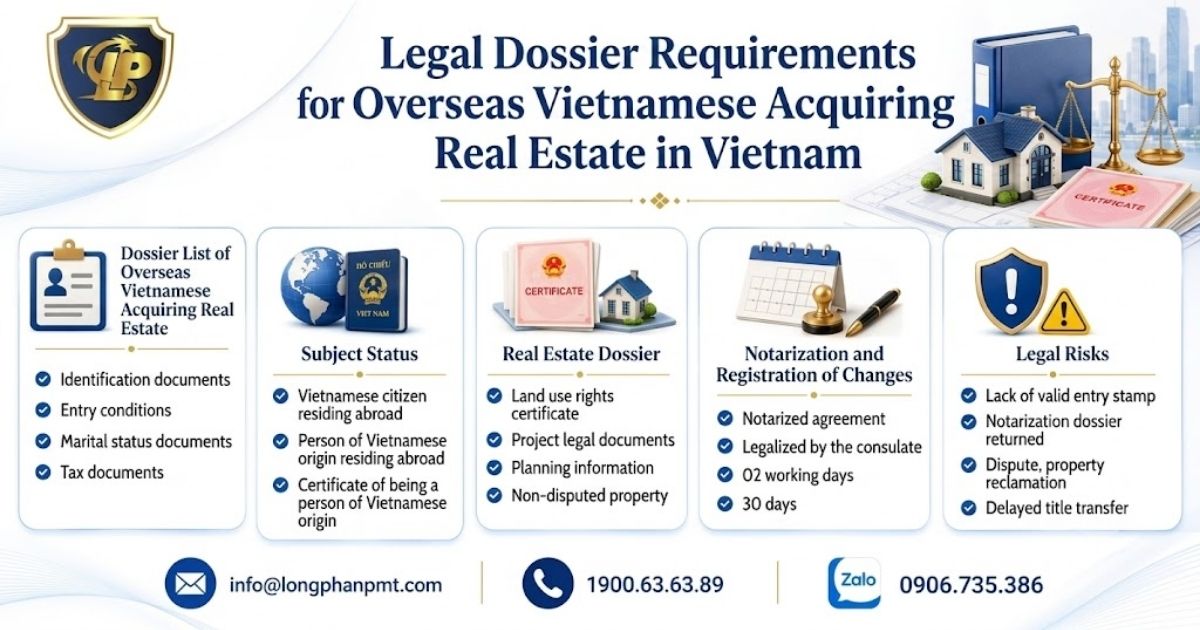
Additionally, under governing decrees, overseas Vietnamese with Vietnamese citizenship must provide proof of eligibility for property ownership in Vietnam:
A valid Vietnamese Citizen Identity Card or other documents proving Vietnamese nationality.
A valid Vietnamese passport with an entry stamp into Vietnam at the time of property acquisition.
For Individuals of Vietnamese Origin (without Vietnamese citizenship):
Under Article 44, Clause 1 of the Land Law 2024, individuals of Vietnamese origin who are permitted to enter Vietnam may own housing associated with land use rights and acquire land use rights through transactions within housing development projects. The conditions include:
Permitted entry into Vietnam.
Compliance with the general conditions in Article 45, Clause 1 of the Land Law 2024.
Transactions are restricted to residential land within commercial housing development projects.
Required documentation includes a foreign passport (or a valid international travel document) and a certificate of Vietnamese origin. An entry stamp from Vietnamese immigration is also required at the time of signing the housing transaction.
Required Dossier for Title Transfer for Overseas Vietnamese
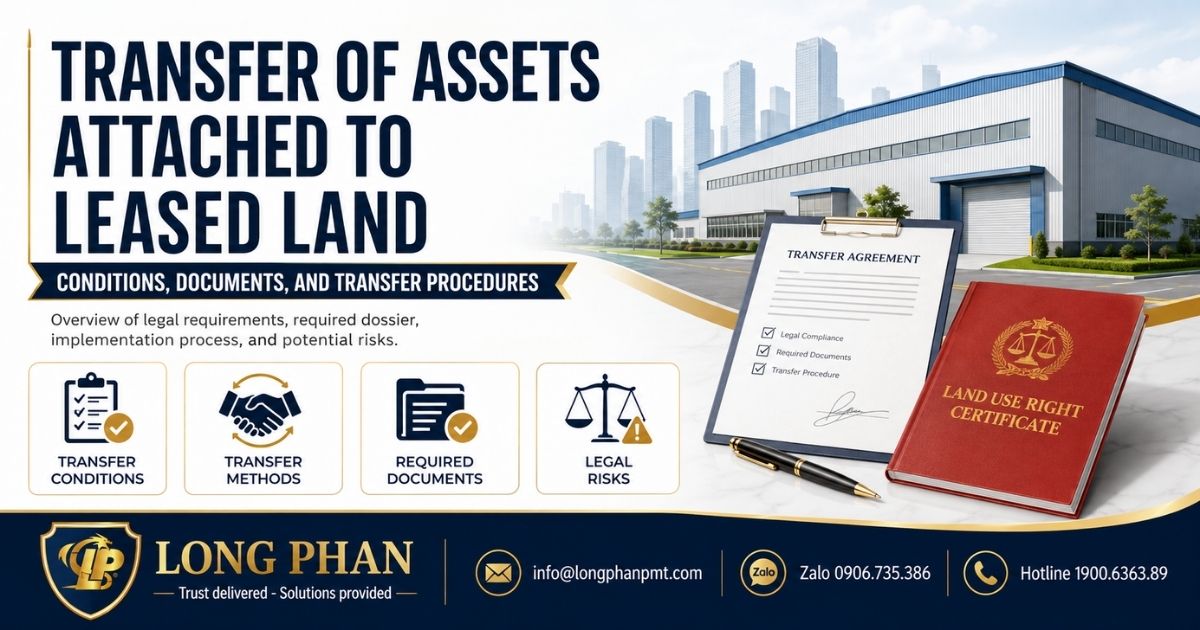
A complete and accurate dossier is critical for the land title transfer procedure. Based on current regulations guiding the Land Law, the required documents include:
Proof of Status: Documents verifying the identity and eligibility of the overseas Vietnamese buyer as specified by law.
Application Form: A completed application for registration of changes in land and attached assets (Standard Form No. 11/DK).
Transfer Contract: The notarized or certified contract for the transfer of land use rights.
Land Use Certificate: The original Certificate of Land Use Rights (Red/Pink Book) from the seller.
Tax Declarations:
The seller’s Personal Income Tax declaration (Form No. 03/BDS-TNCN), if applicable.
The buyer’s Registration Fee declaration (Form No. 01/LPTB).
Tax Exemption Documents: Any documents supporting eligibility for tax or fee exemptions.
Power of Attorney: A notarized/certified power of attorney if an authorized representative in Vietnam is used.
Real estate transfer documents for overseas Vietnamese to buy real estate
Procedure for Land Title Transfer for Overseas Vietnamese
The title transfer process for overseas Vietnamese acquiring property in Vietnam follows a structured legal sequence as outlined in the guiding regulations of the Land Law 2024.
Contract Execution: The overseas Vietnamese individual either directly signs or authorizes a representative in Vietnam to sign the land use right transfer contract at a competent notary office.
Dossier Submission: The complete dossier is submitted to the relevant Land Registration Office or the “One-Stop Shop” department of the provincial-level People’s Committee to register the land change.
Dossier Verification: The receiving officer verifies the dossier’s completeness and validity, issuing a receipt. If the dossier is incomplete or invalid, the applicant will be requested to supplement it within a specified period.
Field Inspection: The registration authority may conduct a field inspection of the property to verify the information in the dossier.
Issuance of Certificate: Upon successful appraisal, the competent authority approves the transfer and issues a new Certificate of Land Use Rights to the overseas Vietnamese owner or provides a justified refusal.
Note: For authorizations made from abroad, the Power of Attorney requires certification by a Vietnamese diplomatic mission or consular legalization to be legally valid in Vietnam.
Steps to transfer ownership when overseas Vietnamese buy property
Key Considerations for Title Transfer for Overseas Vietnamese
Overseas Vietnamese must observe several critical points to ensure a valid and risk-free property transaction.
Document Validity:
Passports must be valid and contain a legal entry stamp.
Proof of Vietnamese origin or citizenship must be issued by a competent authority.
Contractual Integrity:
The transfer contract must be notarized within the correct jurisdiction.
The contract must accurately detail all parties, property information, and transaction terms.
The transaction value in the contract should align with market rates to mitigate legal risks.
Financial Obligations:
Personal income tax and registration fees must be fulfilled according to tax regulations.
Physical Presence:
The timing of the overseas Vietnamese individual’s presence in Vietnam must correspond with the transaction date.
The passport’s entry stamp serves as evidence of legal entry at the time of contract signing.
Due Diligence:
Conduct thorough due diligence on the property’s legal status by examining the seller’s Certificate and verifying details such as area, location, and land use purpose.
Confirm the property is not subject to disputes, seizure, or mortgage.
What is the primary difference in land ownership rights between an overseas Vietnamese with citizenship and a person of Vietnamese origin?
An overseas Vietnamese person who retains Vietnamese citizenship enjoys property rights (transfer, inheritance, lease, mortgage) equivalent to a domestic citizen. In contrast, a person of Vietnamese origin (who has renounced Vietnamese citizenship) is generally limited to owning housing associated with residential land acquired through purchase or lease-purchase in commercial housing development projects. (See Land Law 2024, Art. 4, Art. 44).
What is the standard timeframe for completing the title transfer process?
The standard processing time ranges from 15 to 30 working days, from the submission of a valid dossier to the issuance of the updated Certificate of Land Use Rights.
Can an authorized representative in Vietnam handle the entire transaction?
Yes, a legally authorized representative can perform most steps, including signing contracts, submitting dossiers, and fulfilling financial obligations. However, the Power of Attorney must be certified by a Vietnamese diplomatic mission abroad or undergo consular legalization to be valid.
What are the owner’s property exploitation rights after a successful title transfer?
The owner has full rights of disposition over the property. This includes the right to sell, lease, bequeath as inheritance, or use as collateral for bank loans in Vietnam, subject to applicable laws. (See Land Law 2024, Art. 26, 31, 44).
What are common reasons for the rejection of a title transfer application?
Frequent reasons include expired personal documents (passport, identity card); improperly authenticated or legalized Power of Attorney; inconsistencies between the contract and official documents; or the property being involved in an ongoing dispute or under seizure.
Conclusion
The procedure for land title transfer for overseas Vietnamese buying property is well-defined. A comprehensive understanding of the legal framework and meticulous preparation of the dossier are essential for a successful transaction. For expert assistance with these procedures, contact the specialists at Long Phan Consulting Company via 1900.63.63.89 to ensure a professional and efficient process.
Facebook
Linkedin
Twitter
Pinterest
Luật sư Nguyễn Thu Hương
Lawyer Nguyen Thu Huong is a leading expert in the field of investment and licensing for foreigners. With extensive knowledge of investment laws and the complex regulations related to licensing procedures, she has successfully assisted numerous businesses and foreign investors in establishing their operations in Vietnam.