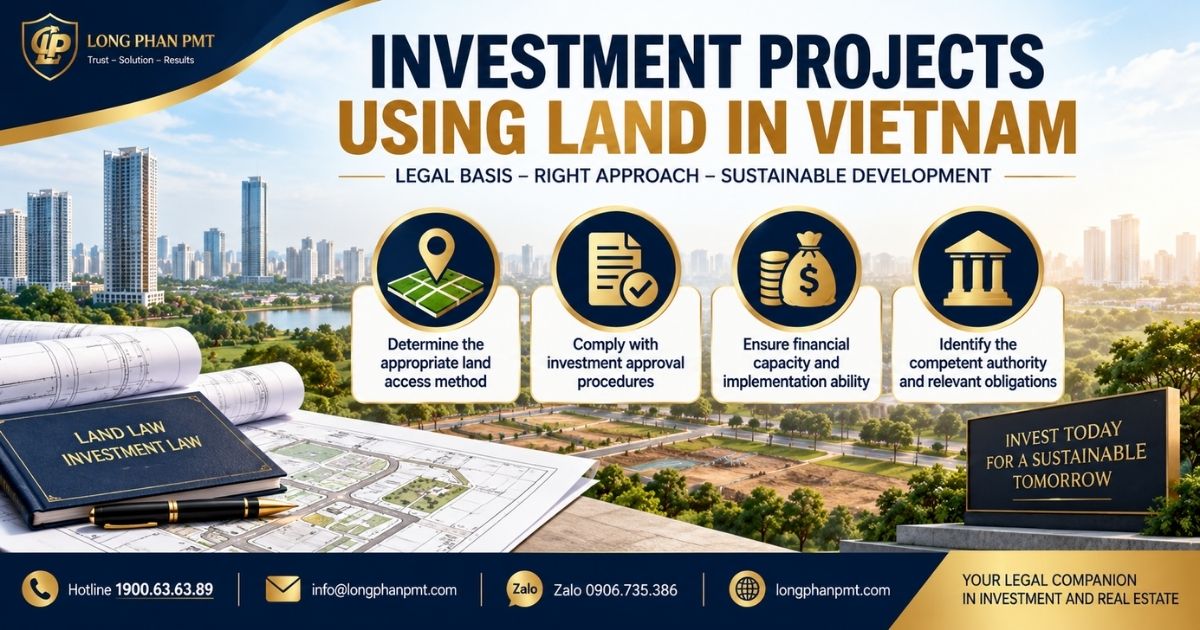

Investing in project land, which refers to plots within a state-approved investment project, requires strict adherence to legal conditions. These transactions demand that investors understand legal regulations and have practical experience to ensure safety and efficiency. This article analyzes the necessary regulations and experience for investing in project land.

Project land, also known as land in a development project, consists of land plots within an investment initiative approved by a competent state authority. These projects typically involve developing synchronous technical infrastructure before transferring land use rights to individuals for self-built housing. For a project land plot to be eligible for business transactions, both the land and the developer must meet strict legal requirements.
The transfer of land use rights with existing technical infrastructure in a real estate project for individuals to build their own houses must comply with specific conditions. This forms the legal basis to protect investor rights and ensure urban development aligns with approved plans.
According to Articles 31 and 32 of the Law on Real Estate Business 2023, the core conditions for project land to be put up for sale include:
Failure to meet these conditions can render a transaction void and cause damages to all involved parties.

Investing in project land demands specialized knowledge and practical experience to maximize returns and mitigate risks. The market offers attractive profit opportunities but also contains investment traps. Mastering the following experiences will help you make informed investment decisions and protect your assets.
Your investment objective is the foundation for your selection strategy. You must clearly define the purpose of the capital: short-term investment (flipping), long-term appreciation, or building a home. Each goal corresponds to different product criteria and risk appetites.
Location is the intrinsic factor that determines the value and growth potential of project land. A good location must ensure convenient transport links to economic and administrative centers and neighboring areas.
Legal status is a vital factor that determines the safety of a project land transaction. Before making any financial commitment, you must request the developer to provide a complete legal dossier and verify it yourself. This due diligence confirms the project is real, licensed, and eligible for sale.
The core legal dossier for a land plot project includes:
The absence of any of these documents is a legal red flag. It is also critical to check the developer’s financial status. The developer must have fulfilled all financial duties concerning the land, including land use fees, rent, and related taxes.
The developer’s capacity and reputation guarantee the project’s progress, quality, and legal status. A financially strong and experienced developer is more likely to deliver on commitments and complete legal procedures for buyers.
Be cautious of projects with unusually low prices, as this may signal financial distress or legal problems with the project land.
Accurately valuing project land is a crucial skill. The most common method is to compare it with similar plots in the same area regarding size, location, and transaction time. Collect price information from multiple sources: real estate websites, local brokerage offices, and direct inquiries with residents.
Liquidity, the ability to convert the land into cash, is another important factor. It depends on:
The payment schedule should align with your financial capacity and the project’s progress. Negotiate a reasonable schedule that protects your interests. Typically, payments are divided into installments tied to specific project completion milestones.
Be wary of contracts requiring a large upfront payment (e.g., over 50%) when the infrastructure is incomplete or the legal status is not yet finalized. This creates a risk of capital appropriation by the developer. The initial payment is usually a deposit and contract signing fee, around 20-30% of the value. Subsequent payments should be linked to infrastructure completion and the handover of the title.
The final stage is receiving the land and completing the title transfer to establish legal ownership. At the physical handover, compare the plot’s location, area, and boundary markers with the 1/500 plan and the signed contract.
Legally, the developer must support the buyer in completing the land registration procedures. The necessary documents for registering the change in ownership (title transfer) at the Land Registration Office include:
The project land market has risks. Be cautious of products with unusual signs.

Investing in project land offers high profit potential but involves complex legal risks. To ensure asset safety and optimize investment efficiency, professional consulting is a strategic decision. At Long Phan Consulting Company, our team of experienced lawyers and real estate experts provides a comprehensive service package.
Our services include:
These are different legal documents. A Deposit Contract secures a future official agreement. A Capital Contribution Contract is often used when a project is not yet eligible for sale, carrying risks if the developer misuses the funds. Only a notarized Land Use Right Transfer Contract, signed when the project is legally qualified, has the highest value in establishing the buyer’s ownership.
The buyer is responsible for the Registration Fee (0.5% of the transfer value) and other administrative fees. The seller is typically responsible for Personal Income Tax (2% of the transfer value), although parties can negotiate this in the contract.
This depends on the project’s approval decision and the terms of the transfer contract. Many projects have construction deadlines to ensure aesthetic uniformity. If the contract includes a binding construction timeline, you must comply to avoid penalties from the developer.
A complete technical infrastructure system typically includes an internal road system (roads, sidewalks), water supply and drainage systems, electricity supply, communication systems (fiber optic cables), and green spaces or parks as detailed in the approved 1/500 plan.
Submit a formal request for planning information directly to the Department of Urban Management or the Department of Economy and Infrastructure at the district-level People’s Committee where the project is located. The written response from this agency is the most accurate and legally valid source of information.
Generally, banks only provide mortgage loans when the individual plot has its own Land Use Right Certificate. Financing is more difficult before individual titles are issued. However, some banks partner with reputable developers to offer “tripartite” loan packages based on the developer’s guarantee.
The core difference is in planning and infrastructure. Project land is planned with synchronous infrastructure and clear regulations on setbacks and construction density. Individual residential land is often in existing residential areas where infrastructure may not be uniform. The legality of project land is more complex initially but becomes more transparent once it is eligible for sale.
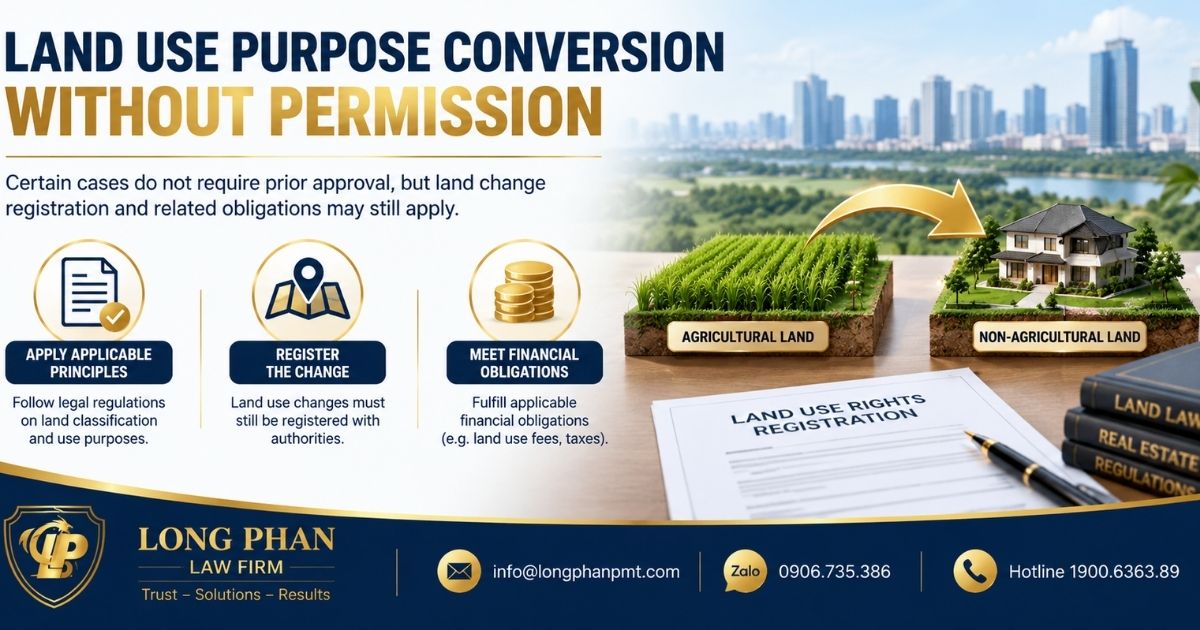
This is not possible if the land use purpose on the Certificate is “residential land.” Construction must comply with the approved use purpose in the 1/500 plan. Changing the land use purpose requires a complex application process with no guarantee of approval.
Investing in project land is a promising channel that requires caution and solid legal knowledge. Thorough due diligence of the project’s legal status, the developer’s capacity, and the contract terms are essential steps to protect your assets. These transactions involve complexities that may be beyond the understanding of non-professional investors. For legal safety and optimized investment returns, please contact Long Phan Consulting Company for professional support via hotline 1900.63.63.89.