The procedure for selling real estate for Overseas Vietnamese requires strict compliance with current legal regulations to ensure the transaction’s legality. Overseas Vietnamese with Vietnamese citizenship and individuals of Vietnamese origin without citizenship both have the right to sell real estate but must meet different conditions. This article provides a detailed guide to the process, procedures, and financial obligations involved in selling property in Vietnam.
Procedure for selling real estate for Overseas Vietnamese
Conditions for Selling Real Estate in Vietnam
Overseas Vietnamese (Việt Kiều) must meet specific legal conditions when undergoing the procedure for selling real estate for Overseas Vietnamese, depending on their citizenship status. This classification determines their transfer rights and required documentation.
For Individuals of Vietnamese Origin (Without Vietnamese Citizenship)
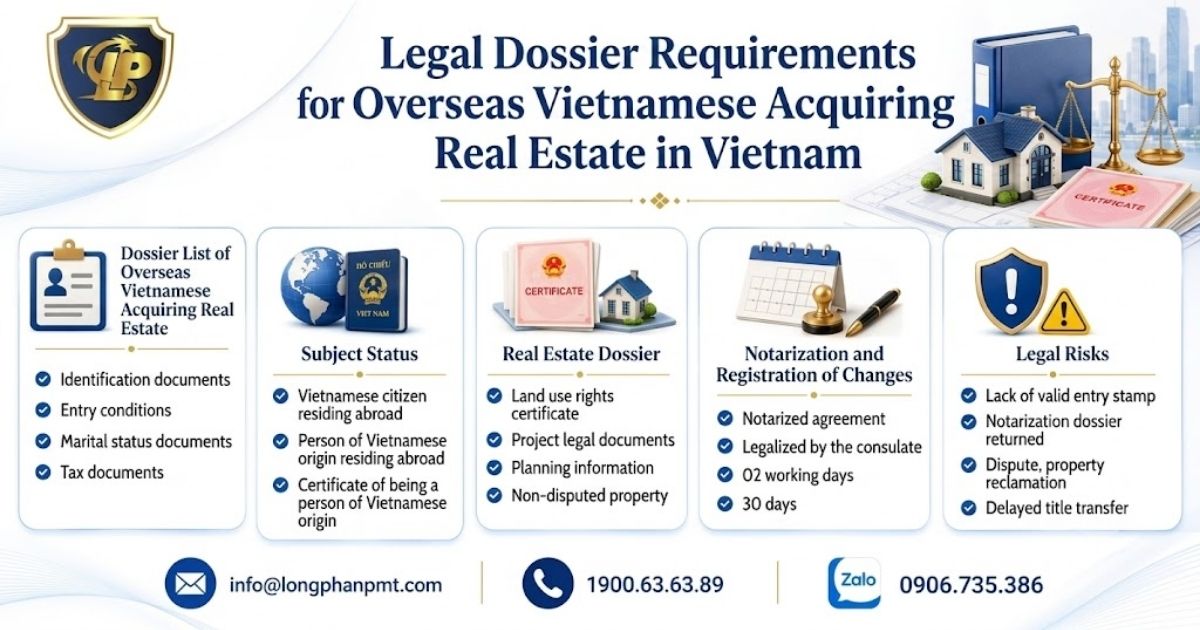
According to Decree 95/2024/ND-CP, individuals of Vietnamese origin residing abroad without Vietnamese citizenship can only sell real estate if they meet these conditions:
Possess a valid foreign passport or equivalent legal document.
Hold a Certificate of Vietnamese Origin issued by a competent Vietnamese authority.
Have a valid entry stamp into Vietnam at the time of signing the transfer contract.
Have full civil act capacity under Vietnamese law.
Can prove legitimate financial sources.
Additionally, under Article 44 of the Land Law 2024, eligible individuals of Vietnamese origin can only own and subsequently sell housing attached to land use rights within commercial housing development projects where transfers are permitted.
For Overseas Vietnamese with Vietnamese Citizenship
The law provides more favorable conditions for Overseas Vietnamese who retain their citizenship. The specific requirements include:
A valid Vietnamese passport with a legal entry stamp at the time of the transaction.
Documents proving Vietnamese nationality, such as a citizen identity card or passport.
Full civil act capacity under Vietnamese law.
Proof of legitimate financial resources to fulfill financial obligations (taxes, fees).
Vietnamese citizens are not limited in the number of homes they can own. The procedure for selling real estate for Overseas Vietnamese in this category, including tax declaration and notarization, is the same as for domestic citizens.
Procedure for Selling Real Estate in Vietnam
The procedure for selling real estate for Overseas Vietnamese is a legal process requiring meticulous preparation of documents and adherence to regulations.
Required Dossier
Dossier for the Property Being Sold:
Certificate of Land Use Rights, Ownership of Housing, and Other Land-Attached Assets (Red/Pink Book): The person named on the certificate must be the seller or their legal authorized representative. The property must be free of disputes, liens, or seizure orders.
Plot Diagram/Cadastral Map Extract: To clearly define the property’s location, boundaries, and area.
Receipts for Taxes and Fees: Proof of fulfilled financial obligations, such as land tax.
Construction Permit and Completion Certificate: For newly built individual houses, proving the construction is legal.
Personal Dossier of the Seller:
The required personal documents vary based on citizenship status:
For Overseas Vietnamese with Vietnamese citizenship:
A valid Vietnamese passport.
A valid Citizen Identity Card or ID Card.
A legal entry stamp in the passport valid at the time of the transaction.
For individuals of Vietnamese origin without Vietnamese citizenship:
A valid foreign passport.
A Certificate of Vietnamese Origin issued by a competent Vietnamese authority.
A legal entry stamp into Vietnam valid at the time of contract signing.
Implementation Process
The procedure for selling real estate for Overseas Vietnamese follows sequential steps to ensure legality and transparency.
Step 1: Deposit – Recommended but Not Mandatory While optional, a deposit secures the commitment between buyer and seller. According to Article 328 of the Civil Code 2015, a deposit acts as a security measure, typically 10–30% of the transaction value. A written, notarized deposit agreement is recommended.
Step 2: Notarize/Certify the Transfer Contract Notarization is a mandatory step. The transfer contract must be in writing and notarized at a competent notary office in the locality of the property. If the Overseas Vietnamese cannot be present, they can authorize a representative through a legally executed power of attorney, which must be notarized abroad, undergo consular legalization, and then be certified in Vietnam.
The contract must accurately state:
Property details (area, address, legal status).
Transfer price and payment method.
Handover schedule.
Responsibilities for taxes and fees.
Commitments regarding disputes and encumbrances.
Step 3: Handover the Property and Register the Title Transfer This is the final step in the procedure for selling real estate for Overseas Vietnamese, completing the physical and legal transfer.
Property Handover: The handover must be documented in a detailed record noting the property’s condition, included assets, and confirmation signatures from both parties.
Title Transfer Registration: After notarization and handover, the buyer submits a dossier to the local Land Registration Office to register the change in ownership. The dossier includes the notarized contract, original title certificate, personal identification, and tax receipts. The process typically takes 15-20 working days.
Step 4: Fulfill Financial Obligations Completing financial obligations is mandatory for the title transfer to be approved by state agencies.
Documents and procedures for selling real estate of overseas Vietnamese
Key Considerations
Verify Buyer Information and Property’s Legal Status: Proactively verify the buyer’s financial capacity. Concurrently, check the property’s legal status at the Land Registration Office to confirm authenticity and ensure it is free from liens, disputes, or zoning restrictions.
Agree Clearly on Payment and Handover Methods: Prioritize payment via bank transfer for legal proof. If using a representative, require the buyer to transfer funds directly to the seller’s account. Structure payments in installments linked to procedural milestones (deposit, contract signing, title transfer).
Calculate and Allocate Taxes and Fees Reasonably:
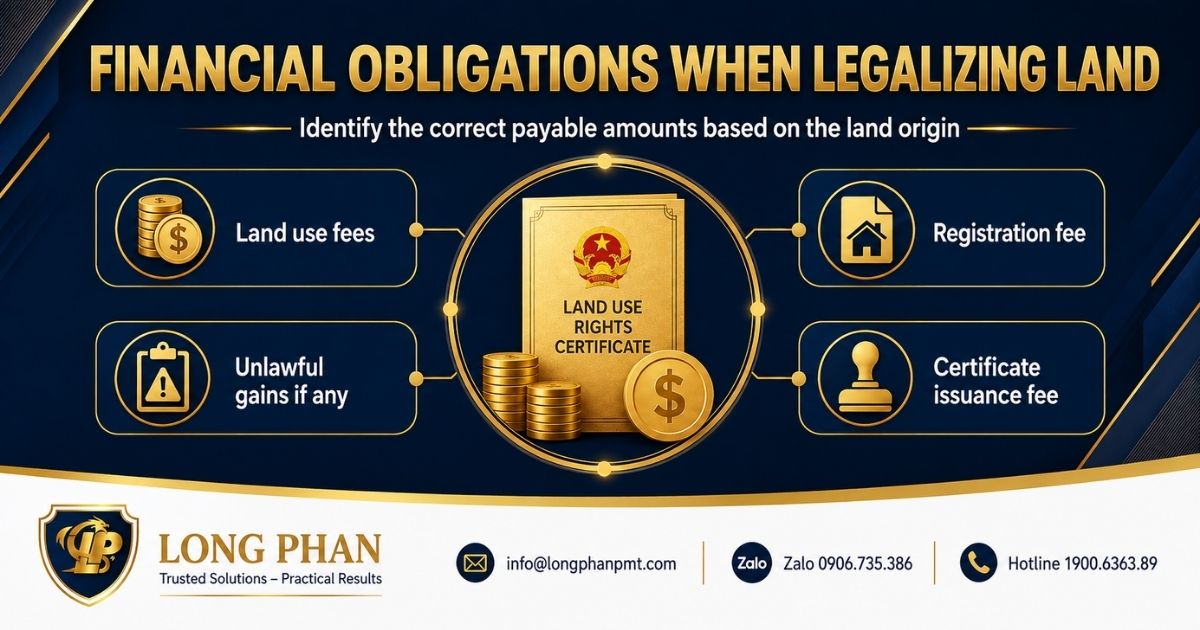
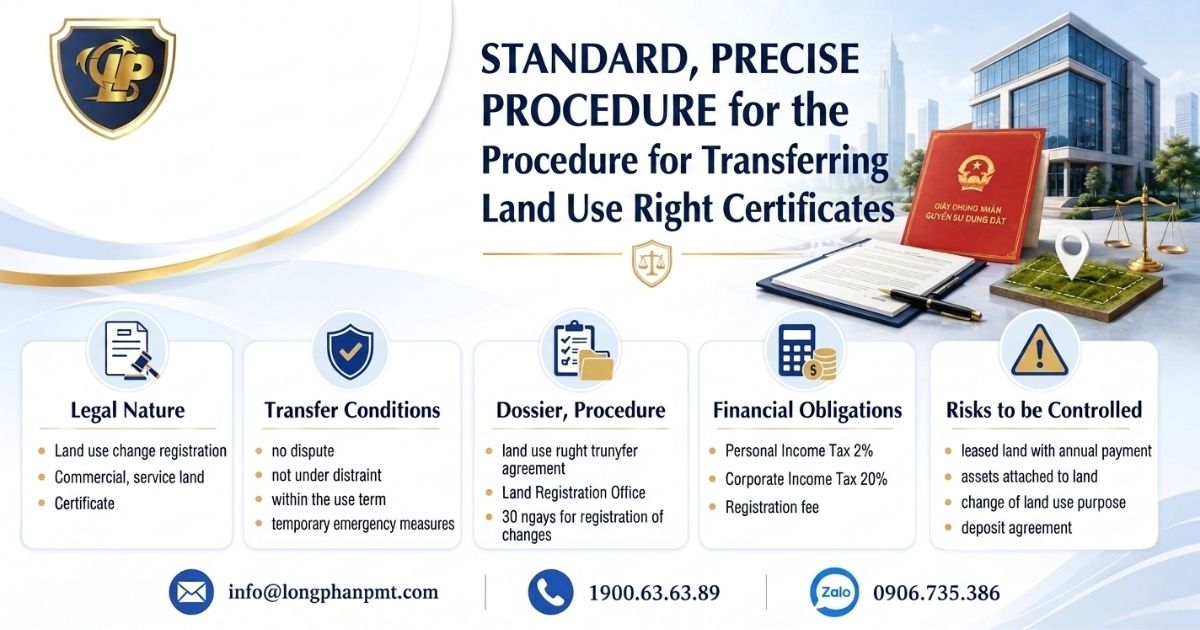
Personal Income Tax (Seller): The seller pays 2% of the transfer price. If the contract price is lower than the provincial government’s price list, the tax will be based on the government’s price.
Registration Fee (Buyer): The buyer pays 0.5% of the property value to register the new title.
Notary Fee: Calculated based on the property value according to a set schedule.
Brokerage Fee (If Applicable): Typically 1-2% of the property value, as agreed between parties.
Agreement on Financial Obligations: To avoid disputes, the contract should clearly state which party is responsible for each tax and fee.
Notes when overseas Vietnamese sell real estate in Vietnam
Consulting Services at Long Phan Consulting Company
The procedure for selling real estate for Overseas Vietnamese involves complex legal requirements. Long Phan Consulting Company offers comprehensive consulting services to help Overseas Vietnamese navigate this process smoothly and legally.
Our services include:
Advising on legal conditions for selling property.
Guiding the preparation of personal and property dossiers.
Drafting and/or reviewing transfer contracts.
Advising on executing a legal power of attorney from abroad.
Representing clients in dealings with notaries, tax offices, and land registration offices.
Providing end-to-end support from preparation to final payment.
With an experienced team of legal experts, Long Phan Consulting Company provides reliable, accurate, and timely services to ensure your real estate transaction in Vietnam is secure and efficient.
Frequently Asked Questions
Can an Overseas Vietnamese without Vietnamese citizenship sell property in Vietnam?
Yes, if they meet specific conditions regarding documentation, legal entry, and if the property is within a permitted commercial housing development project under the Land Law 2024.
If I cannot return to Vietnam, how can I sell my property?
You can authorize a representative (relative, lawyer) through a power of attorney. This document must be notarized abroad, undergo consular legalization, and then be certified in Vietnam.
Is it mandatory to notarize a deposit contract?
No, but it is highly recommended to enhance its legal validity and protect the parties’ interests.
Who pays the registration fee, and how much is it?
The buyer typically pays the registration fee, which is 0.5% of the property’s value. This is required for the title transfer.
How long does the title transfer process take?
The title transfer (change of ownership registration) usually takes 15 to 20 working days, depending on the locality and the dossier’s completeness.
Conclusion
The procedure for selling real estate for Overseas Vietnamese is a complex process requiring a clear understanding of current regulations. To ensure a transparent, lawful, and risk-free transaction, professional support is highly recommended. Long Phan Consulting Company is committed to assisting Overseas Vietnamese with all aspects of real estate transfers, providing peace of mind and maximum efficiency. Please contact our hotline at 1900.63.63.89 for detailed support.
Facebook
Linkedin
Twitter
Pinterest
Luật sư Nguyễn Thu Hương
Lawyer Nguyen Thu Huong is a leading expert in the field of investment and licensing for foreigners. With extensive knowledge of investment laws and the complex regulations related to licensing procedures, she has successfully assisted numerous businesses and foreign investors in establishing their operations in Vietnam.