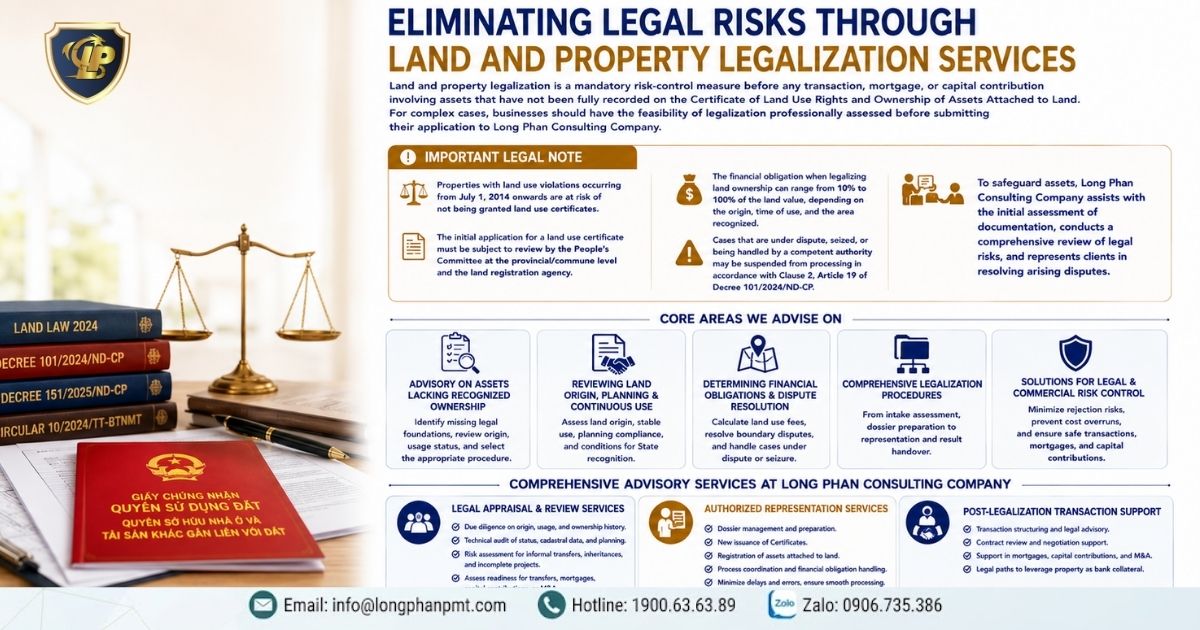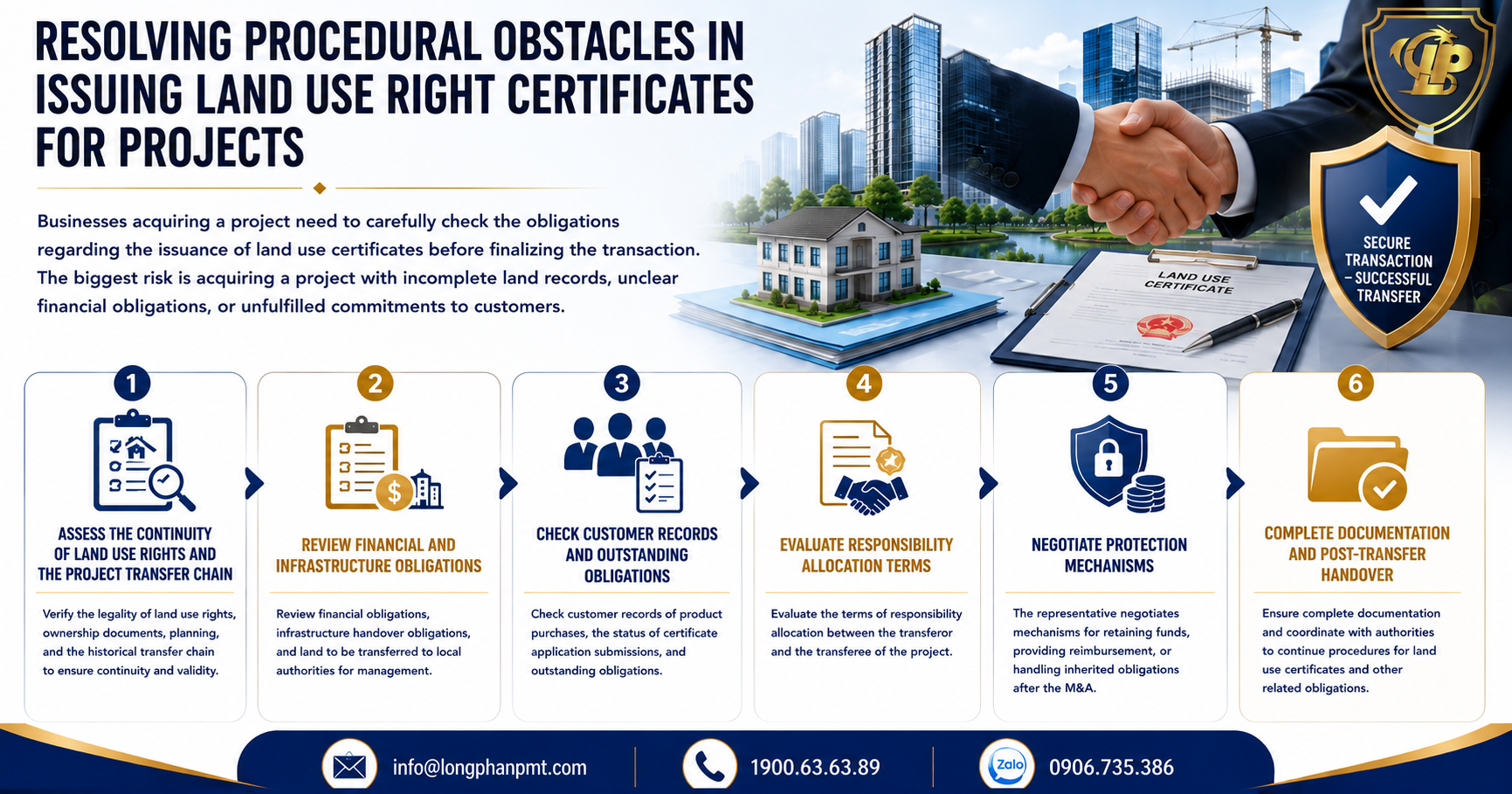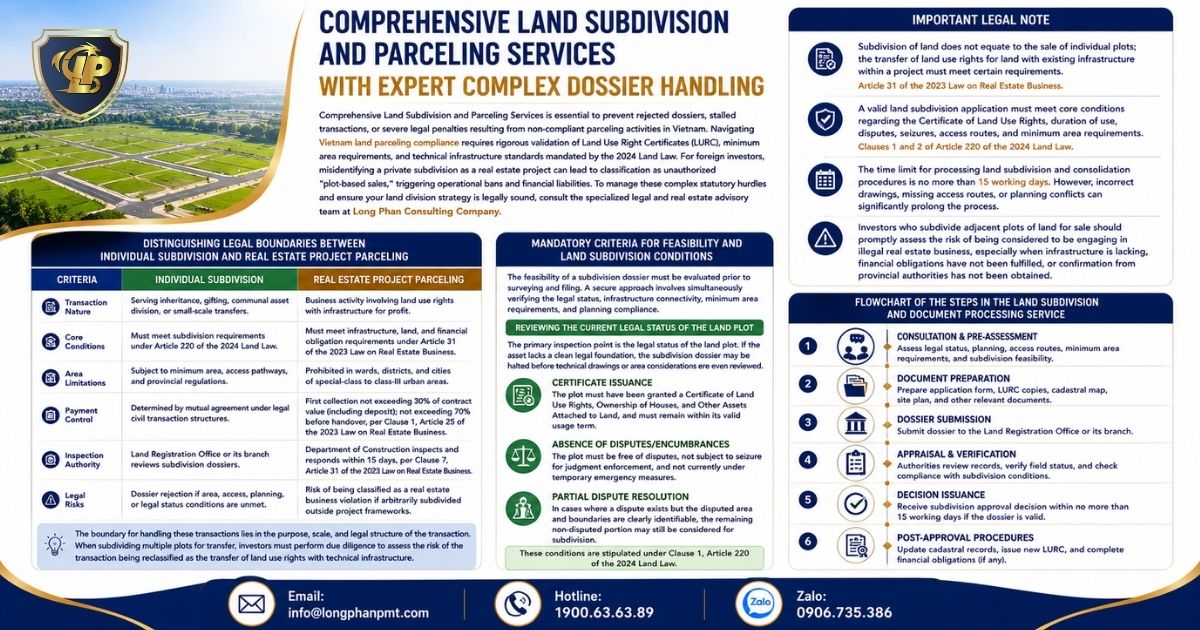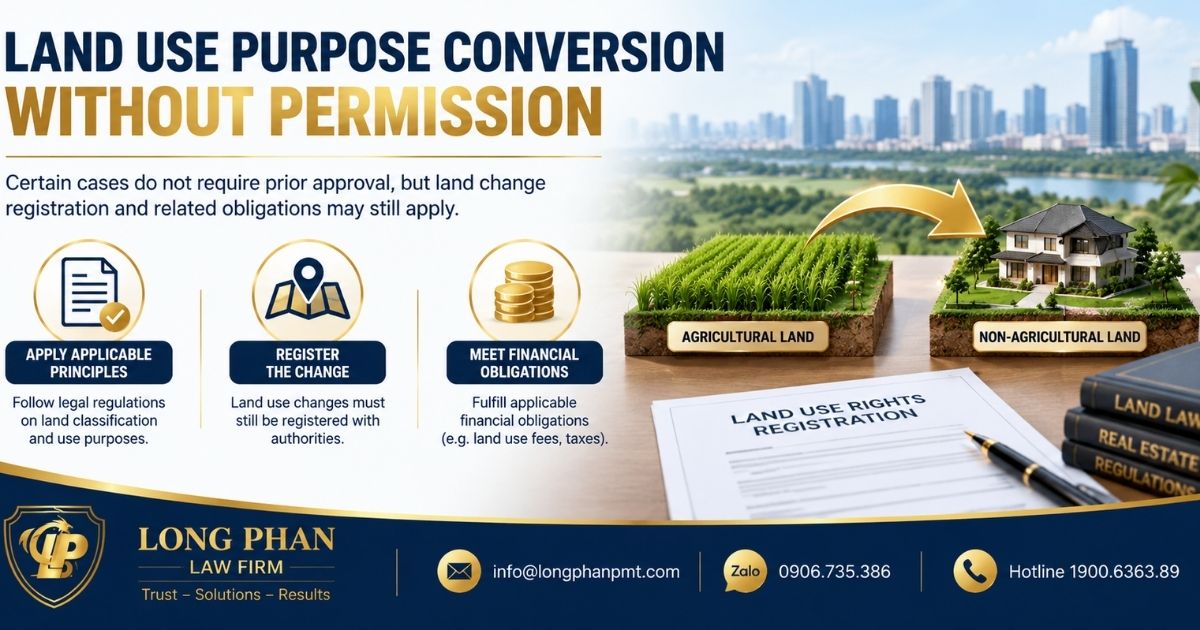

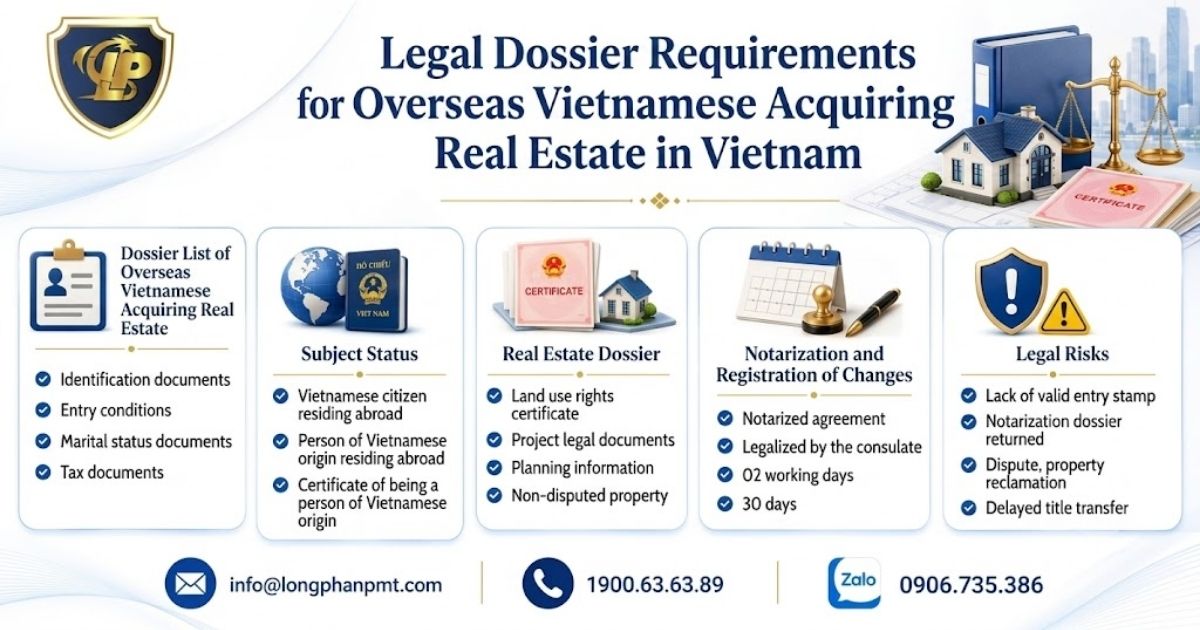
Dossier Requirements for Overseas Vietnamese Acquiring Real Estate must be reviewed with complete evidence of nationality, Vietnamese origin, lawful entry, ownership records, marital status documents, and tax filings to prevent rejected transactions, delayed registration, and financial exposure. Overseas Vietnamese and persons of Vietnamese origin residing abroad should confirm both purchaser eligibility and permitted property categories before executing purchase agreements or submitting title transfer documents. Under the Law On Land, a well-prepared dossier from the outset strengthens compliance for Overseas Vietnamese property acquisition and reduces risks during notarization, tax declaration, and land registration. Proper transaction structuring helps secure ownership transfer with professional support from Long Phan Consulting.
Important legal note:
Properly classifying Overseas Vietnamese categories directly dictates transaction scope, title holding rights, and land mutation clearance. Misidentifying legal standing risks notary rejection or permanent disqualification from updating the Certificate of Land Use Rights, Ownership of Land and Other Assets Attached to Land (LUC).
Enterprise leaders, real estate developers, and corporate legal departments must audit client eligibility before accepting deposits to prevent misallocating non-qualifying property assets.
| Subject Group | Identification Criteria | Legal Scope & Entitlements | Key Risk Controls |
| Vietnamese Citizens Residing Abroad | Retains Vietnamese nationality under Clause 3, Article 3 of the 2008 Law on Vietnamese Nationality | Maintains equal standing with domestic individuals regarding real estate transactions and business operations | Lacking nationality proof, valid Vietnamese passport, or lawful entry verification stamps |
| People of Vietnamese Origin Residing Abroad | Formerly held Vietnamese nationality or direct descendant (child/grandchild) residing long-term abroad | Entitled to own residential housing attached to land use rights, subject to lawful entry clearance | Presuming full entitlement to acquire all land categories identical to domestic citizens |
This classification requires priority identification due to its broader transactional scope. In legal essence, these individuals are Overseas Vietnamese who strictly retain their Vietnamese nationality pursuant to Clause 3, Article 3 of the 2008 Law on Vietnamese Nationality.
Regarding commercial real estate activities, Vietnamese citizens residing abroad possess full rights to conduct real estate business equivalent to domestic individuals. This statutory right is explicitly recognized under Clause 2, Article 10 of the 2023 Law on Real Estate Business.
From a dossier control perspective, verifying Vietnamese nationality and lawful entry conditions remains paramount. Project developers, brokers, and legal teams must demand a valid Vietnamese passport before initiating product consultations or executing earnest money deposit agreements. A secure operational practice involves classifying this category during initial client due diligence. Clear nationality documentation establishes a complete legal basis for evaluating transfer entitlements, ownership rights, and post-notarization tax liabilities.
Individuals classified as people of Vietnamese origin residing abroad require stringent verification regarding their transaction scope. This group comprises individuals who once held Vietnamese nationality by bloodline, or their direct children and grandchildren residing long-term abroad, pursuant to Clause 4, Article 3 of the 2008 Law on Vietnamese Nationality.
The primary legal distinction lies in transaction boundaries. People of Vietnamese origin residing abroad must not be presumed to hold identical rights as domestic citizens across all land types, particularly agricultural land or parcels with complex legal origins.
Regarding real estate operations, non-citizen individuals of Vietnamese origin who are permitted entry into Vietnam may invest in constructing residential housing and construction structures attached to land use rights for sale, lease, or lease-purchase through real estate projects, pursuant to Point a, Clause 3, Article 10 of the 2023 Law on Real Estate Business.
For this subject group, Overseas Vietnamese—encompassing both Vietnamese citizens and people of Vietnamese origin—must be permitted entry into Vietnam to qualify for owning residential housing attached to land use rights, pursuant to Point b, Clause 2, Article 8 of the 2023 Housing Law and Clause 1, Article 44 of the 2024 Land Law. Project distribution enterprises must cross-examine real estate categories, land origins, and acquisition forms prior to executing contracts. Flaws at this stage cause notarization blockages, extend land mutation timelines, and trigger deposit refund disputes.
>>> See more: What types of houses can foreigners buy in Vietnam?
A valid submission dossier must simultaneously prove legal capacity, lawful entry, and the clean legal status of the real estate. Missing any required document category can trigger immediate notary rejection or freeze the transaction during registration of land changes (land mutation).
For cross-border transactions, dossier preparation extends beyond administrative paperwork. It functions as a strategic risk assessment to safeguard deposit capital, payment schedules, and the foreign investor’s ability to secure full title on the Certificate of Land Use Rights (LUC).
Identity records represent the initial compliance checkpoint prior to executing deposit agreements. Overseas Vietnamese must substantiate their legal standing and satisfy statutory conditions for lawful entry into Vietnam, pursuant to Point b, Clause 2, Article 8 of the 2023 Housing Law and Clause 1, Article 44 of the 2024 Land Law.
Required documentation must be standardized based on the specific subject group:
Investors should finalize marital documentation and consular legalization prior to remitting deposit funds. Administrative delays at this stage risk extending notarization schedules and disrupting agreed payment timelines.
Sellers and project developers must prove property eligibility before receiving funds. This verification protects buyers regarding land title legitimacy and avoids acquiring encumbered assets.
The required real estate dossier includes:
People of Vietnamese origin residing abroad must not presume entitlement to acquire all land types. Enterprises must cross-reference land classification and statutory acquisition structures before executing contracts to prevent unlawful transactions.
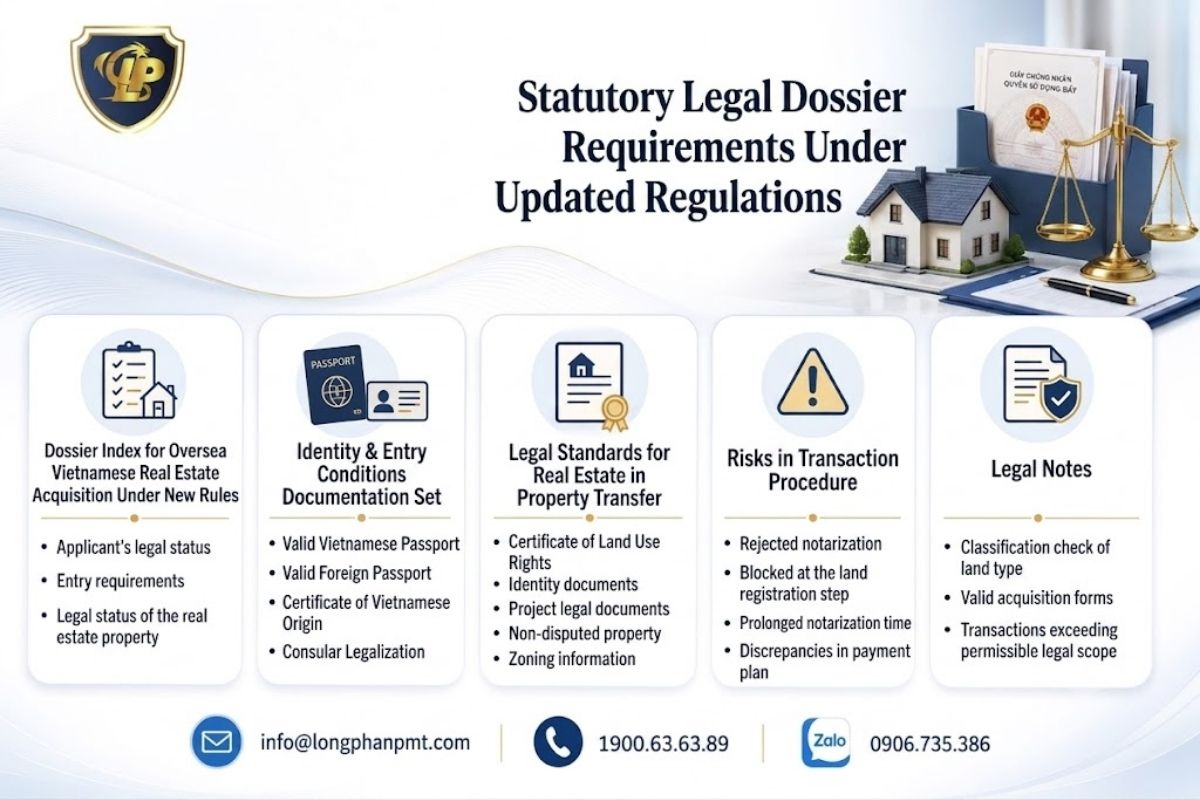
Upon successfully verifying legal capacity and property clean title, real estate transactions must navigate two mandatory regulatory gateways: contract notarization and registration of land changes (land mutation). This procedural phase directly influences payment release schedules, document handover, and updating the transferee’s legal title on the Certificate of Land Use Rights (LUC).
For cross-border transactions involving foreign elements, enterprises must strictly manage both domestic filings and offshore-executed instruments. Imperfections regarding powers of attorney, certified translations, or notarization jurisdiction can freeze contract execution at the final signing stage.
Contracts transferring land use rights and ownership of housing and attached assets must be legally notarized or certified. This formal statutory requirement serves as a non-negotiable prerequisite for submitting land mutation registration, pursuant to Point a, Clause 3, Article 27 of the 2024 Land Law and Clause 1, Article 164 of the 2023 Housing Law.
The notarization workflow should follow a standardized operational sequence:
Clients unable to travel to Vietnam must execute authorization instruments at authorized diplomatic posts abroad as early as possible. Delayed submission risks disrupting notarization appointments and violating contractual payment milestones.
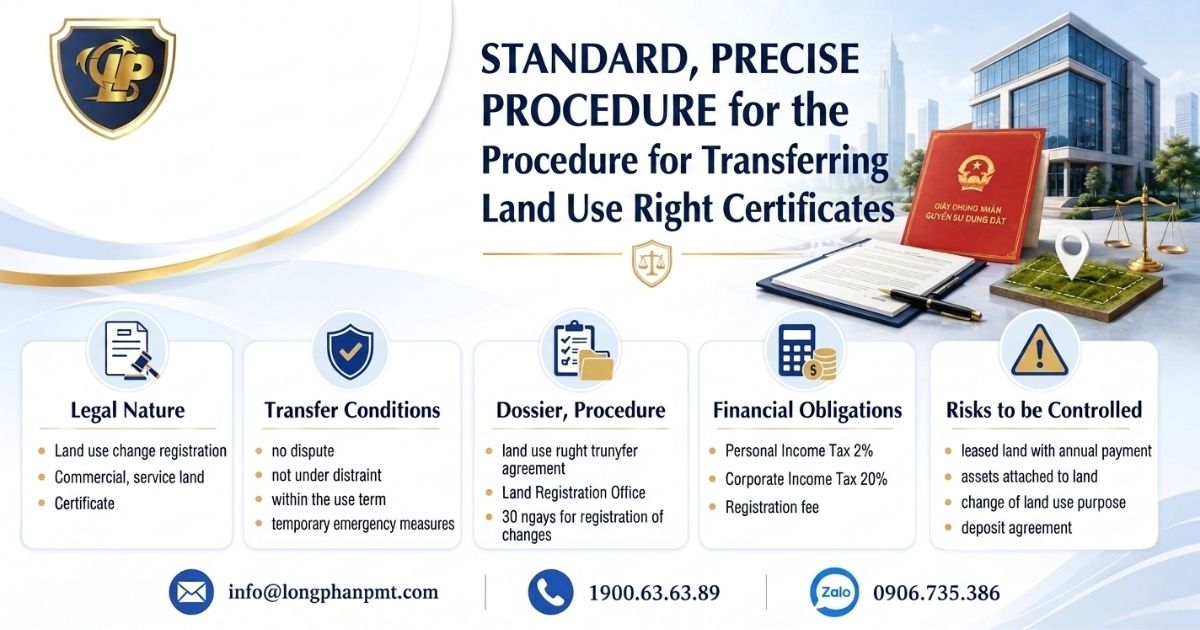
Following notarization, land mutation registration establishes the formal legal effect of state management over changes in land users and asset owners. Land users have a statutory obligation to complete registration within 30 days from the date of the change event, pursuant to Clause 3, Article 133 of the 2024 Land Law.
The registration workflow must be strictly controlled through the following steps:
Administrative authority to register and issue Certificates for people of Vietnamese origin residing abroad rests with the Provincial People’s Committee pursuant to Article 14 of Decree No. 49/2026/ND-CP. All parties should forecast financial liabilities in advance to avoid delays during title transfer.
The primary exposure in transactions involving Overseas Vietnamese stems not from acquisition pricing, but from establishing legal standing and statutory ownership eligibility. A submission dossier lacking entry verification stamps, missing consular legalizations, or involving improper asset classifications can freeze transactions indefinitely.
For project developers, distribution agencies, and legal departments, risk mitigation must begin prior to receiving earnest money deposits. The transitional implementation of land, housing, and real estate business laws demands heightened internal compliance audits.
Offshore documents processed improperly will trigger immediate rejection by notarization practice organizations. Documents executed abroad must undergo consular legalization, unless statutorily exempt, and official Vietnamese translations must feature certified translator signatures pursuant to Article 2 of Decree No. 191/2025/ND-CP.
Key legal risks that must be identified prior to contract execution or fund acceptance include:
The only compliant path is establishing direct, lawful ownership structures from the outset. Enterprises must never utilize nominee arrangements as a substitute for standardizing client nationality, entry clearance, and power of attorney records.
Real estate developers must audit all unexecuted contracts, addenda, and remaining project inventory during the regulatory transition. Real estate business contracts executed prior to the effective date of the new legislation remain legally valid; however, any modifications or supplements executed after the effective date must strictly comply with updated regulations pursuant to Clause 9, Article 83 of the 2023 Law on Real Estate Business.
Internal corporate legal teams must audit the following operational areas:
For pending land registration files, competent state agencies continue processing them under prior regulations, but title issuance authority follows updated statutory rules. Land users maintain the right to request processing under the new law if preferred, pursuant to Clause 2, Article 256 of the 2024 Land Law. Marketing and legal teams must synchronize project data before reopening legacy inventory sales to Overseas Vietnamese buyers, as non-compliance in public disclosures can obstruct notarization and land mutation processing.
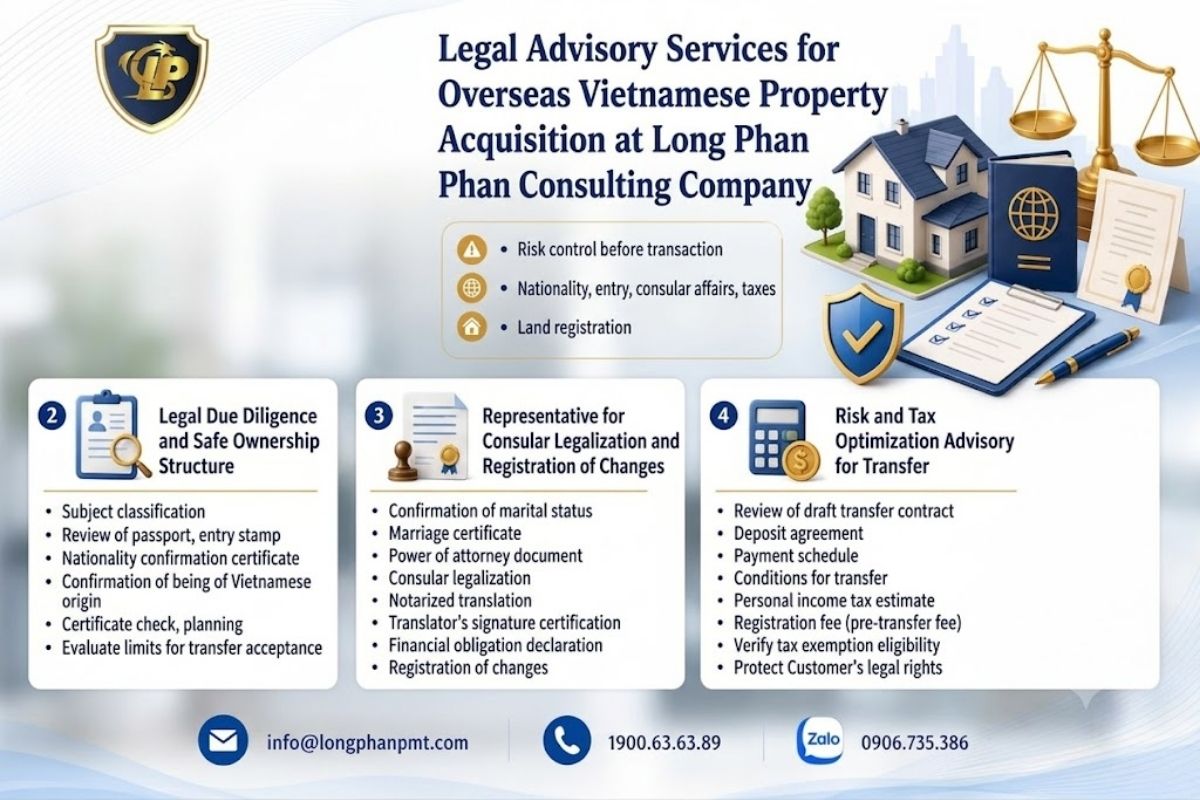
Cross-border real estate transactions for Overseas Vietnamese involve complex intersections of nationality law, entry regulations, consular requirements, taxation, and land registration. Long Phan Consulting Company approaches every dossier through proactive, upfront risk control—preventing legal blockages before filings are submitted to competent authorities.
Our legal specialists and attorneys perform complete Legal Due Diligence to confirm purchaser eligibility and safeguard client investments prior to contract signing:
Offshore documentation frequently encounters delays during consular legalization, translation, and notarization. Our team standardizes all foreign records to ensure full legal validity within Vietnam:
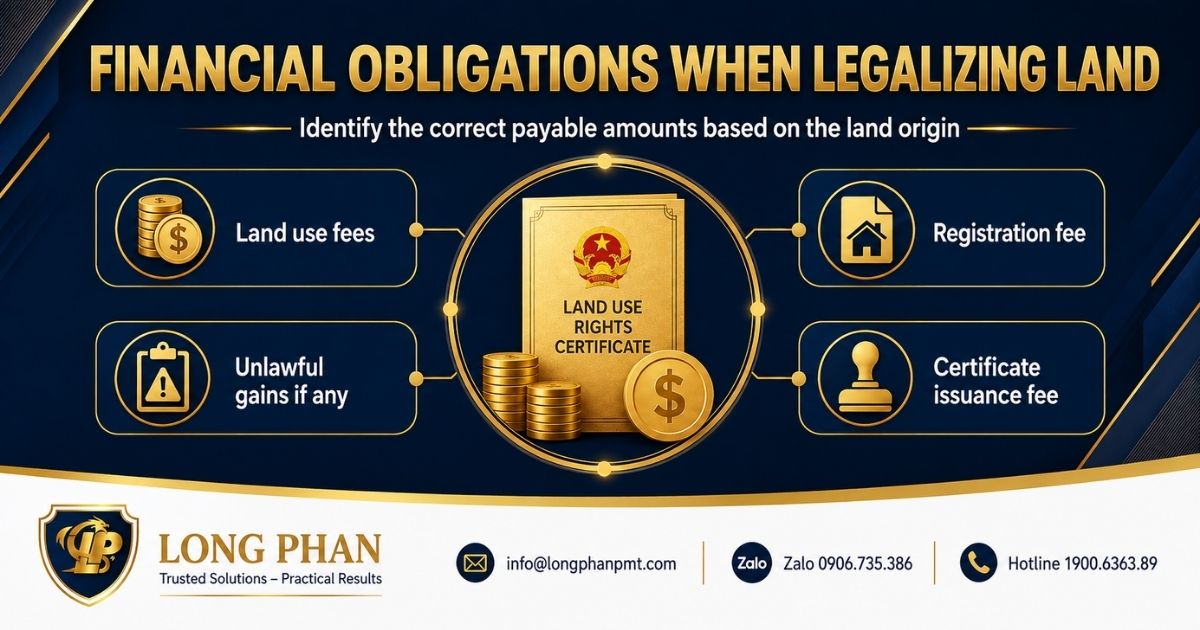
Financial obligations directly impact liquidity and title handover timelines. We optimize payment structures and ensure full tax compliance:
For preliminary evaluation of cross-border real estate transaction dossiers, investors and corporate entities may contact our advisory team via email at info@longphanpmt.com or WhatsApp/Zalo at +84 906 735 386.
The list of documents that overseas Vietnamese need to know when legally transferring land and property goes beyond just personal identification documents. For transactions involving foreign nationals, businesses and investors must also check entry requirements, ownership limits, notary authority, and the timing of registration of changes. The questions below focus on points that can easily delay transactions or create financial risks.
Yes, Vietnamese citizens residing abroad can own houses attached to land use rights if they are permitted to enter Vietnam. The crucial condition is proving legal entry status before notarization and registration of ownership changes. The right to own a house attached to land use rights is stipulated in Point b, Clause 2, Article 8 of the 2023 Housing Law and Clause 1, Article 44 of the 2024 Land Law.
Real estate project developers are only allowed to accept deposits of a maximum of 5% of the selling price or lease-purchase price when the future housing unit meets the conditions for being put into business. Distribution businesses need to control the deposit rate before receiving money to avoid contractual risks and payment claims. The 5% deposit limit is stipulated in Clause 5, Article 23 of the 2023 Law on Real Estate Business.
Payment schedules for future housing must be controlled according to legally stipulated limits. The first payment must not exceed 30% of the contract value, including the deposit. Subsequent payments must not exceed 70% before handover of the housing. If the seller is an economic organization with foreign investment capital, the maximum is 50%. This limit is stipulated in Clause 1, Article 25 of the 2023 Law on Real Estate Business.
The seller is not allowed to collect more than 95% of the contract value if the overseas Vietnamese buyer has not yet been granted a Certificate of Land Use Rights and Ownership of Assets Attached to Land. Investors need to link the final payment condition to the time of completion of the issuance or updating of the Certificate. The limit on collecting payment before transfer of ownership is stipulated in Clause 3, Article 25 of the 2023 Law on Real Estate Business.
Marriage certificates, certificates of marital status, or power of attorney documents prepared abroad must be consularly legalized, unless an exemption applies. Vietnamese translations must also include certified translator signatures. Businesses should verify these documents before the notarization date because errors may cause the dossier to be rejected. These requirements are stipulated in Article 2 of Decree No. 191/2025/ND-CP.
Land registration documents must be processed within 30 days from the date of the change, usually the date the transaction contract is signed. Investors need to monitor this timeframe after notarization to avoid delays in updating rights on the Land Certificate. The 30-day period is stipulated in Clause 3, Article 133 of the 2024 Land Law.
No, notarizing real estate transactions must adhere to territorial jurisdiction. Notaries from notary offices are only permitted to notarize real estate transactions within the province or centrally governed city where the notary office is located. Businesses need to choose the correct notary office based on the property’s geographical location to avoid rejection of their documents. Territorial jurisdiction for notarization is stipulated in Article 44 of the 2024 Notarial Law.
Structuring a compliant Overseas Vietnamese real estate transfer legal dossier requires systematic verification across legal status, lawful entry clearance, consular legalizations, and land mutation filings. For individuals of Vietnamese origin, confirming land classifications and acquisition entitlements represents an essential risk control prior to committing deposit funds. Procedural flaws in identity documentation or tax declarations risk title rejection and severe financial exposure. Contact Hotline 1900636389 for direct advisory support from the legal team at Long Phan Consulting Company.
📚This article has been professionally reviewed based on the following legal documents: