
Overseas Vietnamese Buying Their First House in Vietnam is an increasingly popular trend as many Vietnamese residing abroad desire to return to invest, live, or bond long-term with their homeland. Owning real estate in Vietnam holds meaning not just for settlement but demonstrates an emotional connection and responsibility to one’s roots. Mastering the procedures helps clients execute real estate transactions safely and legally. Below is a detailed process and essential considerations from Long Phan Consulting Company for Overseas Vietnamese buying their first house in Vietnam.

Under Articles 4 and 28 of the 2024 Land Law, the applicable scope has been expanded for Vietnamese residing abroad. This subject group includes Vietnamese citizens and people of Vietnamese origin capable of proving their roots as prescribed, creating a clear legal basis for Overseas Vietnamese buying their first house in Vietnam.
>>>See more: Overseas Vietnamese Housing Investment Forms
Equality in land access is a crucial highlight of the 2024 Land Law. Specifically, this policy facilitates many subjects, including Overseas Vietnamese buying their first house, when exercising lawful land-related rights. Understanding these rights helps clients become more proactive in investment decisions and asset management in their homeland.
Under Article 44 of the 2024 Land Law, Overseas Vietnamese who are Vietnamese citizens enjoy land use rights and obligations equal to domestic individuals. This regulation creates synchronization in state land management, ensuring clients have full authority to execute legal transactions such as converting, transferring, leasing, inheriting, donating, and mortgaging land use rights. Notably, this equality mechanism is evident in practical application, especially for Overseas Vietnamese buying their first house in Vietnam, reflecting consistency in securing land use rights across subject groups. In addition to general rights, this group is permitted to:
Under Article 44 of the 2024 Land Law, Overseas Vietnamese who are Vietnamese citizens are guaranteed equal real estate ownership and transaction rights alongside domestic individuals. In practice, this is exceptionally meaningful for Overseas Vietnamese buying their first house in Vietnam, as clients are facilitated to exercise their legal rights fully and transparently. Clients have the right to execute the following civil transactions regarding land use rights:
All these transactions must strictly comply with the procedures in the 2023 Law on Real Estate Business and the 2023 Housing Law to ensure maximum asset legality. This is critical for Overseas Vietnamese buying their first house, as strict compliance mitigates legal risks and protects the lawful rights of transacting parties.
Under Article 45 of the 2024 Land Law and Article 15 of the 2023 Law on Real Estate Business, Overseas Vietnamese have their real estate development and business rights maximally expanded:
Exercising these rights requires clients to meet financial capacity conditions and strictly comply with project licensing procedures.
>>>See more: Real Estate Rights for Overseas Vietnamese
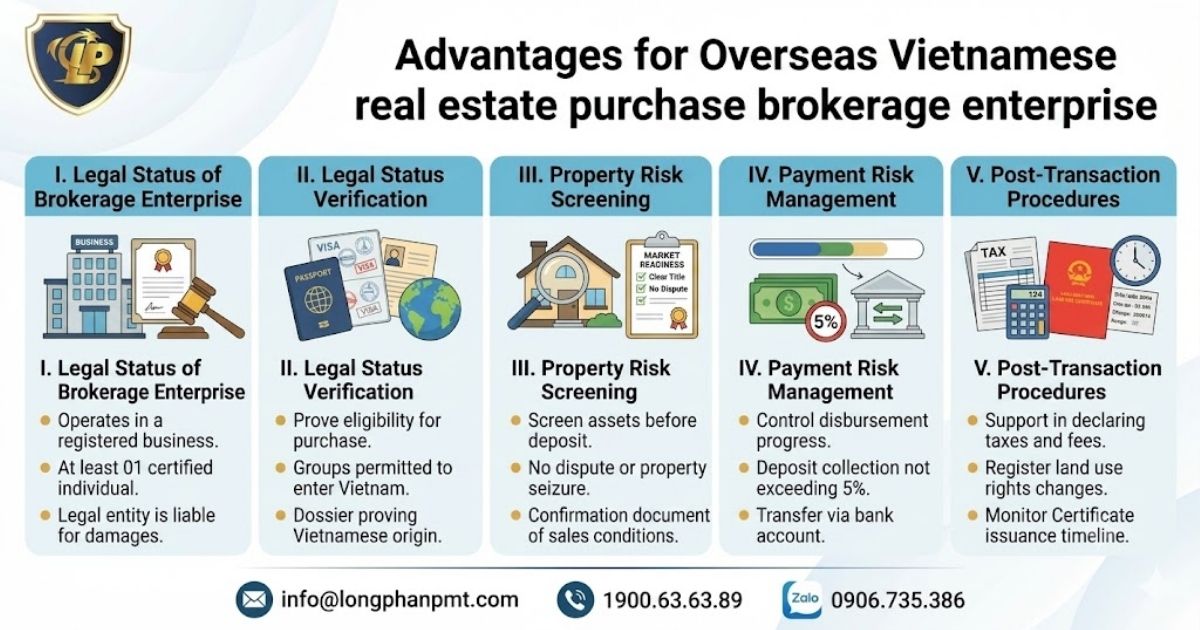
Based on Clauses 2 and 3, Article 3 of Decree 95/2024/ND-CP, the conditions to buy housing/land in Vietnam hold significant meaning for Overseas Vietnamese buying their first house, demanding they fully meet current legal conditions.
Overseas Vietnamese wishing to buy real estate in Vietnam must possess documents proving they are an eligible individual to own housing:
Additionally, Overseas Vietnamese must possess documents proving their eligibility to own housing:

Preparing the dossier to confirm Vietnamese origin demands precision in legal documents. In reality, this often arises for Overseas Vietnamese buying their first house when they need to prove their roots to complete legal procedures. Clients must retain all documents from their birth or from former previous governments.
Legal documents include personal identification documents (Citizen ID card, foreign passport) and documents proving Vietnamese nationality or civil registration documents, household registration issued by competent authorities in the past. According to regulations, customers need to provide valid copies proving that their parents or grandparents (paternal or maternal) previously held Vietnamese nationality.
In the absence of the aforementioned documents, customers may use a guarantee letter from a Vietnamese community abroad or from an individual holding Vietnamese citizenship confirming their Vietnamese origin. Please note that all documents issued abroad must undergo consular legalization procedures as required to be valid in Vietnam.
Customers can submit their applications directly to Vietnamese diplomatic missions abroad or the State Committee for Overseas Vietnamese. For those residing in Vietnam, customers should contact the Ministry of Foreign Affairs or the local Department of Justice to complete the verification procedures according to their authority.
Preparing complete documentation from the outset helps clients shorten the processing time for administrative procedures.
The process for overseas Vietnamese purchasing their first home in Vietnam requires strict adherence to the 2023 Real Estate Business Law, the 2023 Housing Law, and the 2024 Land Law. This process demands rigorous compliance from legal verification to the transfer of ownership. Understanding these steps helps minimize potential risks during the transaction. Below is the optimal legal roadmap for a safe and transparent transaction.
Customers need to clearly define their purpose for buying a home: whether it’s for residential purposes or investment. Thorough research into the market, location, and legal aspects of the project is fundamental to a successful transaction.
This is a crucial step in preventing potential disputes. Clients need to verify the following documents:
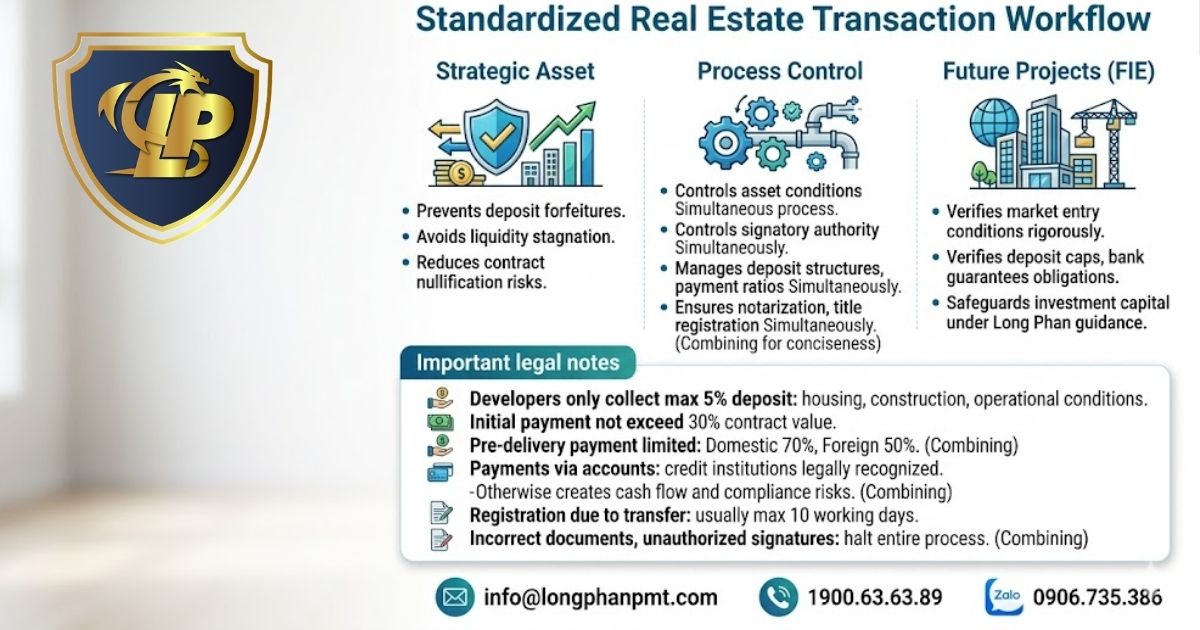
After agreeing on the terms, the customer proceeds to sign the deposit contract. This document must clearly specify the property value, payment schedule, and the seller’s legal commitments to protect the customer’s rights.
Payments must be made through legitimate banking channels to ensure transparency of funds. Customers should retain all transfer documents for future declaration of asset origin.
The sales contract must be in writing and notarized by an authorized notary office. This is the most important legal step to record your ownership rights according to the law.
Customers are required to pay the following taxes and fees:
Customers submit the transfer of ownership documents to the Land Registration Office to complete the ownership transfer process. After completion, the authorities will issue a Certificate of Ownership in the customer’s name.
Strictly following these steps will help our valued customers absolutely protect their assets.
The guide for Overseas Vietnamese buying their first house in Vietnam is becoming a focal point of attention thanks to positive changes from the 2024 Land Law. When researching this guide, clients will grasp outstanding benefits and the safe asset ownership process. We continuously update the latest guides to help clients avoid unnecessary legal risks. Furthermore, mastering these guides helps clients optimize the transaction progress professionally. Below, Long Phan Consulting Company details the guides to help clients protect their lawful rights in every real estate investment step.
Choose Reputable Projects and Developers
Clients should prioritize projects from developers with strong financial capacity and market prestige. Researching the developer’s handover history of past projects helps evaluate reliability and actual progress.
Multi-Dimensional Legal Information Checks
Clients must request the seller to provide a complete legal dossier, including the Certificate of Land Use Rights, 1/500 detailed planning, and the construction permit. Simultaneously, cross-check information directly at local land management agencies to avoid dispute or distrained asset risks.
Use Professional Legal Consulting Services
The Vietnamese real estate market has seen many policy changes under the 2024 Land Law. Using a professional lawyer team helps clients rigorously review contract clauses, ensuring there are no disadvantageous terms causing financial damage.
Retain Complete Dossiers and Transaction Receipts
All transfer receipts, deposit contracts, and confirmation documents must be carefully stored. These are the most critical legal evidence for clients to protect ownership in case of disputes or when executing future administrative procedures.
With the goal of comprehensive legal support, Long Phan Consulting Company always focuses on guides for Overseas Vietnamese buying their first house in Vietnam to help clients feel confident in every transaction decision. We have built a specialized roadmap to ensure client assets are strictly protected by law.
By adhering to the updated guides, the experts at Long Phan Consulting Company will directly execute the following tasks to maximize client protection. We structure our professional support into the following key area:

Below, Long Phan Consulting Company provides some frequently asked questions regarding the procedures for overseas Vietnamese buying their first home in Vietnam. We invite interested clients to refer to this information:
No. According to Article 4 of the 2024 Land Law and Article 19 of the 2023 Housing Law, Vietnamese people residing abroad who are Vietnamese citizens have the right to own houses and use land normally like individuals in the country, without any limitations on the number or type of real estate.
Important considerations to avoid risks when overseas Vietnamese buy land in Vietnam for the first time include:
Vietnamese people residing abroad (including those who still hold Vietnamese citizenship and those of Vietnamese origin) are entitled to equal home ownership rights as citizens residing in Vietnam. Mandatory conditions include:
According to Clause 2, Article 17 of the 2023 Housing Law, foreigners are allowed to own housing in Vietnam, including apartments and detached houses, through the following forms:
If you do not own a home, you can prove your legal residence with a rental agreement, loan agreement, or proof of staying with an individual or household. These documents need to be notarized or certified by a competent authority to ensure their legal validity when submitting your temporary residence registration application.
Overseas Vietnamese can borrow money from banks in Vietnam to buy a house if they meet the bank’s credit requirements, including repayment ability, credit history, and documentation proving legitimate income. However, the conditions may be stricter than for domestic citizens.
Strictly adhering to the guide for Overseas Vietnamese buying their first house in Vietnam helps protect assets and optimize investment profits for clients. When mastering this guide, clients will more easily access potential real estate projects. You should proactively research the guide thoroughly and partner with legal experts to ensure all procedures occur accurately. If you require in-depth support, please contact Hotline 1900636389 to receive professional consulting from Long Phan Consulting Company.