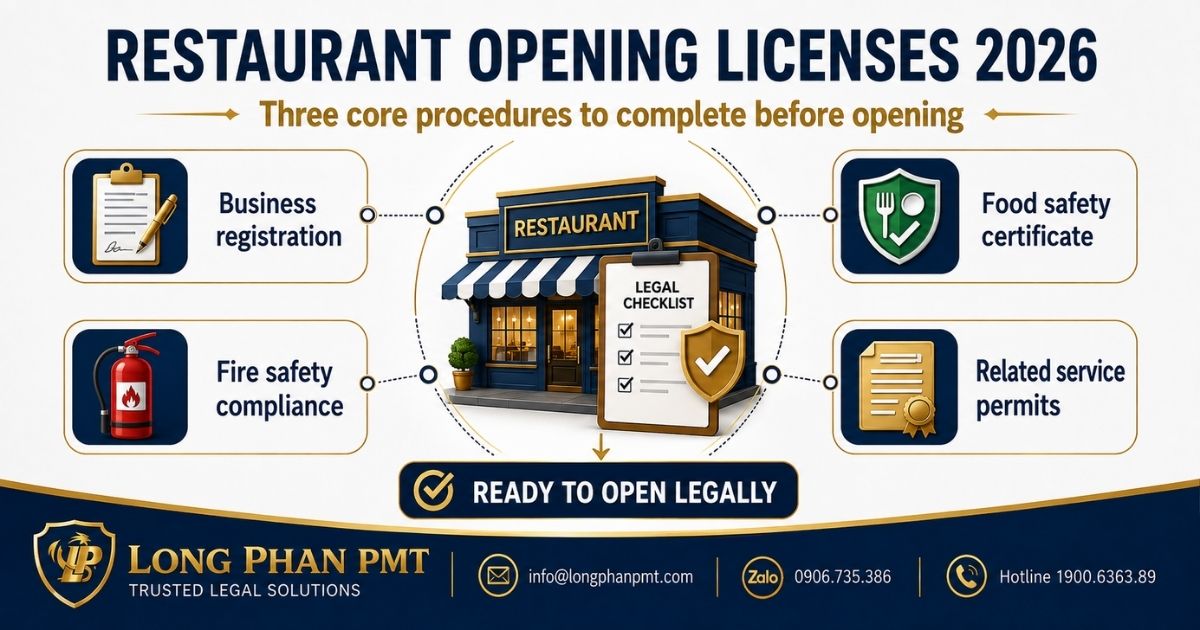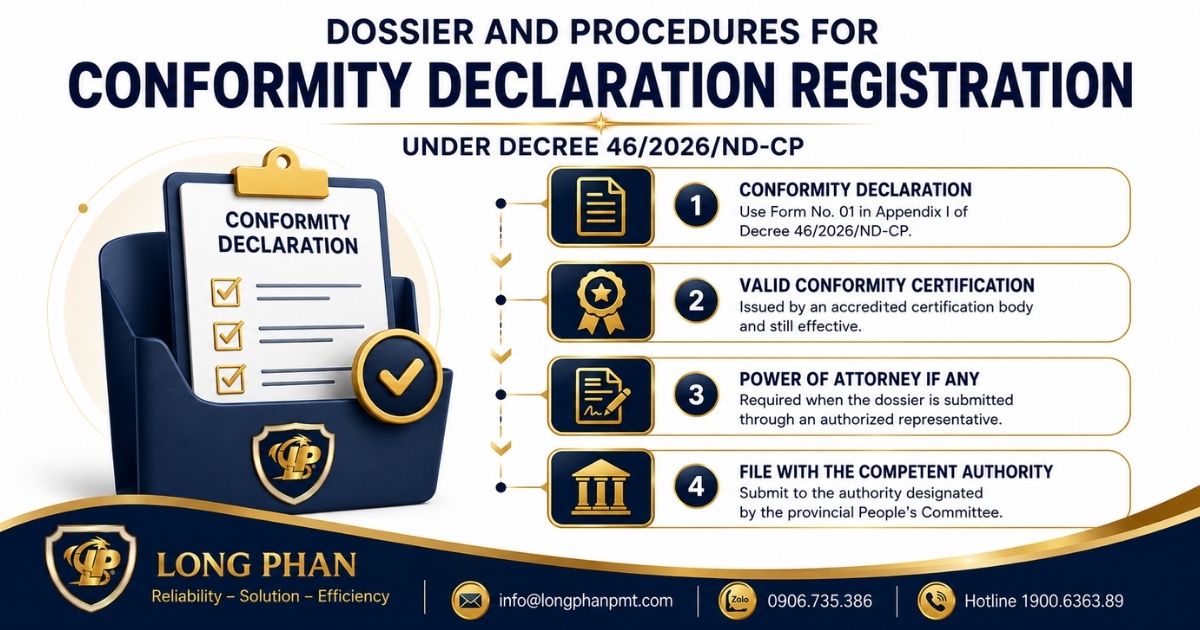

Obtaining a massage spa business license requires careful classification of the intended service model, as operating regulated massage activities without the proper approvals may result in fines, suspension, or forced closure. Foreign investors must separate ordinary beauty and wellness services from massage or medical-related treatments that trigger additional requirements concerning fire safety, security and order, professional conditions, and facility standards. Under the Law on Enterprises and Businesses, the registered business lines, investment scope, and operational structure must also remain consistent with the actual services provided.
Long Phan Consulting supports investors in reviewing service classifications, preparing licensing dossiers, and coordinating compliance procedures before commencement.

Key legal notes:
Misclassifying your business model during the registration phase can result in a critical lack of essential permits upon launch. When pursuing massage and spa business licensing in Vietnam, the decisive factor is determining whether your services are restricted to beauty care, inclusive of massage, or if they constitute medical aesthetic procedures.
You must define your business model before securing premises, designing service suites, or registering industry codes. While basic skincare spas may only require standard business registration, massage services trigger mandatory Security and Order compliance.
| Business Type | Provided Services | Required Licenses | Medical Element |
| Beauty Service Establishment | Non-invasive skincare, scalp care, nail services | Enterprise or Household Business Registration | None |
| Massage Service Establishment | Massage, physical therapy, health-focused bodywork | Business Registration + Security and Order Certificate | Prohibited |
| Medical Aesthetic Clinic | Injections, laser treatments, surgical interventions | Medical License (pursuant to Law on Medical Examination) | Mandatory |
Massage services are defined as utilizing physical therapy methods for health improvement, pursuant to Clause 5, Article 3 of Decree 96/2016/NĐ-CP.
Do not utilize a household business registration for “beauty care” to operate a massage establishment. Operations involving massage or physical therapy require the mandatory procurement of a Security and Order Certificate before commencement, per Clause 1, Article 6 of Decree 96/2016/NĐ-CP.
Services involving injections, laser radiation, or devices that intervene in the body must be provided exclusively by licensed medical facilities. This is a strict legal boundary established under Clause 12, Article 40 of Decree 96/2023/NĐ-CP. Consequently, you must audit both your service model and marketing content. Terms such as “therapeutic,” “curing,” or “high-tech slimming” may lead authorities to categorize your facility as operating beyond the scope of a spa or massage license.
Massage establishments require more than a standard business registration. Investors must compile an operational dossier that satisfies Security and Order (ANTT), Fire Prevention and Fighting (PCCC), personnel management, and room layout standards prior to the official launch.
The provision of massage services is categorized as a conditional business investment sector, listed under item 8 of Appendix IV of the 2025 Law on Investment. Consequently, your entity must be legally incorporated and licensed before applying for a Security and Order Certificate.
Key foundational requirements include:
Investors opening chains must conduct an individual audit for each location. A facility lacking fire safety compliance or possessing an unclear lease agreement can stall your entire launch timeline.
Massage activities present specific risks regarding client property, personnel management, and service space control. Pursuant to Clauses 1 and 2, Article 30 of Decree 96/2016/NĐ-CP, you must provide secure storage for client belongings and separate massage rooms for male and female clients.
For legacy facilities that do not currently meet PCCC requirements, the deadline for remediation is July 1, 2028, for cases subject to transition, per Clause 3, Article 43 of Decree 105/2025/NĐ-CP. If remediation is unfeasible, enterprises must consider operational restructuring, downsizing, or changing the facility’s utility.

Security and Order documentation must be standardized only after the establishment has achieved legal business registration. Our recommended approach involves the simultaneous preparation of corporate legal documents, fire safety compliance reports, and personnel dossiers before submission to the District-level Police authority.
Your dossier must not only verify your legal right to operate but also demonstrate your capacity to maintain security conditions post-licensing. Prior to submission, enterprises should verify the following:
Deficiencies in fire safety or missing criminal record certificates frequently trigger administrative requests for supplementary documentation. For leased premises, verify the lease agreement and land-use rights before filing.
To avoid launch delays, follow the prescribed jurisdictional authorities. Applications should be submitted to the local Police authority responsible for issuing the Security and Order Certificate and overseeing massage service businesses, pursuant to Clause 14, Article 1 of Decree 58/2026/NĐ-CP.
Upon commencement, facilities must notify the local communal Police within five days, per Clause 2, Article 25 of Decree 96/2016/NĐ-CP, and submit personnel lists within 20 days, pursuant to Clause 10, Article 25 of the same decree.
Launching without a finalized Security and Order Certificate can disrupt your cash flow from the very first day of operation. The primary risk is not the initial business registration, but rather the assessment that your facility fails to meet the specific conditional requirements for massage services.
Massage establishments are required to maintain security conditions throughout their active lifecycle. Business operations prior to licensure or following the revocation of the certificate are strictly prohibited under Clauses 1 and 2, Article 6 of Decree 96/2016/NĐ-CP.
Key risks include:
A recurring error involves using a “beauty care” business registration to offer therapeutic massage, health-focused bodywork, or high-tech weight loss services. Such practices lead authorities to conclude that the facility is operating outside its authorized business scope.
Review all marketing collateral before publication, as inaccurate messaging may subject your enterprise to higher legal compliance standards.

Obtaining a massage spa license requires the simultaneous management of business registration, security and order certification, fire safety compliance, personnel oversight, and marketing control. Long Phan Consulting Company assists enterprises in standardizing their operational dossiers from the conceptual design phase through to post-licensing inspections. Our services prioritize long-term risk mitigation rather than mere administrative filing, ensuring your facility avoids launch delays, scope violations, or advertising penalties.
Our legal experts support your enterprise through the following tasks:
To conduct a preliminary evaluation of your premise documents, fire safety status, or business model, please send your materials via Email to info@longphanpmt.com or contact our Zalo/WhatsApp at +84 906 735 386.
Obtaining a business license for a massage spa often involves ambiguity at the boundary between beauty care, massage, and cosmetic services with medical elements. The questions below focus on points that can easily cause delays in opening, misuse of authority, or lack of obligations after licensing. These are issues that need to be addressed before the business leases premises, hires staff, or runs advertisements.
No, establishments offering only non-invasive skin care, therapeutic hair washing, or nail services (not massage services) should focus on business registration as a company or household business. Regular beauty care service establishments follow the registration procedures outlined in Article 1 of Decree No. 168/2025/ND-CP. If the establishment provides massage or therapeutic body treatments, that activity is considered massage service business according to Clause 5, Article 3 of Decree No. 96/2016/ND-CP.
No, a business registration certificate for beauty care services does not replace a Certificate of Eligibility regarding security and order for massage services. Establishments offering massage, body massage, or therapeutic massage services must have a Certificate of Eligibility regarding security and order before commencing business operations, as stipulated in Clause 1, Article 6 of Decree No. 96/2016/ND-CP. Operating a massage parlor with a beauty care business registration certificate may be considered as operating without meeting the required conditions.
The commune-level police are responsible for issuing certificates of eligibility regarding security, order, and management of massage service businesses in accordance with Clause 14, Article 1 of Decree 58/2026/ND-CP. The time limit for issuing new certificates is no more than 05 working days from the date of receiving complete and valid documents, as stipulated in Point a, Clause 3, Article 23 of Decree No. 96/2016/ND-CP, amended and supplemented by Decree No. 56/2023/ND-CP.
Yes, massage service establishments are still required to notify and provide personnel records after commencing operations. The establishment must send a notification document, along with a copy of the Certificate of Eligibility for Security and Order, to the commune-level police within no more than 5 days from the start of operations, as stipulated in Clause 2, Article 25 of Decree No. 96/2016/ND-CP, amended by Clause 19, Article 1 of Decree 58/2026. The list of personnel and supporting documents must be submitted within 20 days, as stipulated in Clause 10, Article 25 of Decree No. 96/2016/ND-CP.
Yes, massage parlors may be subject to periodic or unannounced inspections regarding security and order conditions. The police conduct comprehensive inspections and audits periodically, no more than once a year, as stipulated in Clause 1, Article 50 of Decree No. 96/2016/ND-CP. If a post-inspection reveals that the establishment does not meet the requirements, the police have the right to request a temporary suspension of operations for 40 days for rectification, as per Point a, Clause 3, Article 6 of Circular No. 42/2017/TT-BCA.
Yes, Certificates of Eligibility for Security and Order issued before August 15, 2023, remain valid. Businesses only need to comply with the new regulations if they request renewal or re-issuance after the new regulations come into effect, as stipulated in Clause 2, Article 4 of Decree No. 56/2023/ND-CP. This transitional provision allows legally operating businesses to avoid immediate renewal if their existing license is still suitable for their actual operations.
Yes, advertising services such as “treatment” or “high-tech weight loss” may lead to an assessment that the establishment is providing cosmetic services with medical elements. Services using drugs, substances, or equipment to intervene in the body to change skin color, shape, or weight must be provided by medical examination and treatment facilities, as stipulated in Clause 12, Article 40 of Decree No. 96/2023/ND-CP. A regular spa or massage license is not sufficient to operate this medical service.
Securing massage and spa business licensing in Vietnam requires a strategic, multifaceted approach that transcends simple industry registration. Successful market entry hinges on the precise alignment of your business model, rigorous adherence to fire safety and security protocols, and strict governance of promotional content to avoid classification as a medical facility. Failure to standardize these compliance elements prior to your launch can result in costly operational suspensions or the revocation of your business credentials.
Entrust your legal framework to the experts at Long Phan Consulting Company to ensure your investment meets all regulatory mandates and remains audit-ready. For comprehensive legal support and to expedite your licensing process, contact our team immediately via our professional Hotline at 1900636389.
📚 This article is provided with professional consultation based on the following legal framework: