
Should overseas Vietnamese buy property in a real estate development project? The answer depends on complex legal factors and thorough due diligence. Overseas Vietnamese (Viet Kieu) must understand the specific conditions for property ownership under current Vietnamese law. This analysis provides a detailed breakdown of the requirements, risks, and essential considerations.

Legal eligibility for property ownership is detailed in regulations guiding the Housing Law 2023 and Land Law 2024, such as Decree 95/2024/ND-CP.
Note: Individuals in this second category must present a passport or travel document with a valid entry stamp from Vietnamese immigration at the time of signing the property transaction contract.

>>> See more at: Land Types for Overseas Vietnamese.
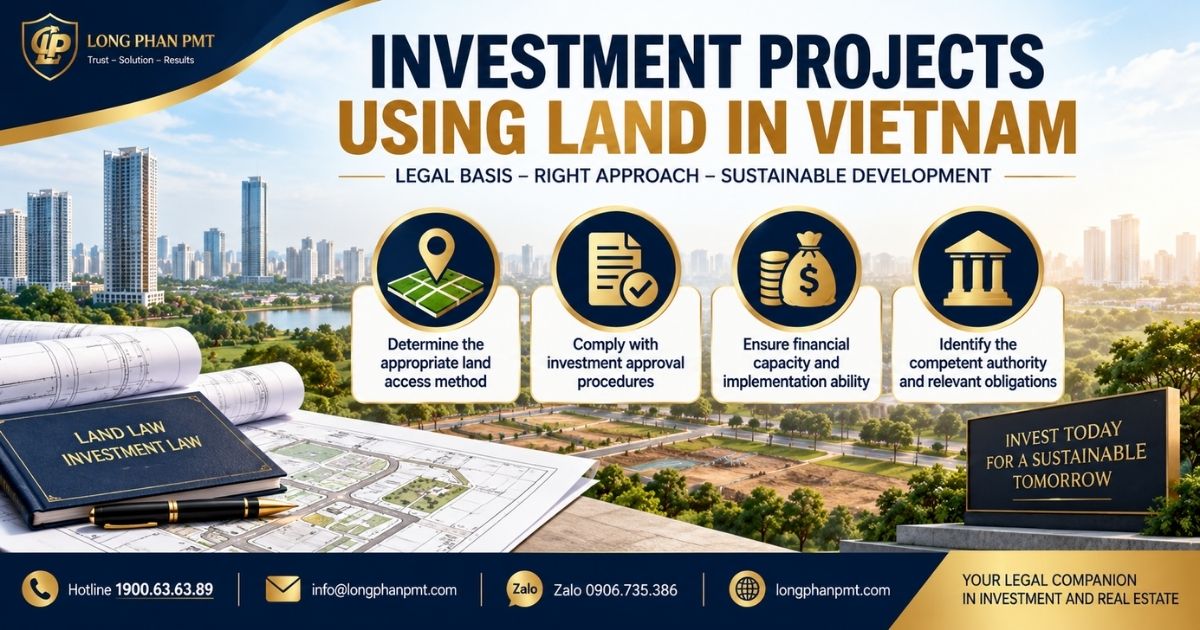
The real estate market presents significant risks if buyers fail to verify a project’s legal status, sales eligibility, construction progress, and developer credibility. Before committing to a purchase in a real estate development project, overseas Vietnamese must assess the following:
Verifying the project’s legal standing and the developer’s right to sell is critical. Under the Law on Real Estate Business 2023, a developer may only offer off-plan properties for sale if they meet strict conditions:
A meticulous review of these legal points is the best way for overseas Vietnamese to protect their investment.
Evaluate the project’s progress against its approved schedule. Delays directly impact the handover date and the issuance of the ownership certificate, creating financial and legal exposure for the buyer. Legally, a developer can only sell when the project’s foundation is complete, verified by an official acceptance record. The buyer should always inspect the certificate of completion for the building’s foundation before signing a sales contract.
Buyers should demand a detailed construction schedule and contractual commitments on completion dates. The sales contract must include clear penalty clauses for delays, specifying the buyer’s right to compensation or contract termination.
A bank guarantee is a critical financial safeguard. Reputable developers secure guarantees from major banks to underwrite their project commitments. Key points to verify:
For any overseas Vietnamese, verifying the developer’s bank guarantee is a non-negotiable step to mitigate financial risk.
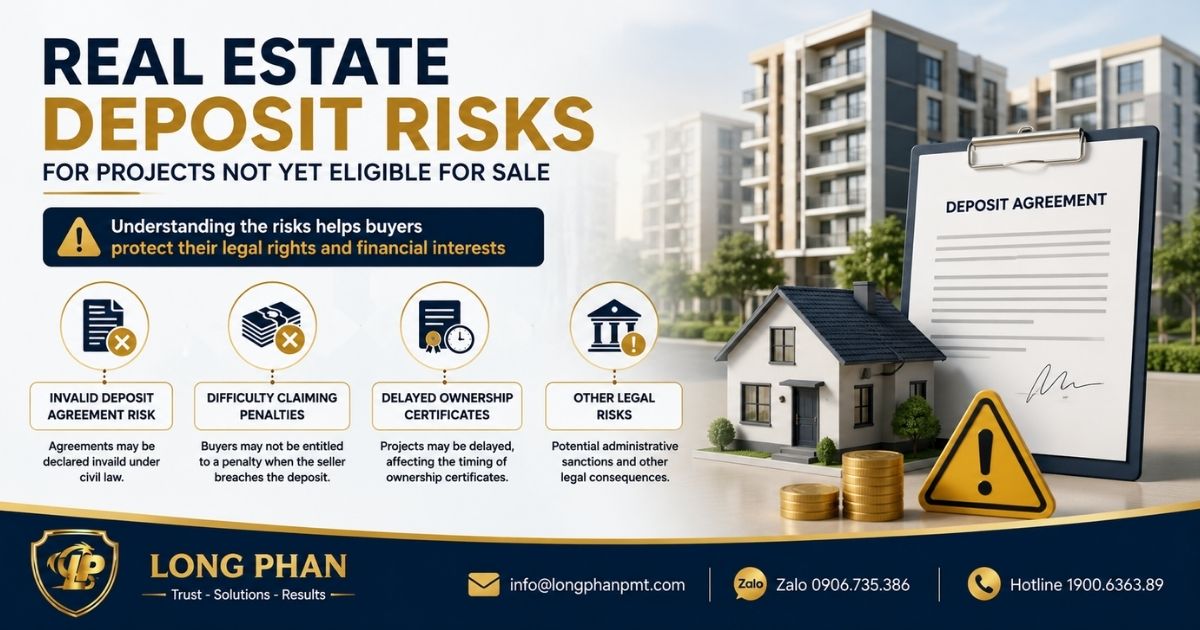
The transaction structure itself can pose risks. Developers often use exclusive distribution agents (brokers). However, certain practices, such as requiring large deposits before a project is legally eligible for sale, may constitute illegal capital mobilization. Buyers should only place a deposit when the project has full legal approval for sales.
Under the Housing Law 2023, capital mobilization must follow a strict schedule tied to construction progress.
A legal transaction process involves: legal due diligence, contract negotiation, signing the official sales contract, payment according to the legal schedule, and receiving the property and ownership certificate.
Assess the credentials of the project’s main contractor and the independent supervising consultant.
Pay close attention to the terms for property handover and the timeline for receiving the ownership certificate (“Pink Book”).

>>> See more at: Vietnam Property Due Diligence: A Technical Guide.
Long Phan Consulting Company offers professional advisory services for overseas Vietnamese interested in real estate development projects. Our experienced lawyers provide comprehensive support.
Transfers must be made through the banking system. The overseas Vietnamese buyer must provide documentation proving the legal purpose of the funds (e.g., a deposit agreement or sales contract) to comply with Vietnam’s anti-money laundering regulations.
Annual costs typically include building management fees, a one-time contribution to the common area maintenance fund (usually 2% of the pre-tax apartment value), and an annual non-agricultural land use tax.
Historically, “red books” certified land use rights, while “pink books” certified ownership of both the house and the land. Today, these have been unified into a single document: the “Certificate of Land Use Rights, Ownership of Housing and Other Land-Attached Assets,” which has a pink cover.
Yes. An overseas Vietnamese with citizenship has full property rights, including the right to lease. They must declare the rental income and pay personal income tax as required by Vietnamese law (Land Law 2024, Art. 4, Clause 3).
Proof can be established with a birth certificate, previous documents showing Vietnamese nationality, or a formal Certificate of Vietnamese Origin issued by a competent Vietnamese authority (as per Decree 95/2024/ND-CP).
Whether an overseas Vietnamese should buy property in a real estate development project requires strict adherence to legal regulations and diligent project selection. Verifying the project’s legal status, construction progress, and developer credibility is essential for a successful transaction. For professional guidance and comprehensive support, contact the experts at Long Phan Consulting Company via hotline 1900.63.63.89.