Land subdivision for real estate projects must comply with strict regulations. A project developer must fully meet conditions regarding legal status, technical infrastructure, minimum area, and financial capacity. Executing a land subdivision requires specialized knowledge of current laws. This article details the mandatory conditions that a real estate business project must adhere to.
Conditions for Land Subdivision for Real Estate Projects: Requirements to Split Land Plots for Property Development
Legal Conditions of the Project Before Subdivision
A real estate project must strictly comply with points a, b, and c of Clause 1, Article 220 of the Land Law 2024 before subdivision. The land parcel must have a valid certificate, be within its land use term, and be free of disputes.
The basic conditions for land subdivision include:
Valid Certificate: According to point a, Clause 1, Article 220 of the Land Law 2024, the land parcel must have been issued one of the following types of certificates: Certificate of Land Use Rights; Certificate of Housing Ownership and Residential Land Use Rights; or Certificate of Land Use Rights, Ownership of Housing and Other Assets Attached to Land.
Land Use Term: The land parcel must still be within its permitted land use term (Point b, Clause 1, Article 220).
No Encumbrances: The land must be free from disputes, liens for judgment enforcement, and not subject to any temporary emergency measures by a competent state agency. If a dispute exists but the disputed area and boundary can be identified, the remaining undisputed portion of the parcel is eligible for subdivision (Point c, Clause 1, Article 220).
Infrastructure Note: Subdivision and consolidation must ensure the new parcel has an access path connected to an existing public road and provides for adequate water supply, drainage, and other essential needs.
Investors planning to subdivide and plot land must adhere to the minimum area regulations outlined in Article 220 of the Land Law 2024. Each new land parcel created through subdivision must not be smaller than the minimum area specified for that type of land.
A key point is that national law does not set a specific number for this minimum area. Instead, the authority to issue detailed regulations on the minimum area for subdivision belongs to the provincial-level People’s Committee where the land is located. Therefore, investors must research and comply with the current local decisions.
The law also provides a flexible solution. Point b, Clause 2, Article 220 allows for the subdivision of a parcel smaller than the minimum area if it is simultaneously consolidated with an adjacent land parcel, ensuring the final parcel meets the standard size. This is a viable option for investors to optimize land use and transactions. The process of land subdivision for real estate projects demands close attention to these local rules.
Regulations on the minimum area of land after subdivision.
Conditions for the Real Estate Project Developer
General Conditions for Real Estate Businesses (Article 9, Law on RE Business 2023)
An entity must first meet these foundational conditions:
For Enterprises:
Must be established as an enterprise under enterprise law.
Must publicly disclose information about the enterprise and the real estate being offered on its website and at the project management office.
May only conduct business with real estate that meets the conditions stipulated in this Law.
For Individuals (New, more detailed regulations):
Small-scale, infrequent business: Individuals conducting small-scale, infrequent real estate business are not required to establish an enterprise but must have full civil act capacity and declare and pay taxes.
Regular business: Individuals conducting regular, professional real estate business (investing, selling, leasing) must establish an enterprise and meet the same conditions.
Specific Conditions for Project Developers
A project developer must satisfy stricter financial and legal requirements:
Financial Capacity: A project developer must have an owner’s equity of no less than 20% of the total investment for projects under 20 hectares, and no less than 15% for projects 20 hectares or larger. They must also prove the ability to mobilize capital for the project. This ensures the developer has the financial strength to implement the project and avoid “stalled” projects.
Financial and Legal Obligations:
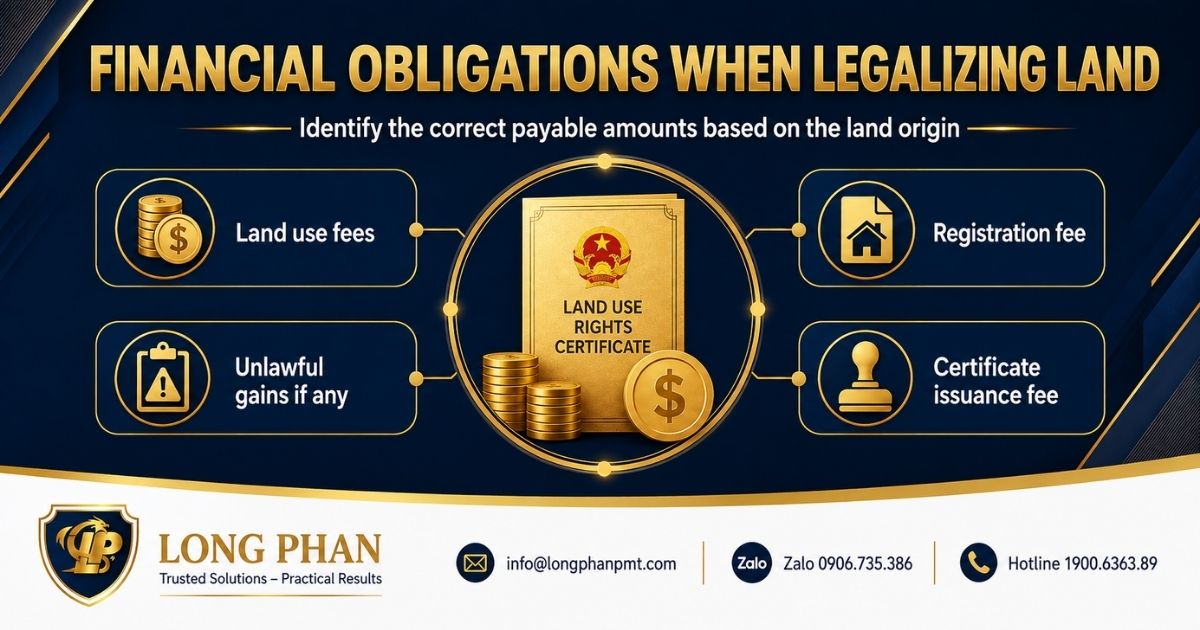
Land-related obligations: The developer must complete all financial obligations related to the project’s land (land use fees, land rent, taxes, fees) before putting the real estate on the market.
Compliance with penalties: If the developer has been penalized for administrative violations in investment, construction, land, housing, or tax related to the project, all penalty decisions must be fully executed before signing contracts with customers.
Principles and Requirements for Real Estate Business (Article 7, Law on RE Business 2023)
All real estate business activities must adhere to these principles:
Publicity and transparency.
Voluntariness, equality, good faith, and cooperation.
Honesty in negotiations and contract execution.
Compliance with laws on real estate business, civil matters, land, investment, and construction.
Bank Transactions: Payments between developers and customers must be conducted through legally operating credit institutions in Vietnam. This is a mandatory rule to increase transparency.
Notification of Eligibility: Before selling or leasing-to-purchase off-plan housing, the developer must send a written notice to the provincial-level state management agency for real estate business, confirming the property is eligible for sale. The agency has 15 days to review and provide a written response. The developer may only sign contracts after receiving this approval.
Conditions of real estate before entering into business.
Consulting Services for Land Subdivision at Long Phan Consulting Company
Turning land potential into a profitable and secure real estate project is your goal. Long Phan Consulting Company is your trusted partner to achieve it. With deep expertise in the Land Law 2024 and the Law on Real Estate Business, we provide end-to-end services from due diligence and subdivision dossier preparation to project completion, ensuring every step is solid and effective.
Our specialized consulting and support services for land subdivision for real estate projects include:
Comprehensive Subdivision Due Diligence: We assess the land’s current state and analyze its legal records to ensure it meets all conditions for area, access, and zoning compliance under Article 220 of the Land Law 2024.
Optimal Subdivision Planning: We design subdivision plans that maximize feasibility and economic efficiency based on your objectives (sale, gift, inheritance, or project development), strictly adhering to Clause 2, Article 220 of the Land Law 2024.
Financial Consulting and Investment Connection: We assist clients in demonstrating and meeting the financial capacity requirements of Article 9 of the Law on Real Estate Business 2023 and leverage our network to connect you with potential capital sources and strategic partners.
Subdivision Dossier Preparation: We accurately prepare all necessary applications, declarations, drawings, and location diagrams according to official requirements.
Representation and Follow-up: We submit the dossier on your behalf to the relevant People’s Committee or Land Registration Office, proactively track its progress, and act as the primary contact for clarifying information with state agencies.
Result Delivery: We receive the final results, including the newly issued Certificates of Land Use Rights for the subdivided parcels, and deliver them directly to you.
Frequently Asked Questions
What are the main taxes and fees for an investor when subdividing and transferring project land plots?
The core financial obligations include: land use fees or land rent paid to the state; registration fees for recording the change and issuing new certificates; and corporate income tax on the profit from transferring land use rights.
How long does the subdivision process for a real estate project usually take?
The timeline varies significantly depending on the project’s scale and the local administrative agency’s efficiency. Typically, the process can take from 3 to 6 months, or longer for large, complex projects requiring multiple appraisal and approval steps.
How can I accurately look up the minimum subdivision area for a specific province?
For the most accurate information, visit the official web portal of the provincial People’s Committee or the Department of Natural Resources and Environment. Search for legal documents with keywords like “quy định diện tích tối thiểu được phép tách thửa” (regulation on minimum area allowed for subdivision).
Can I apply this subdivision process to agricultural land for a real estate project?
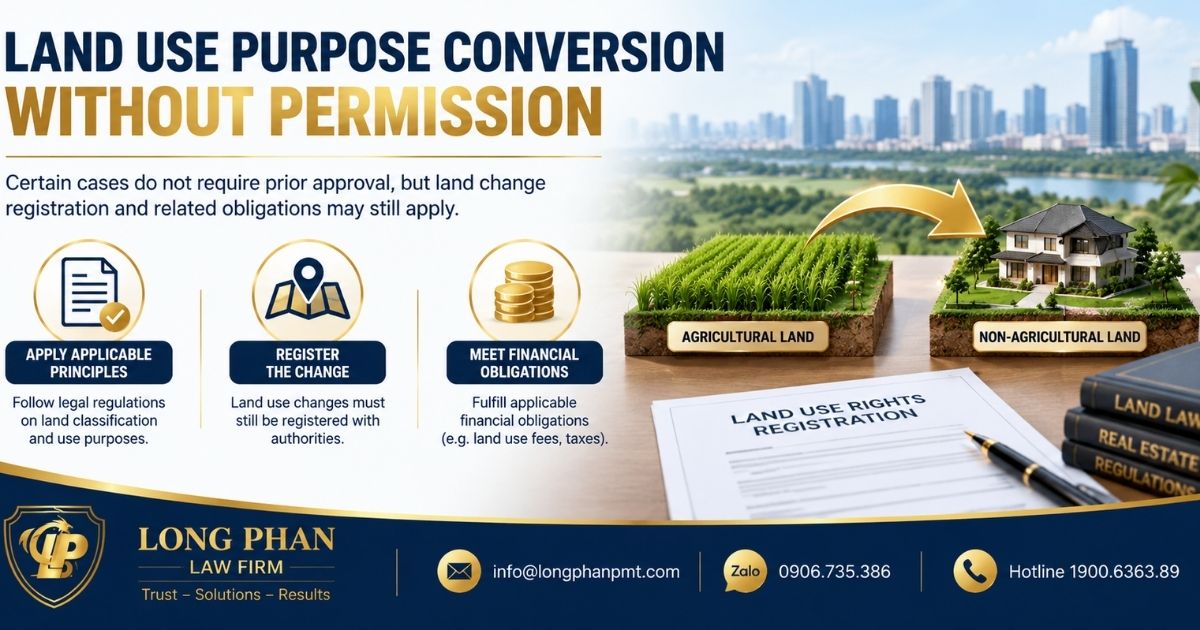
No, you cannot directly subdivide agricultural land for a business project. First, the investor must complete the procedure to change the land use purpose from agricultural to residential or commercial/service land. This procedure must align with the district-level annual land use plan. Only after this is complete can the subdivision process begin.
How does project subdivision differ from a household subdividing its residential land?
The fundamental difference lies in purpose and scale. Land subdivision for real estate projects must comply with the Law on Real Estate Business, requiring the entity to be an enterprise with sufficient financial capacity and an approved investment project. In contrast, a household or individual subdividing residential land only needs to comply with the Land Law’s conditions regarding minimum area and infrastructure connection.
What are common reasons for a project’s land subdivision application to be rejected?
Common reasons include: the subdivision plan does not conform to the approved 1/500 detailed plan; the area of the new parcels does not meet local minimums; the project has not completed essential technical infrastructure (roads, drainage); or the developer has not fulfilled its financial obligations to the state.
Conclusion
The conditions for land subdivision for real estate projects are detailed and require strict compliance with all mandatory conditions. Understanding these regulations is crucial for project success. Professional guidance from legal experts helps optimize the process and ensure compliance. Contact the Long Phan Consulting Company hotline at 1900636389 for expert advice.
Facebook
Linkedin
Twitter
Pinterest
Luật sư Nguyễn Thu Hương
Lawyer Nguyen Thu Huong is a leading expert in the field of investment and licensing for foreigners. With extensive knowledge of investment laws and the complex regulations related to licensing procedures, she has successfully assisted numerous businesses and foreign investors in establishing their operations in Vietnam.