
Mortgaging land use rights for FDI loans is a common security method in the corporate finance activities of foreign-invested enterprises (FIEs). Land use rights serve as collateral for a loan, enabling FIEs to access capital from credit institutions. A clear understanding of the legal regulations governing the mortgage of land use rights for FIEs is a key factor in executing lawful and effective transactions.

The mortgage of land use rights in FDI capital lending is specified in Article 317, Clause 1 of the 2015 Civil Code. Accordingly, a mortgage of land use rights is a form of security for a repayment obligation where an FIE uses its land use rights as collateral for the mortgagee. Thus, a foreign-invested enterprise is permitted to mortgage its land use rights to borrow capital for production and business activities.
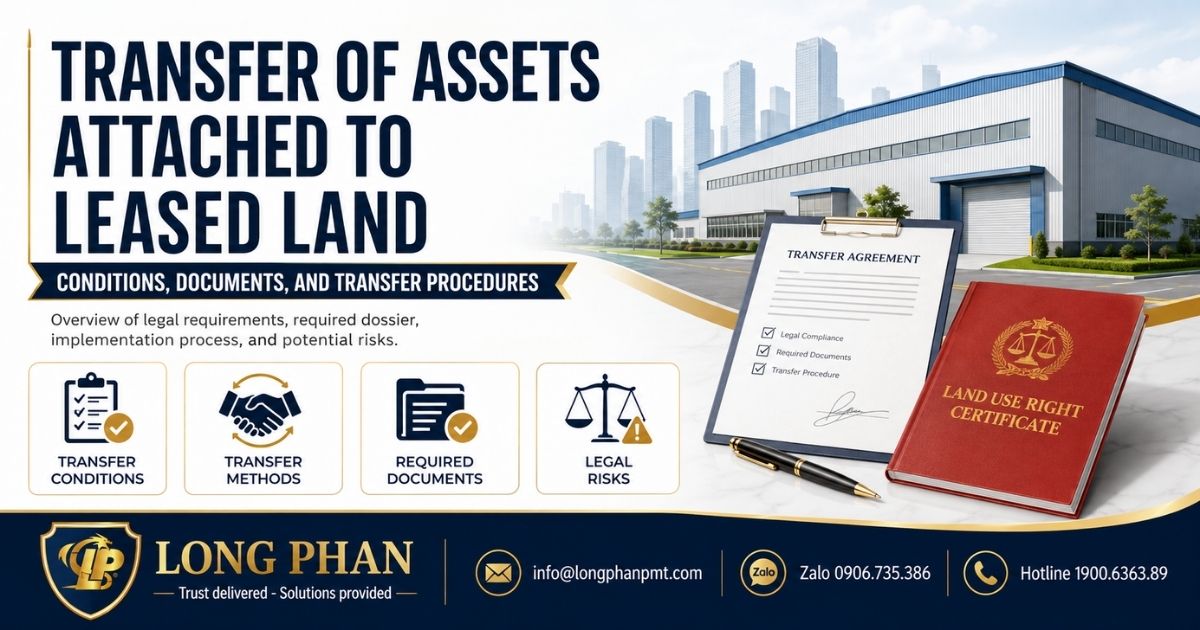
Additionally, under Article 318, Clause 3 of the 2015 Civil Code, if land use rights are mortgaged and assets attached to the land are owned by the mortgagor, those attached assets are also part of the mortgaged property, unless otherwise agreed. This provision ensures consistency in handling collateral when disputes arise. Therefore, FIEs must understand the scope of the mortgaged assets to avoid unnecessary risks during the loan process and the use of land use rights.
>>> See more at: Check whether the land is in dispute or mortgaged or not: What to do?
Mortgaging land use rights for FDI loans is a significant financial solution that helps FIEs mobilize capital for production and business operations in Vietnam. For this transaction to be successful, the FIE must meet a series of strict conditions stipulated by law.
The conditions for land use rights are clearly defined in Article 45 of the 2024 Land Law. An FIE wishing to mortgage its land use rights must fully meet the legal and physical status requirements of the land parcel. Specific conditions include:
The legal appraisal of the land use rights as collateral is of great importance. It forms the basis for the bank’s decision to approve the loan and mitigate credit risk and bad debt.
The scope and purpose of an FIE’s loan when mortgaging land use rights for FDI loans from a credit institution are regulated in Article 7 of Circular 39/2016/TT-NHNN of the State Bank of Vietnam dated December 30, 2016, as amended by Article 2 of Circular 06/2023/TT-NHNN dated June 28, 2023, and Clause 3, Article 1 of Circular 12/2024/TT-NHNN dated June 28, 2024, as follows:
You must demonstrate a lawful loan purpose that is consistent with your registered business lines and land use purpose. The enterprise also needs a feasible capital utilization plan and strong financial capacity to ensure debt repayment ability. Full compliance is a key factor for the credit institution’s approval of the FIE’s loan application.
>>> See more at: Overseas Vietnamese Real Estate Mortgage Guide 2025

Mortgaging land use rights for FDI loans is a complex financial transaction. It provides significant resources for the enterprise but also entails legal risks. To ensure a successful and secure transaction, both the mortgagor (FIE) and the mortgagee (credit institution) must understand their obligations and proceed with caution.
Fulfilling the obligations under Article 320 of the 2015 Civil Code is not only a mandatory requirement but also a basis for building trust with the bank and preserving the value of the collateral. From proving the legal status of the land to the responsibility of preserving the asset, these are core considerations for the enterprise.
In summary, any shortcoming can lead to disputes and the risk of asset enforcement. The enterprise must be fully aware of and strictly adhere to its responsibilities throughout the mortgage process.
Mortgaging land use rights for FDI loans is a significant financial transaction that opens development opportunities for businesses but also carries legal risks for the mortgagee. To ensure loan capital safety and avoid complex disputes, strict adherence to legal regulations is paramount.
By completing all steps from legal review, valuation, and security interest registration to strictly following enforcement procedures and protecting the mortgagor’s rights, the mortgagee can minimize risks and ensure the efficiency and safety of the invested capital.
The mortgage contract for land use rights is the core legal document, forming the basis for the rights and obligations between the FIE and the credit institution. To ensure the loan transaction is secure and lawful, drafting the contract requires attention to the following issues:
According to Article 27, Clause 3 of the 2024 Land Law, a mortgage contract for land use rights must be notarized or certified as required by law.
Additionally, under Article 398 of the 2015 Civil Code, a mortgage contract for land use rights is also a standard civil contract and must contain all mandatory elements:
In conclusion, a robust and transparent land use right mortgage contract is not just a legal requirement but also a shield protecting the FIE’s interests. The enterprise must carefully review every detail in the contract to ensure the loan transaction proceeds safely, smoothly, and successfully.

Long Phan Consulting Company provides comprehensive consulting services on the procedures for mortgaging land use rights for FDI loans with a team of experienced experts. Our consulting services include:
With experience advising numerous FIEs, Long Phan Consulting Company understands the legal specifics and practical requirements of mortgaging land use rights. Our services are tailored to each type of FIE and the scale of the investment project. Long Phan Consulting Company ensures a transparent consulting process, reasonable costs, and prompt execution to meet the urgent needs of FIEs.
To help you better understand the regulations on mortgaging land use rights for FDI loans, we have compiled some common questions:
The law presumes that when land use rights are mortgaged, assets attached to the land owned by the mortgagor are also part of the collateral. However, the parties have the full right to agree in the contract to exclude assets attached to the land from the scope of the security property.
Coupon completing the early repayment, the FIE must notify the credit institution. The two parties will then sign a document to terminate the mortgage contract, and the credit institution is obliged to return the original Certificate. Finally, the enterprise carries out the procedure to delete the mortgage registration at the Land Registration Office to officially release the asset.
In case the land is recovered, the mortgage contract will terminate. The mortgagee (the bank) will have priority in payment of the debt from the compensation, support, and resettlement money that the FIE receives from the State, after deducting related costs.
An enterprise can use one asset to secure multiple obligations if the asset’s value at the time of the transaction is greater than the total value of the secured obligations, unless otherwise agreed. This requires the consent of the prior mortgagee and must be registered according to regulations.
According to Article 27 of the 2024 Land Law, notarization or certification of a mortgage contract for land use rights is a mandatory requirement. Non-compliance may result in the contract being declared void by a court. In that event, the parties must return to each other what they have received and may have to pay damages if at fault.
With these answers, you will have a clearer understanding of the regulations related to mortgaging land use rights for FDI loans and can carry out the mortgage lending procedure in compliance with the law.
A firm grasp of the regulations on mortgaging land use rights for FDI loans under the 2024 Land Law and the 2015 Civil Code is the foundation for a successful transaction. Clients must comply with all legal conditions and mandatory procedures to avoid risks. If you have any questions about mortgaging land use rights for FDI loans, contact the hotline 1900 636389. Long Phan Consulting Company is ready to assist you in completing all procedures quickly and accurately.