Wholesale Rice License: A Guide [2025]

A clear understanding of the procedures, documents, and conditions for a wholesale rice license saves time and costs. Compliance with legal regulations for food businesses is essential. It builds a solid legal foundation for market expansion and secures a credible position in the domestic and international rice supply chain. This guide details the process for obtaining a wholesale rice license.

Guidelines for the wholesale rice license

Conditions for a Wholesale Rice License in Vietnam

Traders must meet specific legal requirements to operate a wholesale rice business in Vietnam. These state-mandated conditions ensure control over an essential commodity, directly impacting national food security and public health. Fulfilling these legal prerequisites is fundamental for authorities to grant a trader market access.

Key conditions for traders include:

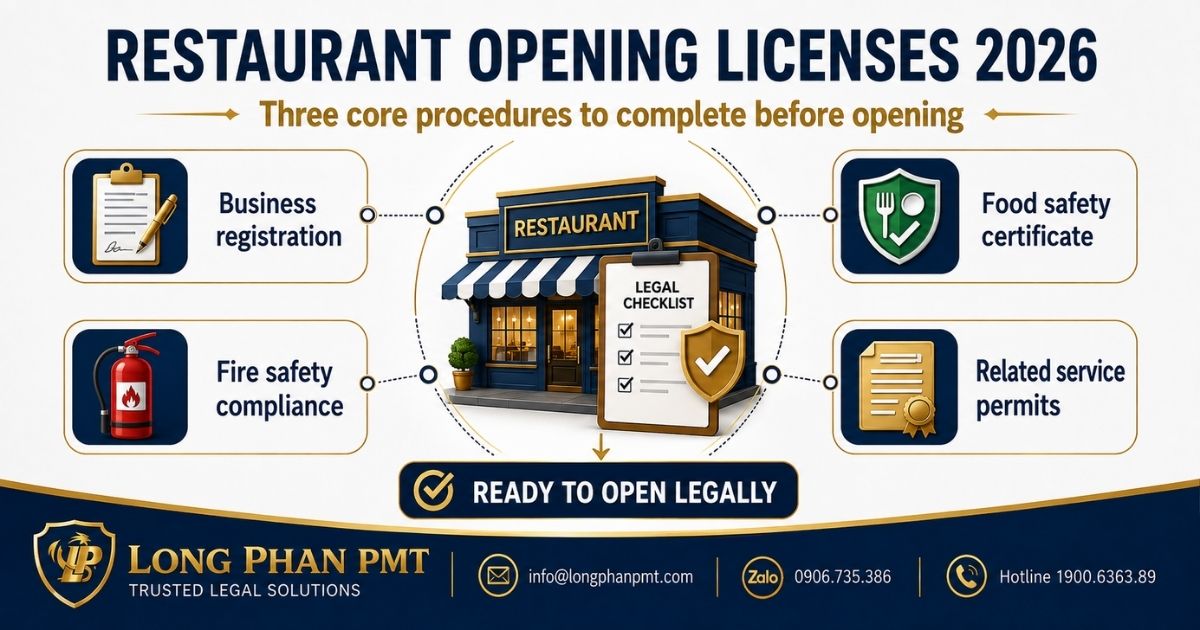
  • Business Registration: The trader must complete the business registration procedure as stipulated by law.
  • Rice Export License: This is required if the business entity’s scope includes rice exportation.
  • Food Safety Certificate: This is mandatory for businesses subject to this requirement to avoid administrative penalties for non-compliant products.
  • Phytosanitary Certificate: This is necessary if the importing country mandates it.
  • Barcode Registration: This is essential for export or import activities.

For traders engaged in rice export, additional conditions beyond standard business registration apply:

  • Possession or lease of at least one dedicated warehouse for storing paddy and rice. The warehouse must meet national technical standards issued by a competent authority.
  • Possession or lease of at least one facility for milling, husking, or processing paddy and rice. This facility must also comply with relevant national technical standards.
  • The warehouse and processing facility can be owned by the trader or leased from other entities. A written lease contract must have a minimum term of five years.
  • A trader holding a Certificate of Eligibility cannot sublease the declared warehouse or processing facility to another trader for the purpose of obtaining a similar Certificate.

For domestic wholesale rice trade, a trader primarily needs to complete business registration and secure a Food Safety Certificate (if applicable) to commence operations.

Current Procedure for Wholesale Rice License Registration

For traders focusing on domestic wholesale (excluding small-scale retail and pre-packaged rice without processing), the process for a wholesale rice license centers on two main legal actions: business registration and obtaining a Certificate of Food Safety Eligibility.

A “wholesale rice license” for the domestic market is not a standalone permit like a rice export license. It involves meeting the business conditions for a conditional sector, specifically business registration and food safety compliance. The entire procedure revolves around these two core requirements.

Traders must first complete business registration. Afterward, if required, they must proceed with the application for a food safety certificate.

Business Registration Procedure

The first step toward a wholesale rice license is business registration. A trader can establish a sole proprietorship (hộ kinh doanh) or an enterprise, depending on the scale and strategic direction. Each form has distinct procedures and application dossiers under the Law on Enterprises 2020 and Decree 01/2021/ND-CP.

1. Registering a Sole Proprietorship

For small-scale operations, a sole proprietorship is a suitable option with a simpler procedure.

  • Application Dossier:
    • Application form for registration of a sole proprietorship.
    • A valid copy of the legal identification document of the owner or household members.
    • A valid copy of the minutes of the household members’ meeting on establishing the business (if applicable).
    • A valid copy of the letter of authorization from household members for one member to be the owner (if applicable).
  • Submitting Authority: The district-level Business Registration Office where the business is located. A Certificate of Sole Proprietorship Registration is issued upon validation of the dossier.

2. Registering an Enterprise

For larger-scale operations or expansion plans, establishing an enterprise (e.g., LLC, joint-stock company) is necessary.

  • Application Dossier:
    • Application for enterprise registration.
    • The company’s charter.
    • A list of members (for a multi-member LLC) or founding shareholders (for a joint-stock company).
    • Valid copies of the legal identification documents of the legal representative and founding members/shareholders.
    • Other documents corresponding to the enterprise type as specified in Articles 19, 20, 21, and 22 of the Law on Enterprises 2020.
  • Submitting Authority: The Business Registration Office of the provincial Department of Planning and Investment where the enterprise’s head office is located. The processing time is three working days from receipt of a valid dossier. After the Certificate of Enterprise Registration is issued, the enterprise can operate.

Foreign investors or foreign-invested economic organizations must also complete procedures for a Business License under Article 9 of Decree 09/2018/ND-CP and a license to establish a retail outlet under Article 38 of the same decree.

Relevant Business Registration Codes:

  • Code 4631: Wholesale of rice, wheat, other grains, and flour. This is the primary and most critical code.
  • Code 4632: Wholesale of food. This can be registered for diversification beyond rice.
  • Code 4610: Agency, brokerage, and auction of goods. For agency or brokerage roles.
  • Other Codes: Consider registering codes for warehousing (5210), transportation, and packaging based on your business strategy.

Selecting and registering the correct business codes ensures legal compliance and facilitates future expansion. Refer to the Vietnam Standard Industrial Classification (VSIC) under Decision 27/2018/QD-TTg for accurate information.

Implement rice wholesale business registration

Procedure for the Food Safety Eligibility Certificate

According to Clause 1, Article 12 of Decree 15/2018/ND-CP, exemptions from the Certificate of Food Safety Eligibility are granted in cases such as small-scale food business or trading pre-packaged rice from a certified or self-declared manufacturer.

However, if the wholesale rice facility conducts primary processing, milling, or repackaging, or engages in large-scale bulk rice trade not covered by exemptions, obtaining the Certificate of Food Safety Eligibility is mandatory.

Application Dossier

Based on Clause 14, Article 1 of Circular 17/2024/TT-BNNPTNT and Clause 1, Article 36 of the Law on Food Safety, the application dossier includes:

  • An application form for the Certificate of Food Safety Eligibility.
  • A copy of the Business Registration Certificate.
  • A description of the physical facilities, equipment, and tools ensuring food safety and hygiene.
  • A certificate of completion of food safety training for the owner and personnel directly involved in production and business.
  • A health certificate for the owner and personnel directly involved in food production and business.

Licensing Procedure

Based on Clauses 14, 15, and 16 of Article 1 of Circular 17/2024/TT-BNNPTNT, the procedure is:

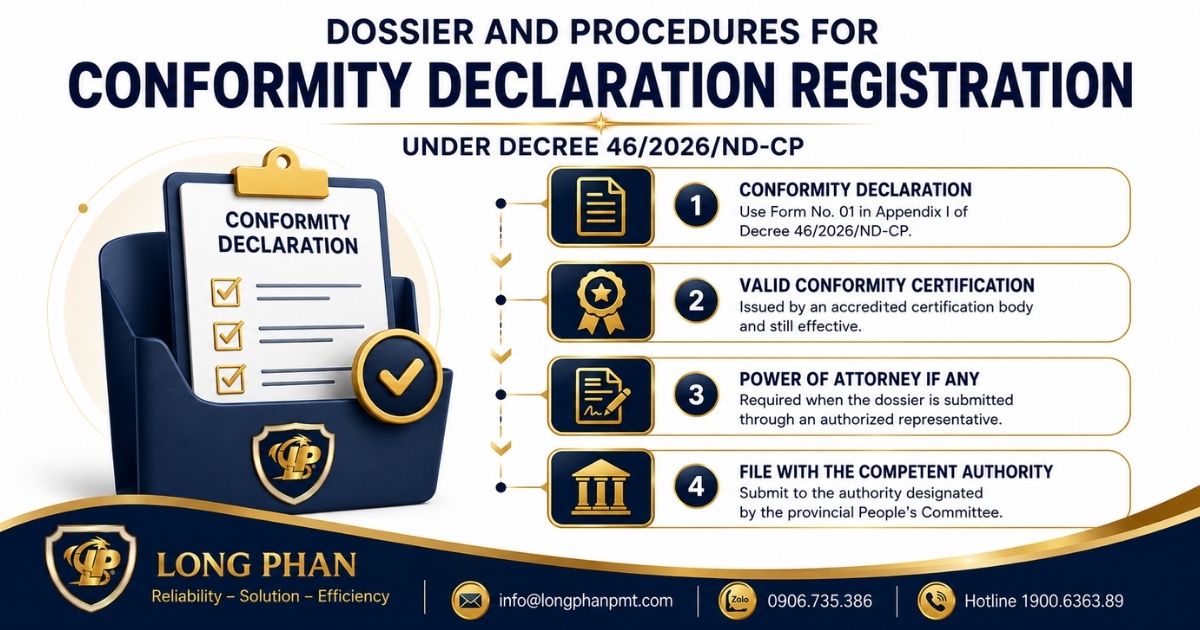
  • Step 1: Submission: The facility submits one set of the dossier to the specialized agency designated by the provincial People’s Committee (via online public service, post, or direct submission).
  • Step 2: Dossier Review: The competent authority reviews the dossier’s validity and informs the facility of the result.
  • Step 3: On-site Inspection: Within 15 days of receiving a valid dossier, the authority conducts an on-site inspection of the facility’s conditions.
  • Step 4: Certificate Issuance: If the facility meets all conditions, the Certificate is issued within 10-15 working days. If not issued, a written response detailing the reasons is provided.
Apply for other types of licenses to wholesale rice

Post-Licensing Obligations for Wholesale Rice Business

After completing the wholesale rice license registration and commencing operations, traders must maintain compliance with several key legal requirements. Continuous adherence minimizes legal risks and builds a sustainable, reputable business.

Traders must focus on three core areas: fire prevention and fighting (PCCC) at warehouses, strict management of product origin, and absolute compliance with registered business locations.

Fire Prevention and Fighting (PCCC)

Rice warehouses, especially large ones, pose a high fire risk. Traders must strictly adhere to PCCC regulations:

  • Develop and conduct regular fire drill plans at the facility.
  • Equip the facility with standard PCCC equipment (fire extinguishers, alarm systems, automatic sprinklers if required by scale).
  • Maintain safe conditions for warehouses, aisles, and emergency exits.
  • Organize PCCC training for staff.
  • Obtain a Certificate of PCCC Eligibility.
  • Coordinate with authorities for periodic PCCC safety inspections.

The dossier and procedure for the PCCC certificate typically take 7-15 working days. Upon meeting the conditions, a Certificate of Fire Prevention and Fighting is issued.

Product Origin, Traceability, and Counterfeit Goods Liability

To ensure product quality and avoid legal risks from counterfeit or untraceable goods, traders must:

  • Establish an effective system to manage and store records proving the rice’s origin (e.g., sales contracts, VAT invoices, warehouse receipts).
  • Comply with goods labeling regulations (if repackaging), providing transparent information about the rice variety, producer/supplier, production date, and expiration date (if any).
  • Implement strict quality control for incoming goods to ensure they match declared specifications.
  • Cooperate with market management authorities during inspections to verify product origin.

Compliance with Registered Business Location

All business activities must occur only at the location legally registered with state authorities.

  • Information about the head office, business locations, and warehouses must be accurate and match the Certificate of Business Registration and other relevant licenses.
  • Any change in business location must be reported and re-registered with the competent state authority as per legal regulations.
  • Continuously maintain physical conditions at the business location that comply with legal standards and industry specifics.

Frequently Addressed Topics on Wholesale Rice Licensing

Here are common points of interest regarding the wholesale rice license service.

Prerequisites for Domestic Wholesale Rice Trade?

The fundamental conditions are business registration and a Certificate of Food Safety Eligibility if the business involves processing, repackaging, or large-scale bulk sales. A rice export license is only needed for export activities.

Requirement for a Food Safety Certificate?

This certificate is mandatory if your facility processes, mills, repackages rice, or trades in large-scale bulk rice. Small-scale retail or distribution of pre-packaged rice are often exempt.

Fire Safety (PCCC) for Rice Warehouses?

Rice warehouses are high-risk. The business must comply strictly with PCCC regulations: develop plans, install equipment, ensure safe infrastructure, train staff, and obtain a PCCC permit if required.

Ensuring Rice Origin and Avoiding Counterfeit Risks?

To guarantee quality and transparency, a business needs a robust system for managing documents (contracts, invoices) that prove the rice’s origin. Implement input quality control and cooperate with market authorities during inspections.

Regulations on Registered Business Locations?

A trader must conduct all business activities at the location specified in the Certificate of Business Registration. Any change of address must be officially reported and re-registered with the relevant authorities.

Procedure for Changing Business Location or Adding Industries?

Any changes to the business location or registered industries must be reported and updated through the competent business registration authority (provincial Department of Planning and Investment for enterprises, district-level office for sole proprietorships).

Wholesale Rice License Services by Long Phan Consulting Company

Navigating the wholesale rice license procedure demands deep knowledge of complex legal regulations and administrative processes. Using a professional consulting service is an effective solution to save time, reduce costs, and ensure legal compliance. Long Phan Consulting Company provides comprehensive support in this field.

At Long Phan Consulting Company, we understand each business has unique characteristics and needs. Our experienced legal team will:

  • Analyze your specific case to identify all necessary permits, including business registration, the Certificate of Food Safety Eligibility (if required), PCCC, and others.
  • Prepare a complete and accurate application dossier according to current laws.
  • Act on your behalf to submit dossiers and monitor the process at competent state agencies (Business Registration Office, Department of Planning and Investment, Food Safety and Hygiene Sub-department, or equivalent).
  • Handle requests for additional information or clarifications from authorities professionally and promptly to ensure the wholesale rice license procedure stays on schedule.
  • Advise on post-licensing legal obligations, such as tax reporting, labor compliance, and other regulations relevant to the wholesale rice trade.

With a commitment to professionalism, dedication, and efficiency, Long Phan Consulting Company delivers high-quality legal services, allowing you to focus on your core business. We partner with you from the initial steps of the wholesale rice license registration until your business is operating stably.

Conclusion

Completing the wholesale rice license registration is a multi-step process that requires precision and strict adherence to legal statutes. From business registration and obtaining a food safety certificate (if applicable) to product self-declaration, each stage has specific requirements. For detailed and professional assistance, contact Long Phan Consulting Company via our hotline at 1900 636 389 for consultation and sub-license services.

Leave a Reply

Your email address will not be published. Required fields are marked *