
Land registration for real estate project transfer establishes legal land use rights for new investors acquiring projects. This procedure ensures transparency, mitigates dispute risks, and enhances safety throughout the transaction. Compliance with current regulations is mandatory for legal recognition. This guide outlines the specific regulations and instructions to assist clients in executing the procedure correctly under the 2024 legal framework.

The transfer of real estate projects is a specialized transaction governed by strict land and real estate business laws. Parties must satisfy specific statutory conditions before initiating the registration.
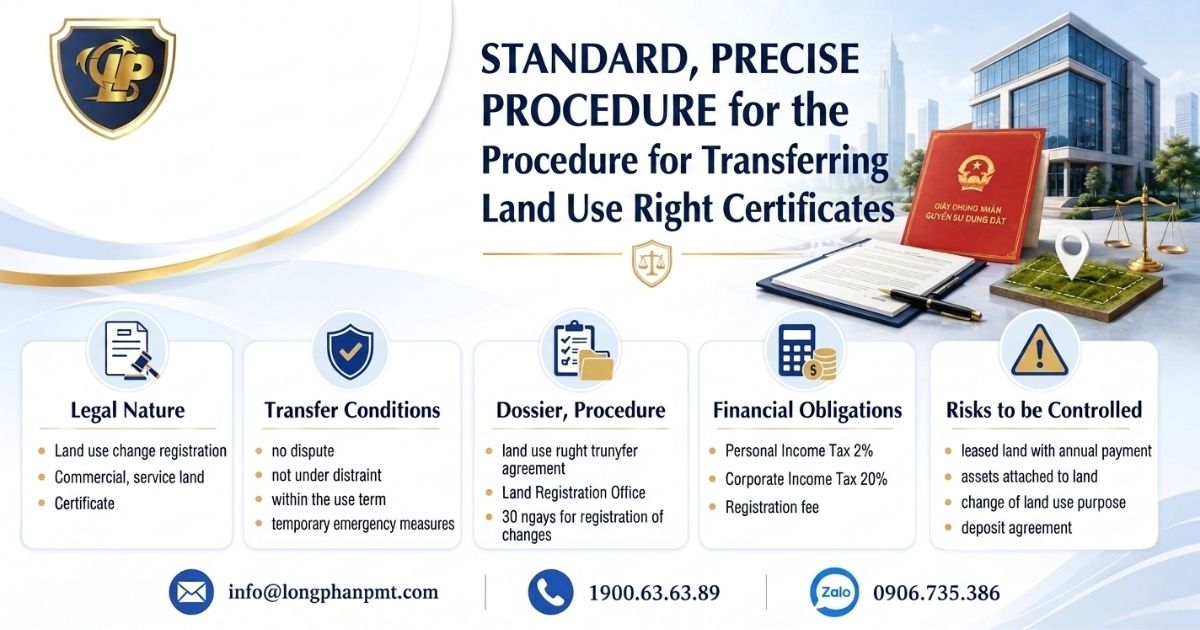
According to Article 40 of the Law on Real Estate Business 2023 (amended 2024), the project must meet these criteria:
Investment Approval: The project possesses a decision on investment policy or investment approval from competent state agencies.
Planning: Detailed planning stands approved under urban and rural planning laws.
Compensation and Clearance: Compensation and resettlement support are complete. For infrastructure projects, technical infrastructure must match the approved schedule and design.
Legal Status: Land use rights remain free of disputes, distraint for judgment execution, or suspension.
Operational Status: The project is not subject to termination or land recovery decisions. Administrative violations must be fully resolved.
Mortgage: Any existing mortgages must be released (deregistered) before transfer.
Timeframe: The project remains within its execution period.
Independence: Partial transfers require the transferred section to function independently from the remaining project.
The investor receiving the transfer must adhere to Article 9 and Article 40 of the Law on Real Estate Business 2023:
Legal Entity: Established as a real estate business enterprise or cooperative.
Operational Standing: Not currently suspended or banned from real estate operations.
Financial Health: Maintains compliant credit debt and corporate bond ratios.
Equity Capital: Possesses equity not lower than 20% of total investment (projects <20 ha) or 15% (projects ≥20 ha).
Commitment: Pledges to continue construction and business operations as approved.
>>> See more at: Rights and obligations of parties when transferring real estate projects
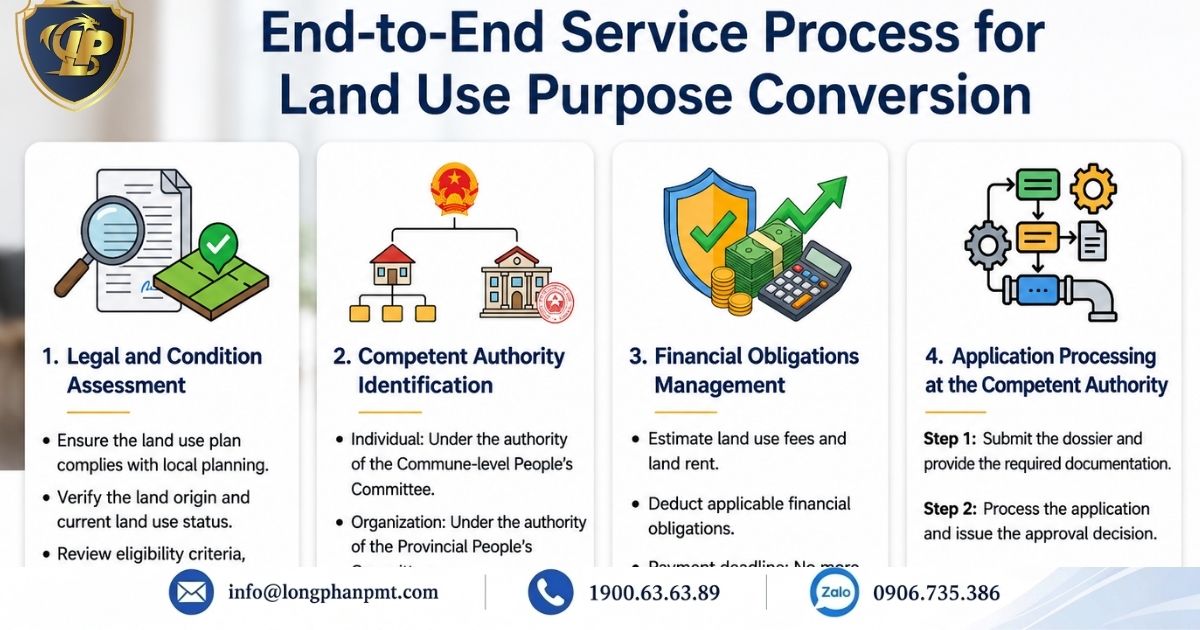
Correct identification of the receiving authority ensures timely processing. Under Section A, Part V, Appendix I of Decree 151/2025/ND-CP, the following bodies receive dossiers for land registration for real estate project transfer:
Provincial One-Stop Shop.
Land Registration Office.
Branches of the Land Registration Office.
A legally precise dossier accelerates appraisal. Decision 3308/QD-BNNMT (Section II.A, Part II) mandates the following documents:
Application Form: Form No. 15 (Decree 151/2025/ND-CP).
Financial Proof: Evidence of financial obligation fulfillment by both parties.
Transfer Permission: Official document from the competent authority permitting the transfer.
Contract: The project transfer contract.
Map Extract: Cadastral map extract signed by the Land Registration Office (for partial transfers).
Application Form: Form No. 18 (Decree 151/2025/ND-CP).
Original Certificate: The certificate previously issued to the transferor.
Financial Proof: Evidence of financial obligation fulfillment.
Transfer Permission: Official document permitting the transfer.
Contract: The project transfer contract.
Split/Merge Drawing: Form No. 22 (Decree 151/2025/ND-CP) for partial transfers.
Additional Requirements: Citizen Identity Cards and Power of Attorney (if applicable).

Step 1: Submission
Direct/Postal: Submit one dossier set to the Public Administration Center or Land Registration Office.
Online: Submit via the National Public Service Portal (Procedure Code: 1.013994). Documents must be digitalized from certified copies.
Note: Original certificates must be submitted for physical verification.
Step 2: Preliminary Processing The receiving agency checks completeness, issues a receipt, and forwards the file to the Land Registration Office.
Step 3: Land Registration Office Processing Processing varies by entity type and land status:
Domestic Investors (Certificate Issued): The office verifies conditions, updates the cadastral database, sends tax information (Form 19, Decree 151/2025/ND-CP) to tax authorities, and issues/updates the Certificate upon financial clearance.
Domestic Investors (No Certificate): The office sends tax information, finalizes the dossier upon payment, and submits it to the provincial land management agency for Certificate issuance.
Foreign Invested Enterprises (FIE): Land registration for real estate project transfer involving FIEs follows land allocation or lease procedures, not standard variation registration.
Annual Rental Land: The office notifies tax authorities to terminate the transferor’s obligations and establishes the transferee’s obligations.
>>> See more at: Online Land Registration Guide 2025
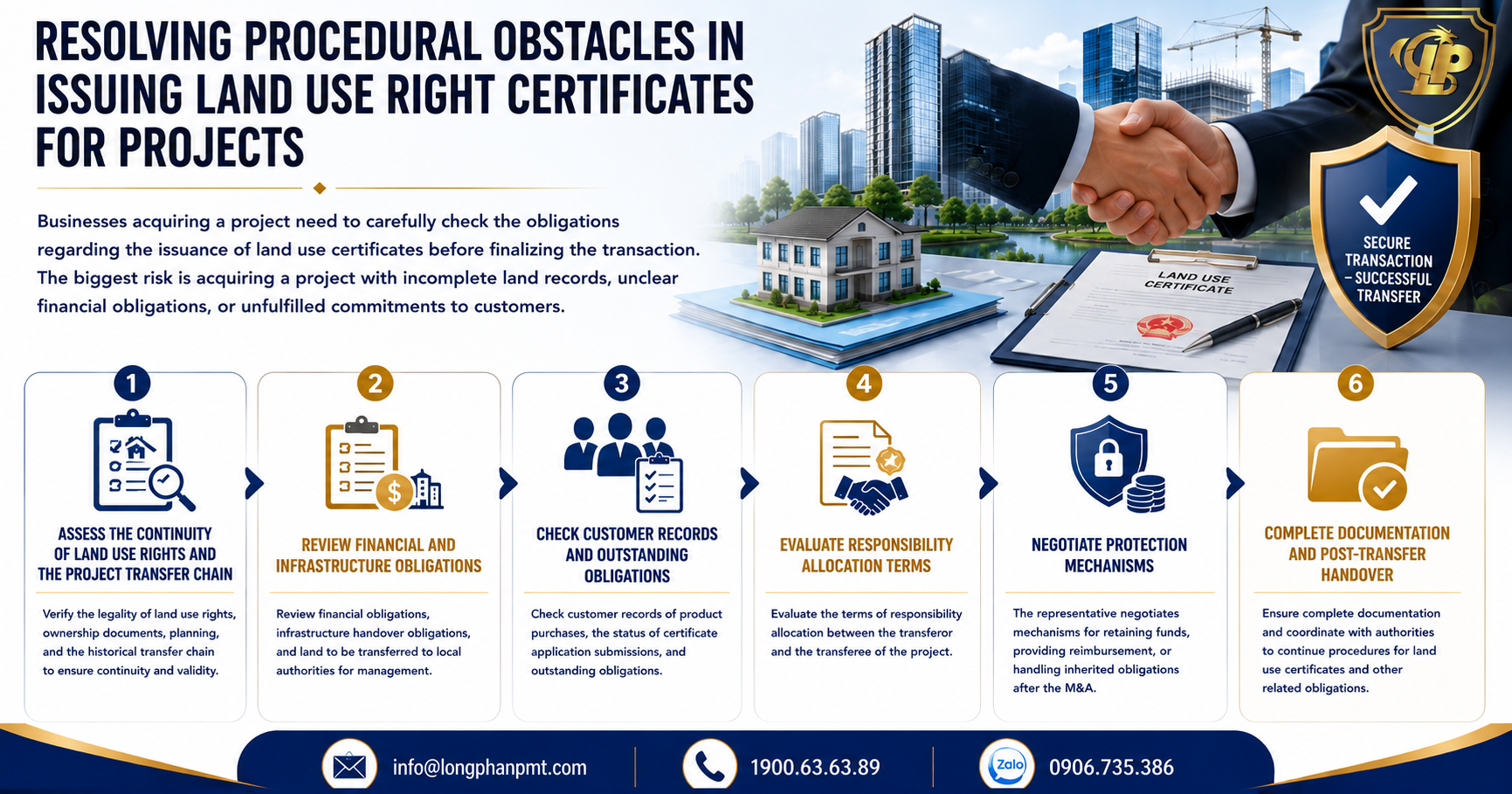
Upon completing land registration for real estate project transfer, the new investor must:
Publicly Announce: Notify customers and partners of the ownership change via official correspondence and mass media.
Update Licenses: Adjust the investor’s name on the Construction Permit, Fire Safety approval, and Environmental License to ensure synchronization.
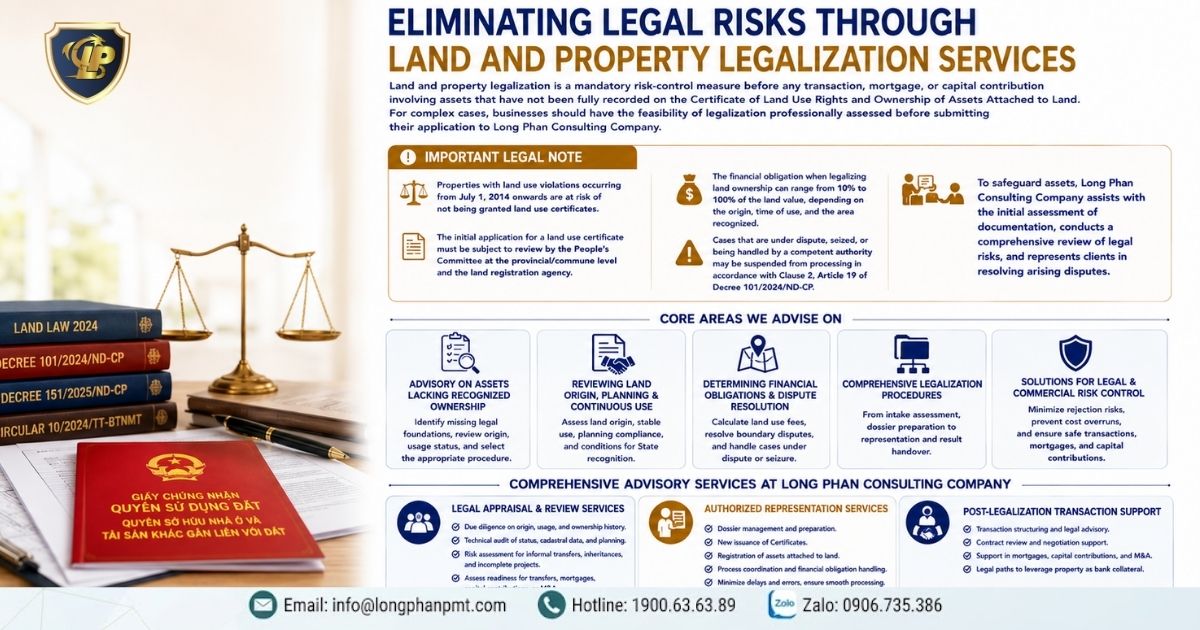
Long Phan Consulting Company provides technical legal support for land registration for real estate project transfer.
Legal Assessment: Analysis of project eligibility and transfer conditions.
Dossier Preparation: Drafting and verification of all required forms and contracts.
Representation: Authorized submission and monitoring at state agencies.
Explanation: Direct engagement with authorities to clarify dossier details.
Result Management: Receipt and handover of the Certificate.

The transferee typically submits the dossier. However, the contract may designate the transferor or transferee as the representative. The application requires signatures from both parties.
Projects under mortgage cannot undergo transfer registration without prior release (deregistration). Alternatively, the bank must provide written consent permitting the transfer.
FIEs do not follow the standard variation registration. The state recovers land from the transferor and allocates or leases it to the FIE transferee to ensure strict regulatory oversight.
Authorities reject dossiers if the project has disputes, the transferee lacks financial capacity, financial obligations remain unpaid, or data inconsistencies exist without valid explanation.
Transferees must provide audited financial statements or independent audit certifications confirming equity capital meets the 20% (projects <20ha) or 15% (projects ≥20ha) threshold.
Successful land registration for real estate project transfer is decisive for legalizing ownership and securing investment. Investors must act with precision. For expedited processing and risk mitigation, contact Long Phan Consulting Company at 1900636389 for expert assistance.