
The pawnshop business conditions opens up attractive investment opportunities in the financial industry. Enterprises participating in this field need to master legal regulations to operate effectively and safely. In this article, Long Phan will analyze in detail the requirements, registration process and obligations of pawnshop businesses, helping you build a solid foundation for your business in this potential field.

The registration process for a pawnshop business includes the following primary steps:
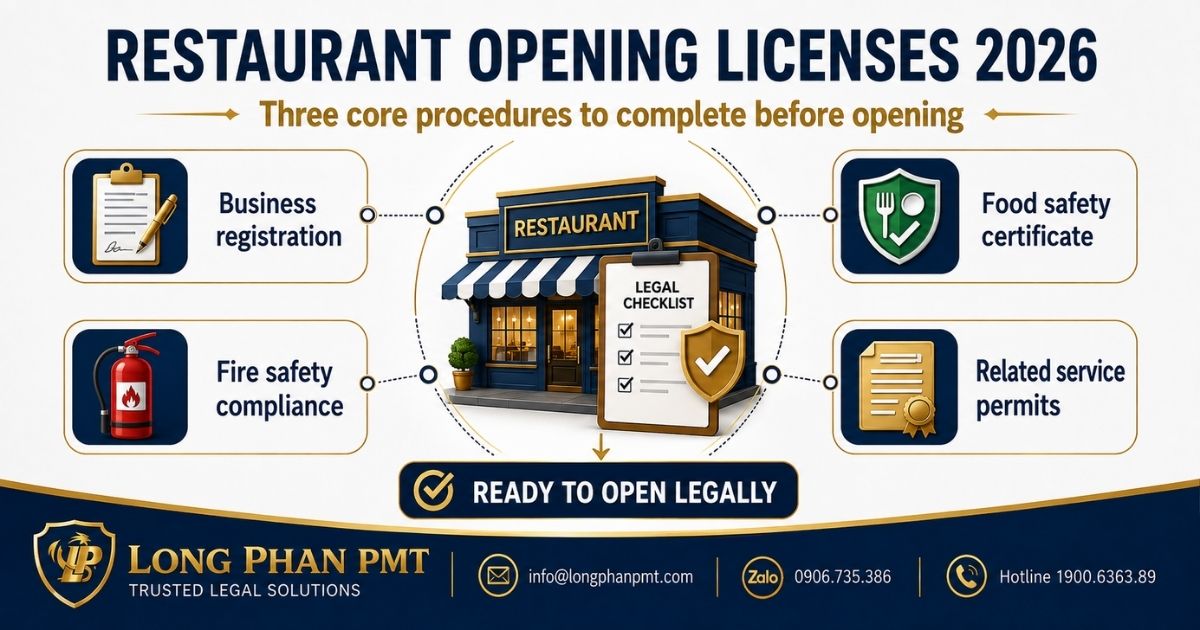
Business Registration: According to Article 7 of Decree 96/2016/NĐ-CP, a pawnshop business must be registered, licensed, or established under Vietnamese law. Article 3, Clause 4 of the same decree defines the pawnshop business as the activity of lending money against legally owned assets as collateral. The establishment must be legally formed through business registration at the competent authority where the pawnshop is located.
The business can be registered as a Household Business or an Enterprise. For a household business, the application is filed at the District-level People’s Committee’s Finance and Planning Office. For an enterprise, the application is filed at the provincial Department of Finance’s Business Registration Office.
Fire Safety and Prevention Compliance: After obtaining the Business Registration Certificate, the pawnshop must secure a fire prevention and fighting (PCCC) permit or a written approval of its PCCC plan from the relevant authorities. The business can only proceed to the next step after obtaining documents proving the facility meets fire safety conditions for the business area and collateral storage warehouse.
Security and Order Certificate Application: The final and decisive step is applying for the Certificate of Eligibility for Security and Order. This is a mandatory legal document confirming the establishment complies with all personnel, facility, and other specialized regulatory requirements. Without this certificate, all lending and pledging activities are considered illegal and subject to legal penalties.
Understanding this sequence is fundamental to establishing a legally compliant pawnshop, ensuring operational stability and mitigating legal risks.
The specific pawnshop business conditions are detailed in Decree 96/2016/NĐ-CP, as amended by Decree 56/2023/NĐ-CP. These regulations establish a strict legal framework covering aspects from the legal status of the business to the ethical and background standards of its direct manager. Compliance is not just a one-time requirement for licensing but a continuous obligation throughout the operational period.
Article 7 of Decree 96/2016/NĐ-CP sets out the general security and order conditions applicable to conditional business lines.
6492 - Other credit granting activities, with the detail: Pawnshop business.Additionally, the registration must comply with specific conditions outlined in the Law on Enterprises 2020, depending on the individual case.
The person responsible for the pawnshop’s security and order must meet the general conditions in Article 7 of Decree 96/2016/NĐ-CP and the specific conditions for this role in Article 9 of Decree 96/2016/NĐ-CP (amended by Decree 56/2023/NĐ-CP). The requirements include:
Note: Decree 56/2023/NĐ-CP has abolished the requirement for the responsible person to have at least five years of permanent residence at the business registration location, creating a more open regulatory environment. These are non-negotiable pawnshop business conditions.
Article 7, Clause 3 of Decree 96/2016/NĐ-CP requires that the pawnshop business meets all fire safety regulations. The establishment’s fire prevention design must be approved by the Fire Police authority.

>>> See more: Instructions for applying for a fire protection license for individual business households
>>> See more: Procedure for applying for a standard fire prevention and fighting license.
After meeting the pawnshop business conditions and receiving a license, the establishment must adhere to strict operational responsibilities outlined in Articles 25 and 29 of Decree 96/2016/NĐ-CP. The objective is to ensure transparent, lawful operations and prevent the business from being used to trade illicitly obtained assets.
Based on Article 25 of Decree 96/2016/NĐ-CP, the pawnshop has general legal responsibilities:
Article 29 of Decree 96/2016/NĐ-CP outlines responsibilities specific to pawnshops:
Compliance will be regularly monitored by the Police. Violations can lead to administrative fines and revocation of the Certificate of Eligibility for Security and Order.

Long Phan Consulting Company provides comprehensive services designed for the pawnshop industry, ensuring clients comply with all legal regulations from establishment through operation.
Initial Licensing and Setup:
Operational Compliance and Risk Management:
Long Phan Consulting Company is committed to partnering with your business from registration until all necessary legal documents are secured. We stay current with all regulatory changes to provide accurate and timely advice.
Under the Civil Code 2015, the agreed interest rate for civil transactions, including pawn services, must not exceed 20% per annum of the loan amount, unless otherwise provided by a relevant law. Any agreement exceeding this limit is void.
Current law primarily controls the interest rate ceiling. Other fees, such as asset storage or valuation fees, are not prohibited but must be clearly and transparently agreed upon in the pledge agreement. These fees must be reasonable and not serve as a means to circumvent the interest rate cap.
When a loan contract expires and the borrower fails to meet their obligations, the pawnshop has the right to liquidate the pledged asset as specified in the agreement. If there is no prior agreement, the asset must be sold via auction. After deducting the principal, interest, and reasonable costs, any remaining surplus must be returned to the pledger.
A legally valid pledge agreement must contain: full information of both parties; a detailed description and condition of the pledged asset; the asset’s value at the time of pledge; the total loan amount; the interest rate and calculation method; the loan term; the repayment method; terms for asset liquidation; and the rights and obligations of both parties.
The pawnshop is liable for compensating for any loss or damage to the pledged asset, except in cases of force majeure. The compensation amount is determined by the agreement or by the market value of the asset at the time the damage occurred.
Unlike some other licenses, the Certificate of Eligibility for Security and Order does not have a fixed expiration date. However, it becomes invalid and must be returned to the Police if the business is dissolved, declared bankrupt, or ceases operations. A new certificate must be applied for if there are any changes to the information on the current one.
A pawnshop is a conditional business, recognized and strictly managed by law, requiring legal collateral and adherence to interest rate caps. Conversely, “tín dụng đen” (predatory lending or loan-sharking) is the act of lending at an interest rate five times or more than the highest rate set by the Civil Code. It is an illegal activity subject to criminal prosecution.
This is not mandatory. The business owner can authorize another person in writing (e.g., a director or manager) to be the person responsible for security and order. However, the authorized person must meet all the strict personal background conditions stipulated in Articles 7 and 9 of Decree 96/2016/NĐ-CP (as amended).
The pawnshop business conditions demand strict enterprise compliance with regulations on security and order, business registration, fire safety, and legal responsibilities. Fulfilling the requirements for the person in charge of security, maintaining a safe facility for fire prevention, and executing the proper professional pledge process are key factors for ensuring lawful and sustainable business operations. For detailed consultation and assistance with legal procedures, please contact the Long Phan Consulting Company hotline at 1900636389.