
Overseas Vietnamese buying land plots in real estate projects is a right under current Vietnamese law. However, exercising this right requires strict adherence to legal conditions and procedures. These regulations clearly define eligible parties, forms of ownership, and specific limitations. This analysis by Long Phan Consulting Company details the legal requirements, processes, and essential considerations to ensure clients conduct a safe transaction.

Current law does not provide a specific legal definition for a “land plot” (đất nền). In the real estate business, a land plot is understood to be a parcel of land without existing structures, maintained in its original state, that has been planned and subdivided within an investment project. The sale and purchase of a land plot is, in effect, a transaction to transfer land use rights.
In practice, land plots are classified by purpose and location into three main types:
For a land plot in a project to be eligible for transaction, the law sets out strict requirements. According to Article 31 of the Law on Real Estate Business 2023, the transfer of land use rights in a real estate project to an individual for self-construction of a house must meet the following conditions:
Fulfilling these legal conditions under the Law on Real Estate Business 2023 is a mandatory requirement for a project land plot to be legally transacted, creating a safe legal corridor for all participants.

“Overseas Vietnamese” includes Vietnamese citizens residing abroad who still hold Vietnamese nationality, and people of Vietnamese origin residing abroad who no longer hold Vietnamese nationality. For Vietnamese citizens abroad, real estate rights are applied as they are for domestic citizens. For people of Vietnamese origin without Vietnamese nationality, real estate rights in Vietnam are more limited.
However, the Land Law 2024, effective from January 1, 2025, introduces new regulations that expand land access for people of Vietnamese origin residing abroad. These provisions create the legal basis for overseas Vietnamese buying land plots in real estate projects legally. Specifically:
According to Point h, Clause 1, Article 28 of the Land Law 2024, people of Vietnamese origin residing abroad who are permitted to enter Vietnam have the following rights:
This regulation shows that Overseas Vietnamese can directly receive residential land use rights by purchasing a house in a housing development project. Although the law does not explicitly mention “buying a land plot,” the purchase of a house attached to land use rights in a project effectively includes the ownership of the use right for that plot. This is the legal mechanism that facilitates overseas Vietnamese buying land plots in real estate projects.
Furthermore, Clause 3, Article 27 of the Land Law 2024 stipulates that for land use right transfer contracts where one or more parties are a real estate business, notarization or authentication is performed at the request of the parties, creating transactional flexibility. This means when an Overseas Vietnamese buys a future housing product or an eligible land plot in a project from a developer, the transaction is conducted through a real estate business contract, consistent with the new regulations.
These progressive regulations in the Land Law 2024 have officially created a clear mechanism, allowing Overseas Vietnamese to legally own real estate attached to residential land in projects, removing previous legal barriers.
To protect the buyer’s rights and ensure market transparency, the law requires the transferor (project developer) to meet strict conditions. A developer with sufficient legal and financial standing to conduct the transaction is a key factor for the client’s safety when purchasing a land plot.
According to Article 32 of the Law on Real Estate Business 2023, the party transferring land use rights with completed technical infrastructure in a real estate project to an individual must:
Therefore, a thorough appraisal of the developer’s legal status and compliance is the first and most effective risk-screening step for any client before proceeding with a transaction.

The transaction of purchasing a land plot in a real estate project carries many legal and financial risks. To ensure safety, clients should conduct a comprehensive appraisal and inspection before making an investment decision.
Completing these appraisal steps is not just a preventive measure but an effective legal tool to help clients protect their legitimate rights and interests throughout the investment process.
The process of overseas Vietnamese buying land plots in real estate projects is complex, requiring deep legal knowledge and practical experience. The changes in the Land Law 2024 and the Law on Real Estate Business 2023 bring both opportunities and challenges. Using a professional consulting service is an optimal solution to successfully navigate this legal environment.
Long Phan Consulting Company provides in-depth legal consulting services for investment and the purchase of land plots in real estate projects. We assist clients throughout the entire transaction process, from the initial appraisal stage to the completion of procedures for transferring the name on the Certificate of Land Use Rights.
Our services include:
With expertise and experience, Long Phan Consulting Company is committed to accompanying clients, turning complex legal regulations into safe and effective investment solutions in practice.
According to the Land Law 2024, both groups have the opportunity to own real estate attached to residential land in projects. However, those still holding Vietnamese nationality have a legal status equivalent to domestic citizens, while those of Vietnamese origin without nationality must be permitted to enter Vietnam and exercise their right through the mechanism of purchasing a house attached to land use rights.
The Land Law 2024 allows Overseas Vietnamese to “receive residential land use rights in housing development projects.” This is often done by purchasing a house to be built in the future that is attached to that plot. Therefore, the transaction is not for a simple vacant plot, but for a property that includes both the right to use the land and the house that will be built on it according to the approved plan.
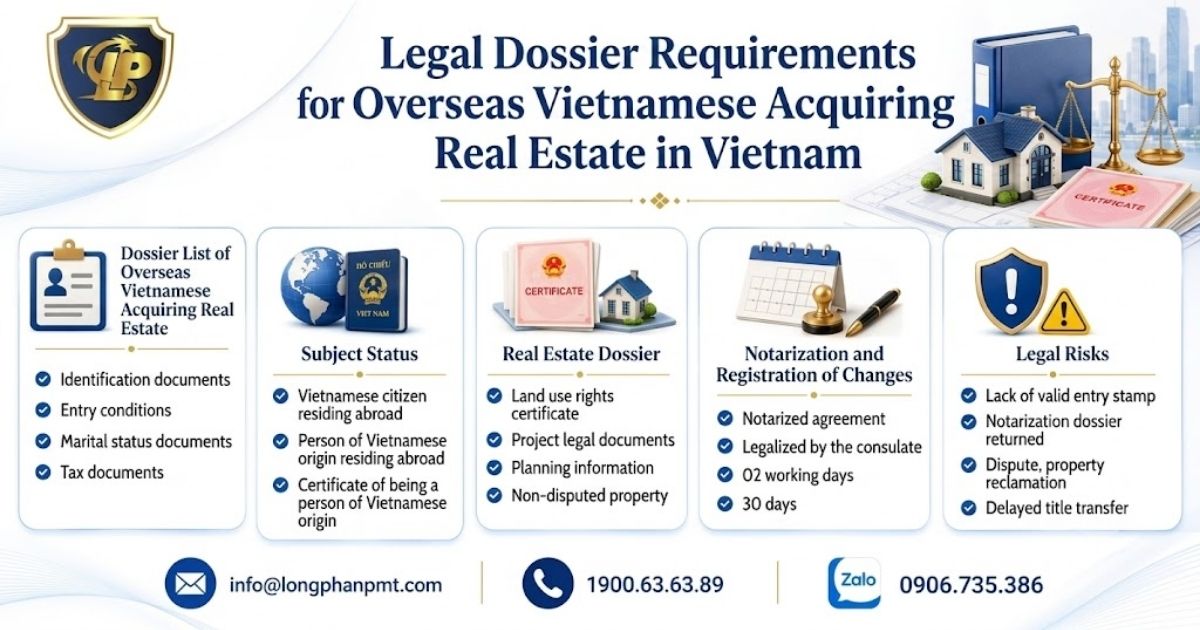
Overseas Vietnamese need to provide a valid Vietnamese passport (if still a citizen) or a foreign passport accompanied by documents proving Vietnamese origin (such as a birth certificate, decision of renunciation of Vietnamese citizenship, or a certificate of Vietnamese origin issued by a competent authority) and a document confirming permission to enter Vietnam.
You should request the developer to provide copies of core legal documents such as the project approval decision, 1/500 detailed plan, infrastructure construction permit, and the Department of Construction’s letter confirming the land plot is eligible for transaction. Additionally, you can hire a legal consulting firm in Vietnam to independently appraise these documents at state agencies.
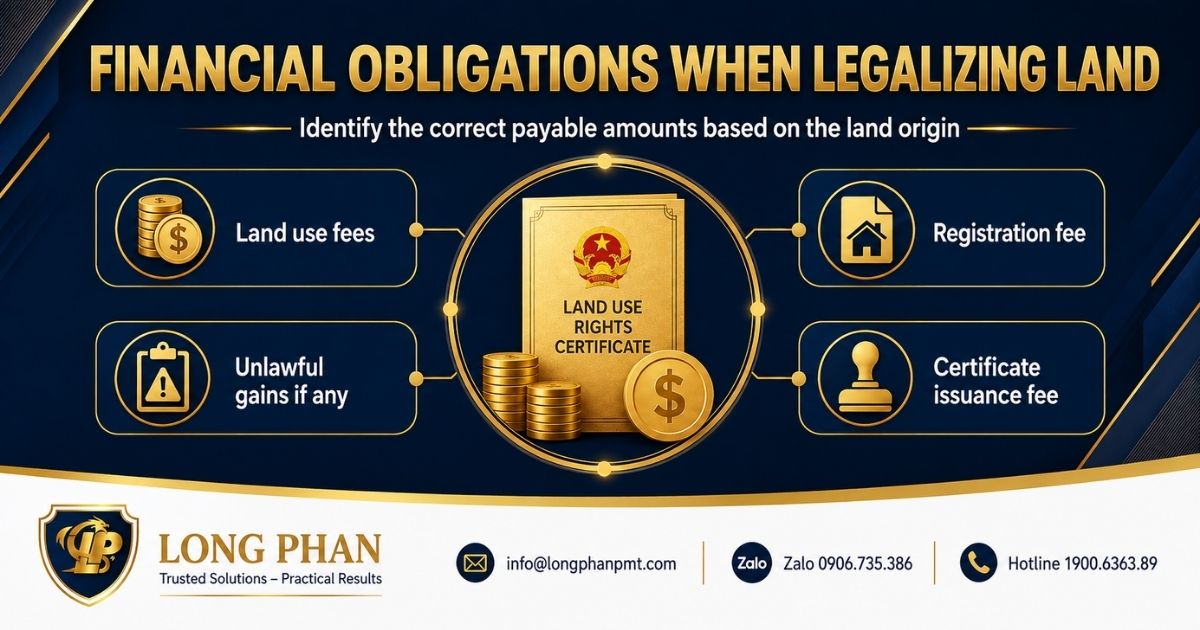
When receiving a transfer from a developer, the selling price usually includes Value Added Tax (VAT). Upon being issued the title (Sổ hồng – Pink Book), you will need to pay a registration fee (usually 0.5% of the property’s value) and other administrative fees related to registration and certificate issuance.
After being issued the Certificate of Land Use Rights, Ownership of Housing and Other Assets Attached to Land, Overseas Vietnamese have the rights of an owner, including the right to transfer (sell), gift, bequeath, or mortgage at credit institutions permitted to operate in Vietnam, in compliance with the conditions of current law.
Yes, many commercial banks in Vietnam have policies for lending to Overseas Vietnamese to buy real estate, provided they can prove a legal and stable source of income to repay the debt. The purchased property itself serves as collateral for the loan.
The money transfer must be done through the banking system to ensure legality. You need to clearly state the purpose of the transfer is to pay for a house purchase in a specific project, and keep all transaction documents to prove the legal origin of the funds if required.
Owning real estate is a factor that shows attachment to Vietnam, but it is not a decisive condition or a direct priority mechanism in the process of reapplying for citizenship. The approval for reacquiring Vietnamese citizenship follows the separate regulations of the Law on Nationality.
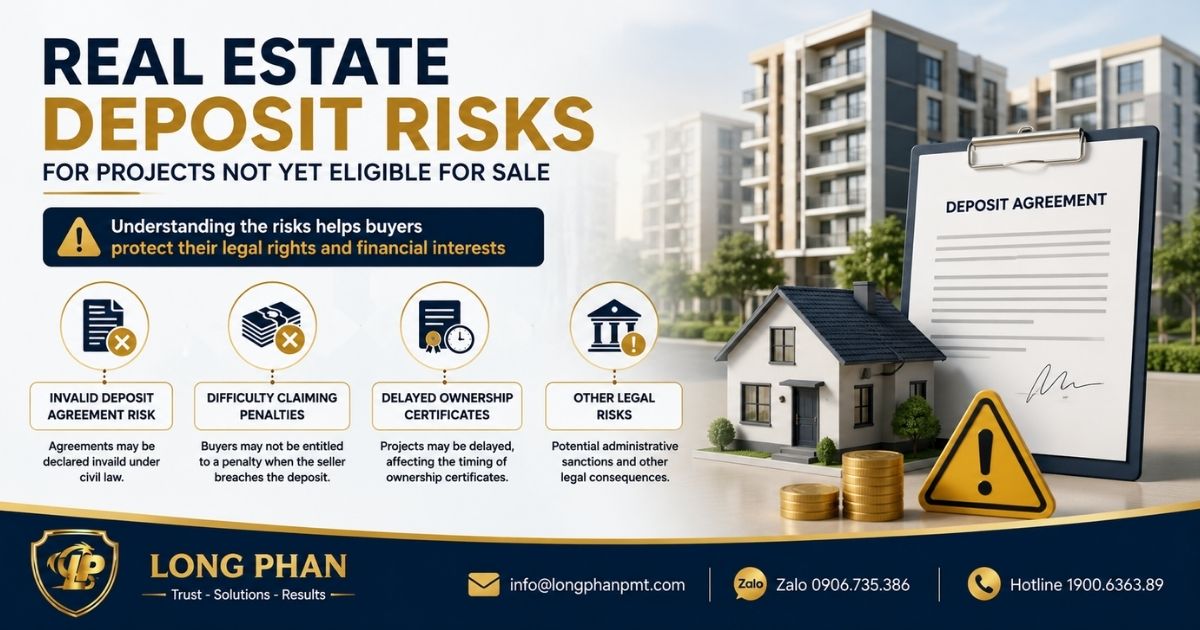
A deposit agreement is usually a preliminary document to confirm the intention to buy and “reserve” the plot, involving a small amount of money. The purchase contract is the official legal document, detailing all the rights and obligations of the parties, the transaction value, and the payment and handover schedules. The purchase contract has much higher legal value and is the basis for registering ownership later.
A land plot transaction in a project is a major investment decision. Correctly complying with legal regulations not only ensures the legality of the property but also helps clients avoid unnecessary disputes in the future. To ensure legal safety and optimize your rights, please contact Long Phan Consulting Company via hotline 1900 636 389 to receive in-depth and comprehensive support from our real estate investment consulting service for Overseas Vietnamese.