
Overseas Vietnamese buying bank mortgaged houses requires a profound understanding of land laws and the collateral asset handling process. This transaction harbors many risks if the mortgage release and ownership transfer processes are not strictly controlled under the 2023 Housing Law. The expert team at Long Phan Consulting Company provides detailed information on this issue for clients in the article below.

Buying a bank-mortgaged house is a form of acquiring assets within the “foreclosed assets” category, which occurs when the original owner is no longer able to repay their loan obligations. This type of transaction has become increasingly relevant in the context of overseas Vietnamese buying bank – mortgaged houses, as it opens up access to discounted properties. In such cases, the collateral (housing or land) is liquidated based on agreements between the borrower and the bank in order to recover outstanding debts.
Notably, in transactions involving overseas Vietnamese buying bank – mortgaged houses, all legal aspects must be thoroughly reviewed to ensure the transfer complies with regulations throughout the collateral handling process. In these cases, the bank serves as an intermediary connecting the buyer and the seller. It is important to understand that the bank is not the actual property owner; rather, it facilitates the mortgage release and supports both parties in completing the sale procedures.
In practice, the bank will coordinate the preparation of mortgage release documentation prior to the transfer to ensure legal compliance. This step is particularly important in cases involving overseas Vietnamese buying bank – mortgaged houses, where procedural clarity helps avoid potential disputes. Overall, this transaction method is carried out in accordance with current regulations to safeguard the rights and interests of both buyers and sellers.
Under Article 320 of the 2015 Civil Code, the mortgagor is not permitted to sell, replace, exchange, or donate a mortgaged asset without the consent of the mortgagee (the bank), a rule that directly impacts transactions involving overseas Vietnamese buying bank – mortgaged houses. In addition, Article 321 of the 2015 Civil Code outlines the specific rights of the mortgagor as follows:
Based on these legal grounds, for a house currently mortgaged at a bank, the owner is only permitted to proceed with a sale if the bank provides its consent. This principle also applies in cases of overseas Vietnamese buying bank – mortgaged houses, where the transfer must strictly follow the mortgage release procedure and obtain prior approval from the bank. Accordingly, the seller is required to notify the bank of their intention to sell and may only accept a deposit once such consent has been granted.
>>>See more: Property Buyer Finding Services for Real Estate Owners
To purchase a mortgaged house in Vietnam, buyers must fully satisfy legal requirements related to housing ownership rights, financial capacity, and the validity of the transaction under current regulations—particularly in cases involving overseas Vietnamese buying bank – mortgaged houses, where compliance plays a decisive role.
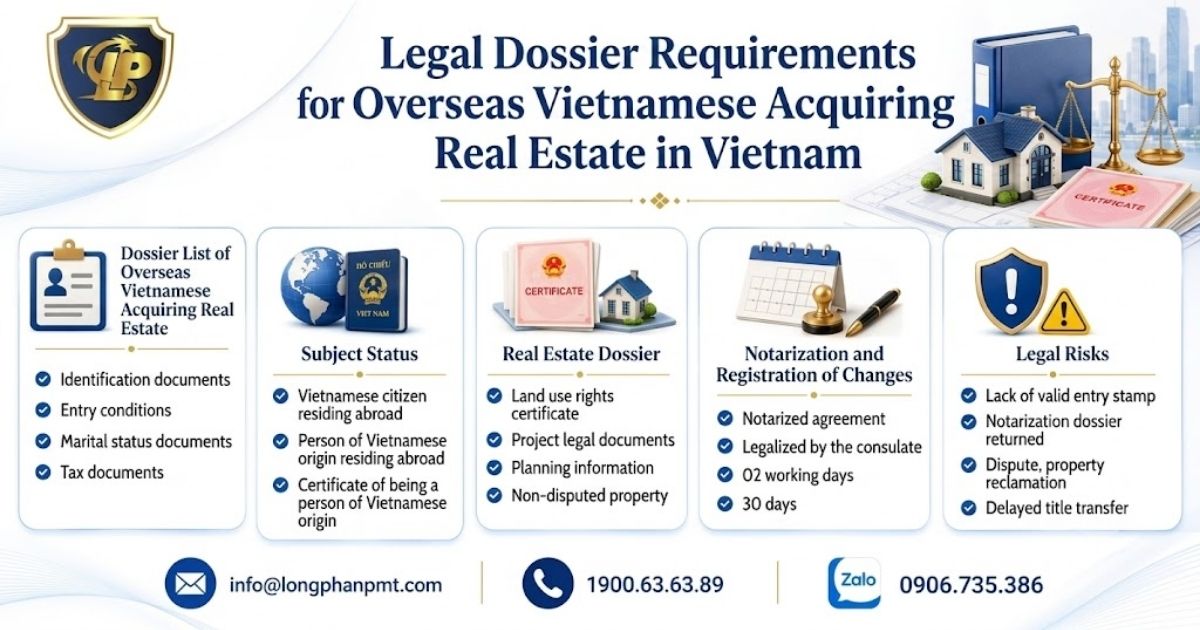
Overseas Vietnamese are allowed to engage in real estate transactions under specific business forms and purposes, depending on their nationality status as outlined in Clauses 2 and 3, Article 10 of the 2023 Law on Real Estate Business. This framework is particularly relevant to overseas Vietnamese buying bank – mortgaged houses, as eligibility conditions may influence how such transactions are structured and executed.
For Overseas Vietnamese Retaining Vietnamese Nationality
Under Clause 2, Article 10 of the 2023 Law on Real Estate Business, Vietnamese citizens residing abroad who are permitted to enter Vietnam may engage in real estate business activities – including participation in overseas Vietnamese buying bank – mortgaged houses through the following forms:
For People of Vietnamese Origin (No Longer Holding Vietnamese Nationality)
Under Clause 3, Article 10 of the 2023 Law on Real Estate Business, people of Vietnamese origin permitted to enter Vietnam may participate in these forms:
Under the 2023 Housing Law, the 2024 Land Law, and Decree 95/2024/ND-CP, Overseas Vietnamese can invest when fully meeting these legal conditions:
For Overseas Vietnamese Retaining Vietnamese Nationality
Under Point b, Clause 3, Article 3 of Decree 95/2024/ND-CP, they must:
For People of Vietnamese Origin (No Longer Holding Vietnamese Nationality)
Under Point b, Clause 2, and Point c, Clause 3, Article 3 of Decree 95/2024/ND-CP, they must:
In addition, under Clause 1, Article 44 of the 2024 Land Law, persons of Vietnamese origin who meet the prescribed conditions may own residential houses attached to land use rights within housing development projects eligible for transfer in accordance with approved planning. This provision is particularly significant for overseas Vietnamese buying bank – mortgaged houses, as it clarifies ownership eligibility in more complex transactions. However, proving Vietnamese origin and ensuring lawful entry into Vietnam remain mandatory requirements for the transaction to be legally recognized and for ownership rights to be fully secured.
In general, whether they are Vietnamese citizens or persons of Vietnamese origin who no longer hold Vietnamese nationality, the law allows participation in real estate investment in Vietnam, albeit under different conditions. This distinction becomes especially relevant in more complex cases, including overseas Vietnamese buying bank – mortgaged houses, where legal requirements tend to be more stringent. A clear understanding of, and full compliance with, regulations on legal documentation, entry conditions, proof of origin, and financial capacity will help ensure lawful transactions, minimize risks, and safeguard long-term rights and interests.
>>>See more: Full-Package Support Services for Buying Real Estate in Vietnam
The process of acquiring mortgaged properties involves close coordination between the seller, the bank, and the buyer, along with strict compliance with legal procedures – an approach that is especially critical in cases of overseas Vietnamese buying bank – mortgaged houses to ensure a secure and legally valid transaction.
In this arrangement, the bank, the seller, and the buyer enter into a tripartite agreement that clearly defines the terms for deposits, payment schedules, and mortgage release procedures. This structure is particularly important in transactions involving overseas Vietnamese buying bank – mortgaged houses, where stricter provisions are needed to safeguard rights and manage legal risks for all parties. The specific process includes:
The seller may substitute the mortgaged property with another asset as collateral, allowing the original property to be released for transfer. This mechanism is particularly useful in scenarios involving overseas Vietnamese buying bank – mortgaged houses, as it helps ensure the mortgage obligation remains secured while enabling the buyer to proceed without concerns about the seller’s outstanding debts.
In practice, this approach is commonly applied in more complex transactions, particularly in cases of overseas Vietnamese buying bank – mortgaged houses, as it helps ensure a smooth transfer process while still maintaining the seller’s financial obligations to the bank.
In practice, this approach is commonly applied in more complex transactions, particularly those involving overseas Vietnamese buying bank – mortgaged houses, as it helps ensure a smooth transfer process while still maintaining the seller’s financial obligations to the bank. If the seller is unable to repay the loan and the bank proceeds with asset seizure, the property will typically be handled through foreclosure and sold via a public auction process.
These options provide buyers with the flexibility to choose a method that best aligns with their needs and financial capacity, particularly in the context of overseas Vietnamese buying bank – mortgaged houses, where transaction structures can vary depending on legal and financial considerations.

The procedure for purchasing a mortgaged house is strictly regulated, particularly in cases involving foreign elements, such as overseas Vietnamese buying bank – mortgaged houses, where compliance requirements are more rigorous:
Step 1:
Tripartite Commitment Sign a notarized/authenticated tripartite commitment (You, Seller, and Bank) regarding payment for the house and clearing the seller’s loan. You will pay the bank an amount equal to the house’s price into a designated account. The bank clears the principal and interest, executes the mortgage release, and hands the book and excess money (if any) to the seller.
Step 2:
Notarizing the Sale Contract You and the seller go to a notary office to establish the real estate sale contract. Required documents include: ID cards, household registries (or equivalent), Certificate of Land Use Rights, and marital status confirmations.
Step 3:
Fulfilling Financial Obligations Pay Personal Income Tax and registration fees at the tax sub-department where the real estate is located.
Step 4:
Title Transfer Registration Execute the title transfer at the Land Registration Office. The dossier includes:
The above outlines the fundamental procedures for purchasing a property mortgaged to a bank. However, to ensure a safe and effective transaction especially in cases involving overseas Vietnamese buying bank – mortgaged houses—buyers should conduct thorough due diligence on the legal status of the property, carefully negotiate pricing and contractual terms, and complete registration for auction participation while setting a clear maximum bid within their financial capacity. If successful, the buyer will then proceed to sign the purchase agreement and finalize payment for the property.
Before proceeding with the purchase of a mortgaged property, buyers should carefully consider several key factors to ensure a secure transaction, particularly in situations involving overseas Vietnamese buying bank – mortgaged houses, where additional legal and financial complexities may arise:
Long Phan Consulting Company provides in-depth legal support to ensure safe transactions when Overseas Vietnamese buy bank-mortgaged houses. Our experts execute the following specialized tasks:

The following, Long Phan Consulting Company Here are some frequently asked questions regarding the process of overseas Vietnamese purchasing mortgaged properties. We invite interested customers to refer to them:
Foreign individual customers are only permitted to own residential properties (including apartments and detached houses) within commercial housing development projects, excluding areas designated for national defense and security as stipulated in Article 16 of the 2023 Housing Law. If shophouses are classified as non-residential constructions, foreigners will not be eligible to own them under current conditions.
Customers should request the seller to provide planning information or directly check with the local Department of Natural Resources and Environment based on the information disclosure provisions in Article 6 of the 2023 Law on Real Estate Business. This verification ensures that the property being transacted meets the condition of “not being prohibited from transaction by law” and is safe for the customer’s long-term use.
The mortgagor has the right to sell the mortgaged property if the mortgagee (bank) agrees, as stipulated in Clause 4, Article 321 of the 2015 Civil Code. Customers should request the seller to carry out the mortgage release procedure or establish a tripartite agreement (Buyer – Seller – Bank) to ensure their rights and the legal transfer of the land title.
This transaction is at risk of being declared invalid due to non-compliance with the requirement that the contract must be notarized or certified, as stipulated in Clause 3, Article 27 of the 2024 Land Law. When the contract is invalid, the parties must return to each other what they have received, resulting in you losing an investment opportunity and difficulty recovering any payments made if the seller is uncooperative.
Clients should evaluate based on publicly available financial reports, tax compliance history, and the actual handover progress of previous projects. Transparency in providing legal documents and operational management capabilities after handover are qualitative standards that help clients trust in the asset’s appreciation value.
Overseas Vietnamese buying a bank-mortgaged house requires a rigorous process to protect the buyer’s lawful rights. With in-depth experience in the land and housing sectors, we commit to accompanying you through every step of the transaction. If you require detailed support regarding buying a mortgaged house, please contact Hotline 1900636389 immediately to receive direct support from the expert team at Long Phan Consulting Company.