Obtaining a Tobacco Cultivation Certificate is a legal procedure that enterprises must follow to operate in this sector in Vietnam. Investment activities in tobacco cultivation are governed by specialized legal documents. These regulations establish a clear legal framework for the entire process. This article by Long Phan Consulting Company analyzes the conditions, dossier, and procedure for this certificate.
Procedure for Issuing a Tobacco Cultivation Certificate in Vietnam
Conditions for a Tobacco Cultivation Certificate
To get a Tobacco Cultivation Certificate, an enterprise must meet specific conditions. These conditions ensure that investment activities are scalable, comply with planning, and are linked to raw material growing areas. Over time, some initial conditions were abolished to streamline administrative procedures and create a more favorable business environment.
Based on Article 7 of Decree 67/2013/ND-CP, along with the abolished provisions in Clause 3, Article 4 of Decree 08/2018/ND-CP and Clause 1, Article 19 of Decree 17/2020/ND-CP, the current conditions an enterprise must meet include:
Business Registration for Tobacco Raw Material Trading: This is a prerequisite that establishes the legal status of an enterprise permitted to operate in this specific field. The enterprise must register business lines related to trading or processing tobacco raw materials. This forms the basis for subsequent procedures to obtain the Tobacco Cultivation Certificate. Pursuant to Decision 27/2018/QD-TTg dated July 6, 2018, the industry code that a trader can register for tobacco cultivation investment is Code 0115 – 01150: Growing of tobacco. This group includes activities of growing tobacco for rolling cigarettes (cigars) and for processing tobacco. Excluded: Tobacco processing activities are classified under group 1200 (Manufacture of tobacco products).
Investment Scale of at Least 100 Hectares Annually: This condition ensures the enterprise has the financial capacity and a serious, large-scale investment plan, contributing to the formation of a concentrated and stable raw material area. The 100-hectare scale is the minimum cultivation area maintained annually, demonstrating a long-term investment commitment and a connection with the locality and farmers.
Investment Contracts with Tobacco Growers: The enterprise must sign direct contracts with farming households or their representative organizations. This contract is the legal basis binding the responsibilities of both parties. The enterprise commits to investing in seeds, agricultural supplies, providing technical support, and purchasing the final product. The growers commit to cultivating according to the correct process and selling the product to the enterprise. This regulation protects the interests of farmers and creates a sustainable value chain.
Enterprises should note that several previously strict conditions regarding physical facilities (warehouses, ventilation systems), technical equipment, personnel (technical staff), and environmental protection, fire prevention, and fighting have been abolished by Decree 08/2018/ND-CP and Decree 17/2020/ND-CP. Understanding the current regulations helps businesses prepare accurately and save resources.
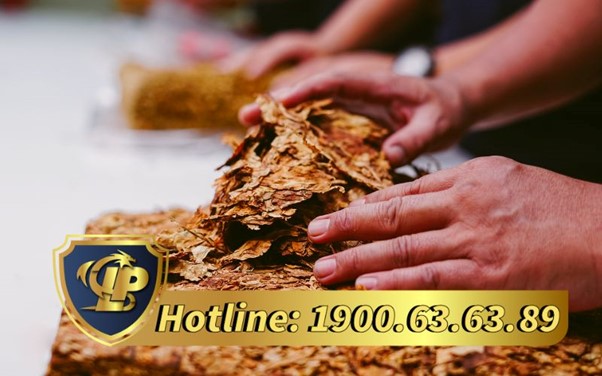
Regulations on the conditions for issuing a certificate of eligibility for growing tobacco.
Dossier for a Tobacco Cultivation Certificate
Based on Article 8 of Decree 67/2013/ND-CP, as amended by Clause 6, Article 1 of Decree 106/2017/ND-CP and Clause 4, Article 4 of Decree 08/2018/ND-CP, a complete dossier includes the following documents:
Application for a Tobacco Cultivation Certificate: The application must contain full information about the enterprise, a commitment to comply with regulations, and be signed and sealed by the enterprise’s legal representative.
A copy of the Business Registration Certificate or Enterprise Registration Certificate: This document proves the enterprise’s legal status and that its registered business lines are appropriate for tobacco cultivation investment.
Copies of investment contracts signed with tobacco growers and a summary list of the cultivation area and estimated output: The contracts must clearly show investment and purchase commitments. The summary list provides an overview of the growing area, the number of participating households, the total cultivation area (must be at least 100 hectares), and the expected yield.
A list of tobacco growers, locations, and areas, certified by the commune-level People’s Committee: This document, added by Decree 106/2017/ND-CP, verifies the information provided by the enterprise. The certification from the local authority ensures the accuracy of the participating farmers, locations, and land areas.
Requirements to submit lists of workshops, equipment, fire prevention measures, labor, and professional qualifications have been abolished under Decree 08/2018/ND-CP. Preparing the dossier according to the current list will expedite the appraisal process.
Competent Authority for Issuing the Certificate
According to Clause 1, Article 11 of Decree 67/2013/ND-CP, the competent authority to issue, re-issue, amend, and supplement the Tobacco Cultivation Certificate is the provincial-level Department of Industry and Trade (DOIT) where the enterprise has its head office.
Role of the Department of Industry and Trade (DOIT): The DOIT is a specialized agency under the provincial People’s Committee, performing state management functions for industry and trade in the locality. The DOIT has the professional capacity to appraise conditions related to industrial and commercial investment. The DOIT is fully responsible for reviewing the dossier, conducting on-site inspections if necessary, and deciding whether to grant the certificate.
Reporting Mechanism: Although the DOIT is the direct licensing authority, there is a reporting mechanism to the central management agency. According to Clause 3, Article 11 of Decree 67/2013/ND-CP, after issuing the certificate, the DOIT prepares it in four copies, one of which is sent to the Ministry of Industry and Trade (MOIT) for nationwide monitoring and management. This helps the MOIT track the development of tobacco material areas for macro-policy planning.
Procedure for a Tobacco Cultivation Certificate
The procedure to obtain a Tobacco Cultivation Certificate is regulated with specific steps and resolution times. Enterprises must strictly follow this procedure. Based on Clause 2, Article 11 of Decree 67/2013/ND-CP, the procedure is as follows:
Step 1: Dossier Submission The enterprise prepares one complete dossier set and submits it directly or by post to the DOIT where the enterprise’s head office is located.
Step 2: Dossier Appraisal and Processing After receiving the dossier, the DOIT will conduct an appraisal.
Invalid Dossier: Within 05 working days of receipt, if the dossier is incomplete or needs clarification, the DOIT will issue a written notice requesting the enterprise to supplement or complete it.
Valid Dossier: Within 10 working days of receiving a complete and valid dossier, the DOIT is responsible for reviewing and appraising all contents against legal requirements.
Step 3: Issuance of the Certificate After the appraisal process:
If the enterprise meets the conditions: The DOIT will issue the Tobacco Cultivation Certificate. The certificate is valid for 05 years from the date of issuance.
If the enterprise does not meet the conditions: The DOIT will issue a written refusal, clearly stating the reasons.
To maintain continuous operation, the enterprise must submit an application for re-issuance 30 days before the certificate expires if it wishes to continue investing.
Guidelines for the procedure to obtain a certificate of eligibility for growing tobacco.
Consulting Services at Long Phan Consulting Company
Long Phan Consulting Company provides a comprehensive legal service package for the procedure to obtain a Tobacco Cultivation Certificate, supporting clients from the initial stage to the final result.
Our team of experts will act on your behalf to perform the following tasks:
Receive information and documents and provide detailed advice on the current conditions.
Analyze and assess the legality of client-provided documents.
Prepare a complete and accurate dossier as required by law.
Guide the client in preparing and finalizing investment contracts and lists of growers.
Act as an authorized representative to submit the dossier to the competent DOIT.
Proactively monitor and update the dossier processing status.
Represent the client in working with and providing explanations to the DOIT’s handling officer.
Receive the Tobacco Cultivation Certificate and deliver the result to the client.
Advise on legal obligations, periodic reporting, and post-licensing tasks to ensure compliant operations.
Conclusion
The procedure to obtain a Tobacco Cultivation Certificate requires a deep understanding of legal regulations and practical experience. To ensure the process is smooth, fast, and compliant, please contact Long Phan Consulting Company. Our team of experts is ready to assist via our Hotline: 1900636389 to answer all questions and provide the most professional service.
Facebook
Linkedin
Twitter
Pinterest
Luật sư Nguyễn Thu Hương
Lawyer Nguyen Thu Huong is a leading expert in the field of investment and licensing for foreigners. With extensive knowledge of investment laws and the complex regulations related to licensing procedures, she has successfully assisted numerous businesses and foreign investors in establishing their operations in Vietnam.