Regulations on livestream sales on e-commerce platforms from July 1, 2026, mark an important step in completing the legal framework to control rapidly developing online business activities. The following article by Long Phan Consulting analyzes the core legal contents that individuals and businesses need to note to ensure that livestream sales activities comply with current legal regulations.
Regulations on livestreaming sales on e-commerce platforms effective
Responsibilities of e-commerce platform owners in livestreaming sales activities.
According to the regulations in Article 22 of the E-commerce Law 2025 (Officially passed by the National Assembly on December 10, 2025, effective from July 1, 2026), the responsibilities of e-commerce platform managers in livestream sales activities are prescribed as follows:
Publicize Regulations: Publicize regulations on livestream sales activities on the e-commerce platform, including control and prevention measures.
Complaint Handling Mechanism: Have a mechanism to receive and resolve feedback, requests, and complaints from viewers during livestream sales activities and ensure viewers can exercise this mechanism throughout the livestream and after it ends.
Warning Tools: Have tools allowing livestream sellers to display warning content during sales for goods and services with risks of being unsafe or adversely affecting the life, health, and property of buyers according to legal regulations.
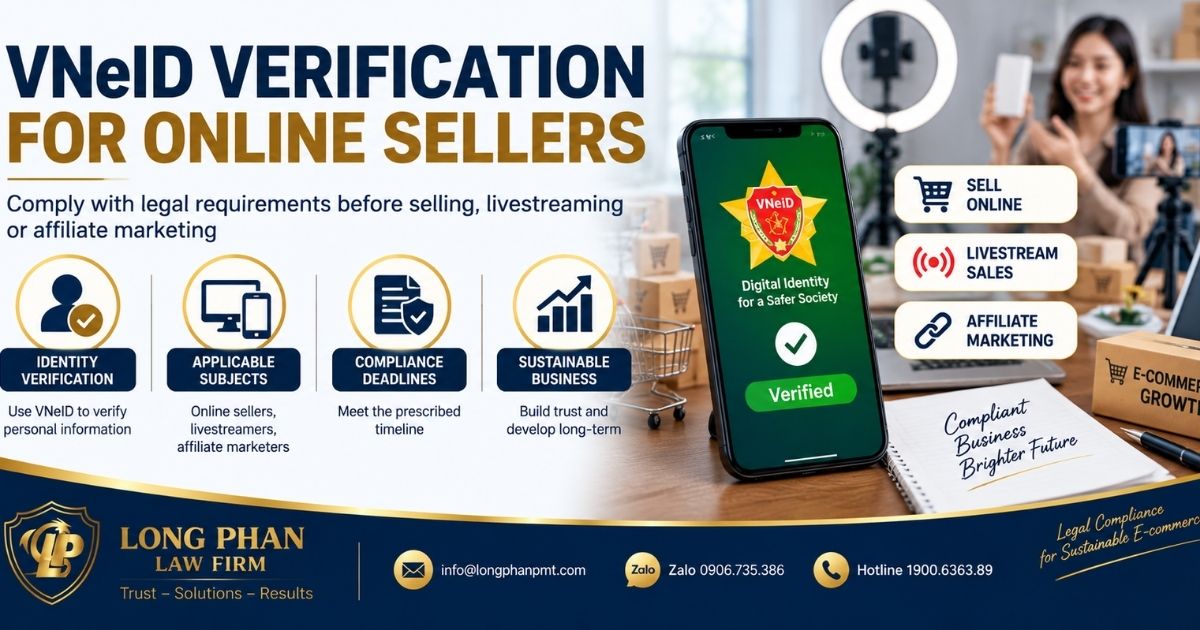
Identity Verification: Perform electronic identity verification of the livestream seller according to this Law and laws on electronic identification and authentication before allowing livestream sales. If the livestream seller is a foreigner, verify identity through legal documents.
Advertising Content Verification: Request the seller to provide written confirmation of advertising content for goods and services required by law to have such confirmation before allowing livestream sales.
Stop Broadcasting: Stop streaming and remove displayed information/links immediately upon detection or request from competent state agencies in the following cases:
Content violates the law or contains language, images, costumes, or behaviors contrary to social ethics and fine customs.
Selling goods banned from circulation, temporarily suspended from circulation, or goods/services banned from advertising.
Livestreaming goods/services requiring written confirmation of advertising content without such confirmation from competent authorities.
Data Storage: Store and ensure access to information and data on images and audio of livestream sales activities for at least 01 year from the start of the broadcast.
Seller’s responsibilities in livestream selling
Based on Article 23 of the E-commerce Law 2025, the responsibilities of sellers are prescribed as follows:
Provide Documents: Before livestreaming, the seller must fully provide the livestreamer with:
Documents proving compliance with business investment conditions for conditional business lines.
Documents proving compliance with product/goods quality standards according to laws on product quality.
Confirm Advertising Content: For goods/services requiring confirmation of advertising content, provide the confirmation document to the platform manager and the livestreamer before livestreaming. The livestream content must match the confirmed advertising content.
Stop Violations: Stop cooperation, stop streaming, and remove displayed information immediately upon detection or request from competent state agencies regarding illegal acts.
Seller’s responsibilities in livestream selling
Responsibilities of a livestream seller
Article 24 of the E-commerce Law 2025 specifically and clearly prescribes the responsibilities of livestreamers:
Provide information to the e-commerce platform manager for identity verification.
Follow the publicized livestream regulations on the platform.
Refuse cooperation when the seller does not provide full information as prescribed.
Do not provide false or misleading information about usage, origin, quality, price, promotion policies, warranty, etc.
Perform advertising content confirmed by competent state agencies for goods/services requiring confirmation.
Do not use language, images, costumes, or behaviors contrary to social ethics and fine customs.
Stop cooperation/streaming and remove information immediately upon detection or request from the seller or competent state agencies regarding illegal acts.
Target groups and specific support policies for e-commerce development.
Currently, Article 10 of the E-commerce Law 2025 details priority groups and specific support mechanisms as follows:
Subjects entitled to specific support mechanisms/policies:
Innovative start-up business households and individuals.
Cooperatives/unions of cooperatives in agricultural production/processing and traditional industries.
SMEs owned by women; enterprises employing many people with disabilities.
People with disabilities; Individuals from ethnic minorities.
Organizations headquartered in, or individuals residing in mountainous areas, borders, islands, and areas with difficult/extremely difficult socio-economic conditions.
Specific support policies include:
Support for costs of connecting digital infrastructure and setting up stalls on e-commerce platforms.
Free or supported costs for e-commerce training.
Support in carrying out administrative procedures.
Facilitating access to preferential policies on national digital transformation and innovation programs.
Building e-commerce model points in ethnic minority, mountainous, border, and island areas.
Target groups and specific support policies for e-commerce development.
Long Phan Consulting provides legal consulting services on sales on e-commerce platforms.
Operating on e-commerce platforms requires a deep understanding of new legal regulations to ensure legal safety. Long Phan Consulting provides comprehensive solutions to support businesses and individuals in adapting to the E-commerce Law 2025. We commit to accompanying Clients in building compliant business processes and optimizing benefits from support policies. Our support is structured into the following key areas:
Platform Compliance and Procedure Setup
Support 1: Assist platform managers in drafting and perfecting Livestream Regulations, ensuring full integration of control, warning, and complaint resolution mechanisms.
Support 2: Provide services to review data storage processes and electronic identity verification for sellers and livestreamers to meet inspection requirements.
Support 3: Consult on technical and legal measures to screen goods and prevent intellectual property infringements or banned goods on the system.
Legal Support for Sellers and Livestreamers
Support 1: Assist sellers in preparing and reviewing mandatory legal dossiers (business licenses, product quality announcements) to provide to livestream partners.
Support 2: Consult on procedures for obtaining confirmation of advertising content for specific goods, ensuring livestream scripts match granted licenses.
Support 3: Represent or provide legal support for livestreamers in signing cooperation contracts, clearly defining liability limits and protecting rights in case of product information disputes.
Policy Advisory and Benefit Optimization
Support 1: Consult on identifying eligibility for specific support policies for subjects like start-ups, agricultural cooperatives, or businesses in difficult areas.
Support 2: Support the implementation of administrative procedures to receive cost support for infrastructure connection, stall setup, and training.
Support 3: Represent Clients in working with functional agencies to resolve legal obstacles while enjoying digital transformation incentives.
Frequently Asked Questions
Below are some frequently asked questions about regulations for livestreaming sales on e-commerce platforms; please refer to them:
What is the data retention period for livestream sales data, and what data is included?
The owner of an e-commerce platform is obligated to store information and data regarding images and audio from livestream sessions for a minimum of one year from the start of the broadcast. This is crucial data for inspection, auditing, and dispute resolution.
(Legal basis: Clause 7, Article 22 of the 2025 E-commerce Law.)
Do livestreamers have the right to refuse requests from sellers?
Yes. Livestreamers have the right and obligation to refuse cooperation if the seller does not provide complete documentation proving business conditions, product quality, or written confirmation of advertising content (if any). This is a crucial safeguard to protect the livestreamer from legal risks.
(Legal basis: Clause 3, Article 24 of the 2025 E-commerce Law.)
When will e-commerce platforms be forced to stop live streaming immediately?
The platform must stop streaming and remove information immediately upon detection or request from the competent authority in 03 cases: (1) Content that violates the law, is immoral, or goes against good customs and traditions; (2) Selling prohibited/temporarily suspended goods or goods prohibited from advertising; (3) Advertising goods that require written confirmation but have not been granted.
(Legal basis: Clause 6, Article 22 of the 2025 E-commerce Law.)
Can viewers file complaints about a product while the livestream is in progress?
Yes. E-commerce platform owners are required to establish a mechanism for receiving and resolving viewer feedback and complaints throughout the livestreaming process and even after the livestream has ended.
(Legal basis: Clause 2, Article 22 of the 2025 E-commerce Law.)
What kind of support do innovative startup businesses receive when participating in e-commerce?
Innovative startup businesses are a priority group, receiving support for digital infrastructure connection costs, store setup, e-commerce training costs, and assistance with related administrative procedures.
(Legal basis: Clauses 1 and 2, Article 10 of the 2025 Law on E-commerce.)
Conclusion
Compliance with regulations on livestream sales on e-commerce platforms is a mandatory requirement to ensure sustainable business operations. Businesses and individuals need to proactively review operating processes before the Law takes effect.
Long Phan Consulting Company is ready to support clients in building a safe legal framework. For detailed advice, please contact us immediately via Hotline 1900636389.
Facebook
Linkedin
Twitter
Pinterest
Dương Thị Kim Ngân
Jurist Ngan Duong Thi Kim - Partner of Long Phan, Ms. Ngan possesses profound knowledge in business consulting, labor, and contracts. With dedication and creativity, Ms. Ngân has achieved significant success in advising and supporting businesses in critical areas such as legal matters, finance, management, and contracts. She is committed to providing optimal solutions and helping clients succeed in the business environment.