
The provincial tourist area recognition procedure establishes the mandatory legal status for local destinations. Compliance ensures standardized management and effective exploitation of tourism resources. Long Phan Consulting Company analyzes the specific conditions, dossiers, and execution steps below.

The criteria for provincial tourist area recognition are stipulated in Clause 1, Article 26 of the Law on Tourism 2017 and detailed in Article 12 of Decree 168/2017/NĐ-CP. Management organizations must meet these technical standards to ensure service quality and visitor safety.
Specific requirements include:
Tourism Resources: Possession of at least one provincial-level tourism resource with topographical boundaries certified by competent authorities. Map scales depend on management requirements.
Infrastructure and Services:
Standardized power grid and clean water supply systems.
Dining services capable of serving a minimum of 100,000 visitors annually.
Accommodation facilities capable of serving a minimum of 50,000 staying guests annually.
Internal rules, signage systems, and destination explanations.
Traffic signs and directions to service facilities and attractions.
Provision of guide and interpretation services.
Connectivity: Connection to national traffic and telecommunication infrastructure.
Security and Environment:
Permanent security and rescue teams.
Publicly listed hotline and address of the management organization.
Information support centers for tourists.
Clean, ventilated, and well-lit public restrooms sufficient for peak periods.
Waste collection systems connected to centralized treatment facilities compliant with environmental laws.
Strict adherence to fire prevention and control regulations.
Pursuant to Article 27 of the Law on Tourism 2017, the authority structure for processing the provincial tourist area recognition is as follows:
Submission: The District-level People’s Committee or the tourist area management organization submits the dossier to the provincial specialized tourism agency (Department of Tourism or Department of Culture, Sports, and Tourism).
Appraisal: The provincial specialized tourism agency receives dossiers, verifies validity, conducts site surveys, and submits an appraisal report to the Provincial People’s Committee.
Decision: The Chairperson of the Provincial People’s Committee issues the Decision on Recognition.
For tourist areas spanning two or more district-level administrative units, the provincial specialized tourism agency compiles the dossier. The Provincial People’s Committee then establishes an Appraisal Council to evaluate the application.
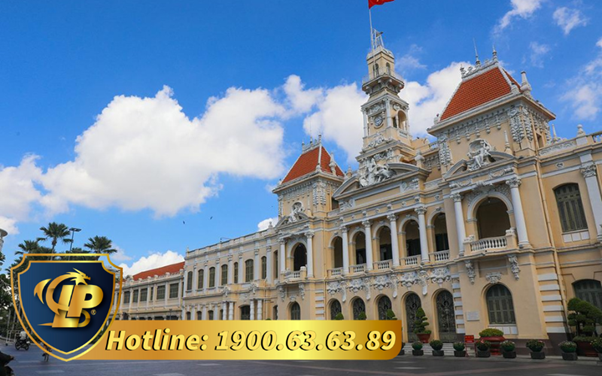
The dossier for provincial tourist area recognition is defined in Clause 1, Article 27 of the Law on Tourism 2017 and guided by Circular 06/2017/TT-BVHTTDL.
Essential documents:
Application Form: Use Form No. 02, Appendix II of Circular 06/2017/TT-BVHTTDL. The form must include the destination name, address, and management unit details.
Explanatory Report: A detailed document proving compliance with Article 26 of the Law on Tourism and Article 12 of Decree 168/2017/NĐ-CP. This includes:
Description of tourism resources and infrastructure status.
Plans for security, order, and environmental protection.
Photographs and diagrams of functional areas.
Legal Evidence: Certified copies of Business Registration Certificates, Establishment Decisions, Land Use Rights Certificates, or resource management assignment documents.
Technical Maps: Topographical maps showing the boundaries of the tourist area.
Safety Certification: Acceptance records for fire prevention and security conditions.
According to Clause 2, Article 27 of the Law on Tourism 2017, the process involves the following steps:
Step 1: Submission and Receipt The management organization submits one dossier set to the provincial specialized tourism agency via the public administration center or post. Officers check the completeness of documents and issue a receipt with an appointment date.
Step 2: Appraisal and Site Survey Within 45 days of receiving a valid dossier, the specialized agency conducts the appraisal. This includes verifying legal documents and inspecting the actual infrastructure, services, and environmental conditions against the explanatory report. The agency then submits the evaluation results to the Provincial People’s Committee.
Step 3: Decision Issuance Within 15 days of receiving the appraisal report, the Provincial People’s Committee reviews and issues the Decision on Recognition. If refused, the authority must provide a written explanation. The total statutory time is approximately 60 days.
>>> See more at: Tourist Destination Recognition: Technical Procedure

Long Phan Consulting Company provides comprehensive legal solutions to assist clients in finalizing the provincial tourist area recognition. Our experts ensure accuracy and efficiency throughout the process.
Scope of Services:
Condition Assessment: Conducting site surveys to compare resources and infrastructure against statutory criteria; evaluating the legality of land and sub-licenses.
Technical Advice: Proposing solutions to rectify infrastructure deficiencies prior to official submission.
Dossier Perfection: Drafting the Explanatory Report with strong logical arguments regarding capacity; systematizing all accompanying proofs.
Representation: Submitting dossiers to the provincial tourism agency; monitoring processing status.
Defense and Explanation: Participating in site inspections and explaining professional issues to the appraisal team.
Result Handover: Receiving the final Decision and advising on post-recognition compliance.
The District-level People’s Committee where the tourist area is located or the organization directly managing the tourist area submits the dossier. If the area spans multiple districts, the provincial tourism agency compiles the dossier. (Legal basis: Clause 2 and Clause 3, Article 27, Law on Tourism 2017)
The statutory limit for the provincial specialized tourism agency to appraise the dossier is 45 days from the receipt of valid documents. The Provincial People’s Committee then has 15 days to issue the decision. (Legal basis: Clause 2, Article 27, Law on Tourism 2017)
The dossier must include a topographical map clearly defining the boundaries of the tourist area. This map requires certification by a competent state authority. The scale depends on management needs and actual terrain. (Legal basis: Clause 1, Article 12, Decree 168/2017/NĐ-CP)
The tourist area must continuously maintain all recognized conditions regarding resources, infrastructure, and security. If an inspection reveals failure to meet criteria, the Provincial People’s Committee will revoke the recognition decision. (Legal basis: Clause 4, Article 27, Law on Tourism 2017)
Yes. State management agencies conduct periodic inspections. The management organization is obligated to facilitate these inspections and ensure ongoing compliance with environmental and operational standards. (Legal basis: Clause 1, Article 26, Law on Tourism 2017)
Completing the provincial tourist area recognition creates a solid legal foundation for business operations and destination branding. Long Phan Consulting Company stands ready to resolve legal obstacles and optimize the procedure. For expert advice, contact our Hotline at 1900636389.