
The Procedure for Restructuring Crops on Rice-Growing Land must strictly comply with legal regulations to ensure food security and effective land use. Land users need to meet conditions under land and cultivation laws while following the correct documentation and procedures. Long Phan Consulting Company provides detailed guidance below.

Rice-growing land is land used for growing at least one rice crop or for growing rice combined with other permitted purposes (where rice farming remains the primary use). It includes specialized rice-growing land and remaining rice-growing land.
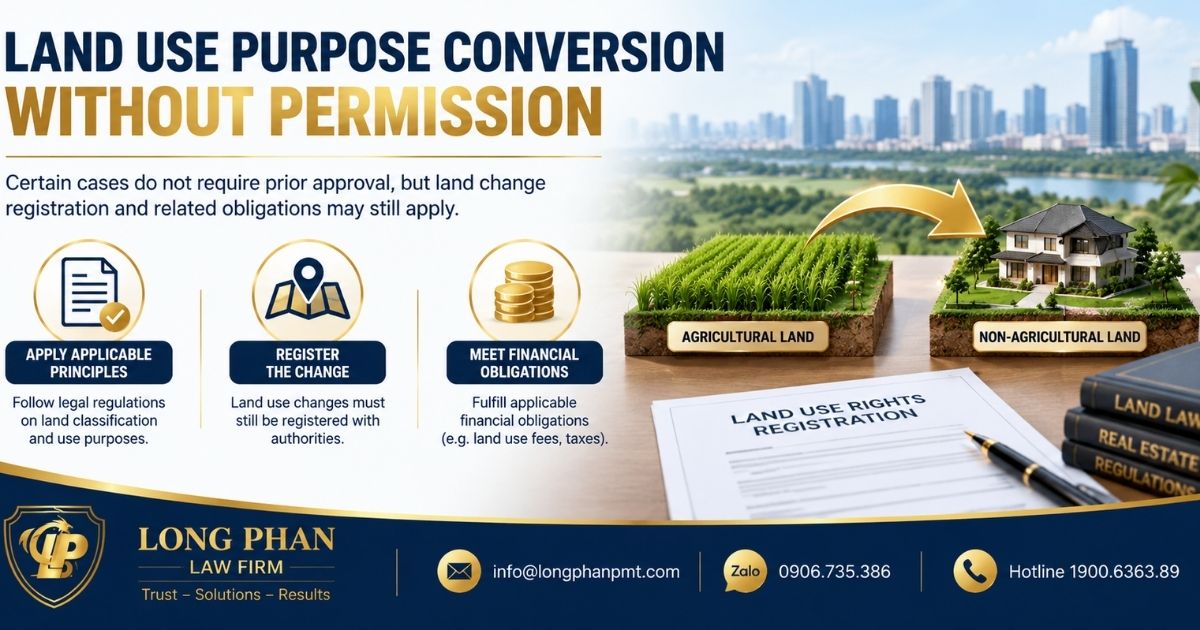
According to Clause 2, Article 9 of the Law on Land 2024, rice-growing land belongs to the group of annual crop land (agricultural land). It is vital for national food security and sustainable agricultural development. While strictly protected regarding planning targets, the law allows mechanisms for restructuring crops to increase economic value and encourage high-tech agriculture without losing the land’s nature.
Based on Article 6 of Decree 112/2024/ND-CP, the principles for restructuring crops on rice-growing land are as follows:
>>>See more: Land Use Purpose Change Registration Procedure
According to Decision 1000/QD-BNNMT, to perform the Procedure for Restructuring Crops on Rice-Growing Land, Clients only need to prepare 01 dossier set, primarily consisting of:
Note: Clients must complete the form accurately using the standard template in Appendix IV of Decree No. 112/2024/ND-CP to ensure compliance and avoid delays.
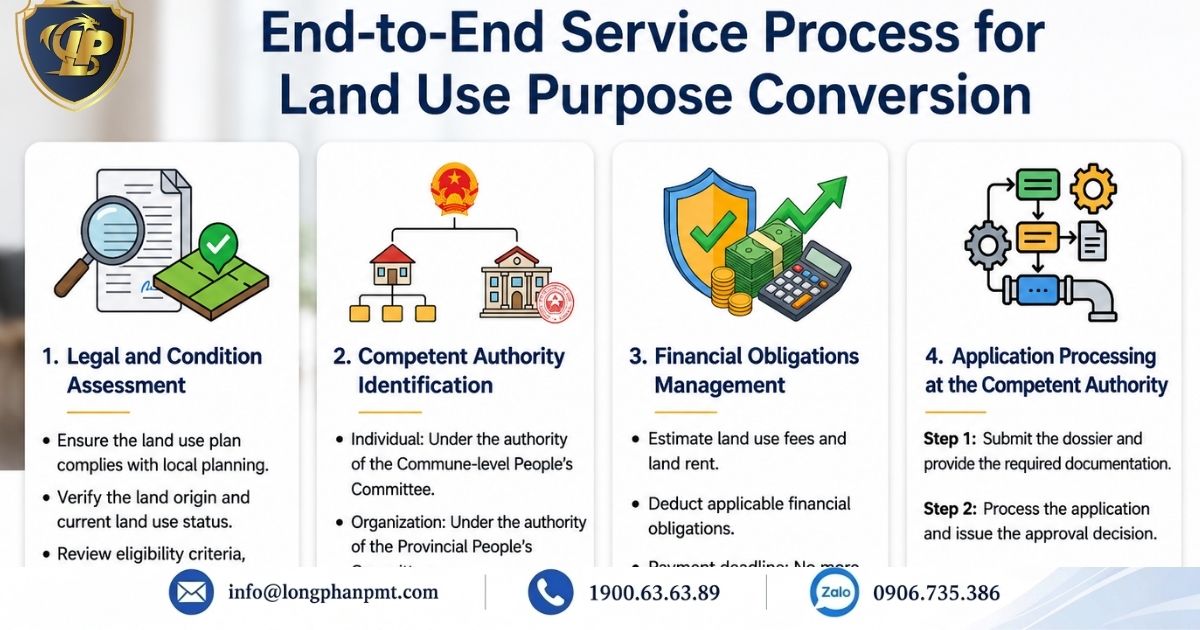
The process ensures State control and follows Decision 1000/QD-BNNMT:
Step 1: Submission Land users wishing to switch to perennial crops or rice combined with aquaculture submit the dossier to the Commune-level People’s Committee (Directly, via post, or online).
Step 2: Validity Check
Step 3: Appraisal and Result Within 05 working days from receiving a valid dossier, the Commune-level People’s Committee reviews the Registration Form against the annual local restructuring plan:
Processing Time:
05 working days from the date of receiving a complete and valid dossier.

Long Phan Consulting Company provides in-depth legal services to ensure strict compliance:

Below are some frequently asked questions regarding the procedure for changing the production structure on rice-growing land; please refer to them:
No. Restructuring crops changes the type of plant/animal but maintains the land purpose as agricultural land (rice-growing land). It is not a conversion to non-agricultural land. (Legal Basis: Clause 5, Article 182, Law on Land 2024).
No. A prerequisite is conformity with the commune-level restructuring plan approved by the competent authority. Non-conforming applications will be rejected. (Legal Basis: Article 6, Decree 112/2024/ND-CP).
Restructuring without complying with procedures, losing the ability to revert to rice, or damaging the land will result in administrative penalties in the land sector. Fines increase based on the area of violation. (Legal Basis: Article 8, Decree 123/2024/ND-CP).
No. Since the land use purpose remains unchanged (still rice-growing land), Clients do not need to adjust or re-issue the Certificate. (Legal Basis: Clause 3, Article 121, Law on Land 2024).
The Procedure for Restructuring Crops on Rice-Growing Land requires careful preparation and strict adherence to legal conditions. Please contact Long Phan Consulting Company via Hotline 1900636389 for professional support to develop agricultural production legally and effectively.