Liquidating assets when dissolving a business: A-Z guide

Liquidating assets when dissolving a business is a mandatory process to terminate the operation of an economic unit. This process requires compliance with procedures to ensure the rights of relevant parties. This article will analyze in detail the process of liquidating assets when dissolving a business and the obligations of the business.

Liquidating assets when dissolving a business

Cases of enterprise dissolution

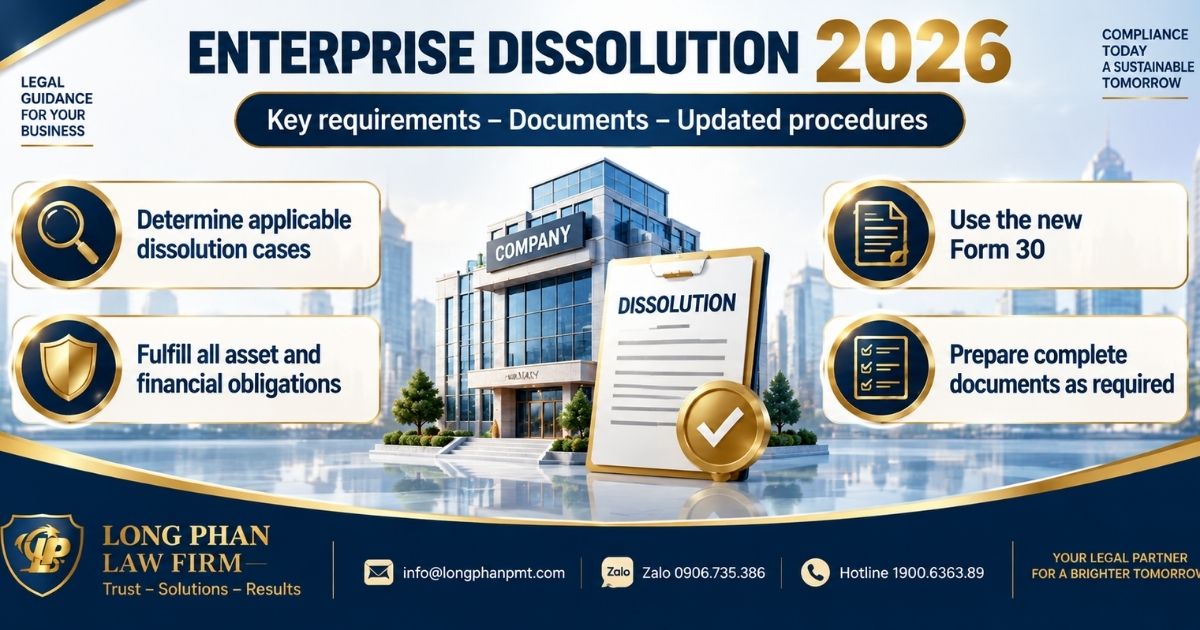
According to Clause 1, Article 207 of the Law on Enterprise 2020, enterprises are dissolved in the following cases:

  • End of the operating term stated in the company charter without a decision to extend;
  • According to the resolutions and decisions of the business owner for private enterprises, of the Board of Members for partnerships, of the Board of Members and company owner for limited liability companies, and of the General Meeting of Shareholders for joint stock companies;
  • The company no longer has the minimum number of members as prescribed by this Law for a period of 06 consecutive months without carrying out procedures for converting the type of enterprise;
  • The Certificate of Business Registration has been revoked, unless the Law on Tax Administration has other provisions.

Process for liquidating assets when dissolving a business

The process of liquidating assets when dissolving an enterprise includes the following steps:

Step 1: Decide to dissolve the enterprise

The owner of a private enterprise, the Board of Members or the General Meeting of Shareholders approves the dissolution decision.

Resolutions and decisions on enterprise dissolution must include the following main contents:

  • Name and address of the enterprise’s headquarters;
  • Reason for dissolution;
  • Time limit and procedures for liquidating contracts and paying debts of the enterprise;
  • Plan for handling obligations arising from labor contracts;
  • Full name and signature of the private enterprise owner, company owner, Chairman of the Board of Members, Chairman of the Board of Directors.

Step 2: Notice of dissolution

  • The enterprise notifies the business registration agency of the dissolution decision.
  • The notice includes information about dissolution status, reason, time and other necessary content.

Step 3: Make a list of assets

  • Enterprises make a detailed list of existing assets: fixed assets, current assets, intangible assets and receivables.
  • This list needs to be accurate and complete.

Step 4: Evaluate assets

To liquidate assets, businesses need to evaluate the value of the assets on the list. Evaluation can be performed by experts or specialized units, ensuring accuracy and transparency.

Step 5: Make a liquidation plan

  • Determine liquidation method (auction, direct sale, transfer…).
  • Plan in detail the time and costs involved.

Step 6: Perform liquidation

  • Carry out liquidation activities according to the established plan.
  • Comply with legal regulations and internal processes.

Step 7: Pay off debt

Enterprise debts are paid in the following order of priority:

  • Salary arrears, severance pay, social insurance, health insurance, unemployment insurance as prescribed by law and other benefits of employees according to the collective labor agreement and signed labor contract;
  • Tax debt;
  • Other debts;
  • After paying the costs of dissolution of the enterprise and debts, the remaining amount is divided to the private enterprise owner, members, shareholders or company owners according to the ratio of ownership of contributed capital and shares.

Step 8: Complete liquidation documents

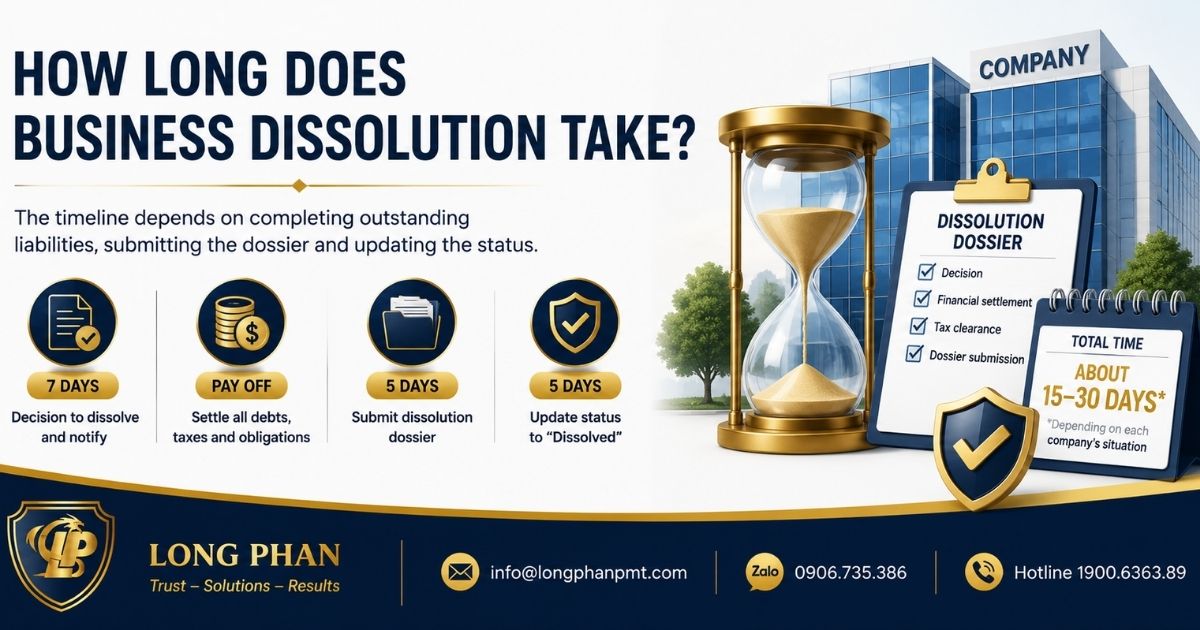
Complete the application and send it to the Business Registration Authority within 05 working days from the date of payment of all debts of the enterprise.

Step 9: Announce the end of the activity

Send notice of termination of operations to tax authorities and other relevant agencies.

 Procedures for liquidating assets when dissolving a business
Procedures for liquidating assets when dissolving a business

Obligations of enterprises during the dissolution process

During the dissolution process, the enterprise has the following obligations:

  • Fully pay all debts and property obligations before terminating operations (tax debt, bank debt, employee salary debt,…).
  • Dissolution is not allowed if the dispute is being resolved at Court or Arbitration.
  • Obligation to fully comply with requests from competent authorities.

Consulting services for liquidating assets when dissolving a business at Long Phan Consulting Company

Long Phan Consulting Company provides comprehensive consulting services during the process of liquidating assets when dissolving a business, including:

  • Consulting on legal regulations on business dissolution and asset liquidation.
  • Evaluate the legal status of the business before dissolution.
  • Plan and execute the asset liquidation process.
  • Draft and submit enterprise dissolution documents to competent state agencies.
  • Business representatives work with relevant state agencies, organizations and individuals.
  • Resolve disputes arising during the dissolution process.
  • Consulting on financial and tax obligations for businesses.
  • Consulting and answering other issues related to asset liquidation when the enterprise dissolves.
 Consulting on liquidating assets when dissolving a business
Consulting on liquidating assets when dissolving a business

>>> See more: Business Dissolution Service: Peace of Mind, Full Package.

Frequently asked questions about liquidating assets when dissolving a business

Below are frequently asked questions that customers can refer to:

What is the maximum time limit to complete the liquidation of assets after the decision to dissolve?

The Law on Enterprise 2020 does not stipulate a specific maximum time limit, but requires liquidation to be completed before submitting documents to terminate business operations. Businesses need to ensure a reasonable liquidation schedule to avoid legal problems.

Can businesses value their own assets or are they required to hire an independent valuation unit?

Businesses can value assets themselves, but to ensure transparency and objectivity, especially for assets of high value, hiring an independent valuation unit is the optimal choice.

How is the priority order for paying an enterprise’s debts determined?

The order of priority is specified as follows: unpaid wages, severance pay, social insurance, health insurance, unemployment insurance, tax debt, and other debts.

Is a business allowed to sell assets to members or shareholders of the company?

Enterprises are allowed to sell assets to members or shareholders, but need to ensure the transaction is carried out publicly, transparently and at market price.

What documents must be included in an asset liquidation application?

Asset liquidation documents should include: dissolution decision, list of assets, asset assessment report, liquidation plan, asset liquidation minutes, debt payment documents and other related documents.

What happens if the business does not pay all its debts?

If the business fails to pay all its debts, creditors have the right to ask the court for settlement and the business may be declared bankrupt.

Is it possible to change the decision to dissolve the enterprise after notification?

The dissolution decision can be changed if the enterprise has not yet submitted a dossier to terminate operations at the business registration agency. However, changes need to be made in accordance with the law.

How to determine the market value of assets upon liquidation?

To determine the market value of assets, businesses can refer to the market prices of similar assets, hire a professional appraisal unit or organize an auction.

What potential risks can businesses encounter during the asset liquidation process?

Potential risks include: disputes with creditors, inaccurate asset valuation, prolonged liquidation time, and legal issues arising.

When liquidating assets, what types of assets are prioritized for disposal first?

Highly liquid assets (for example: cash, securities) are often prioritized for disposal first to have financial resources to pay debt. Then come fixed assets and other assets.

Conclude

Liquidating assets when dissolving a business requires carefulness and strict compliance with the process. Long Phan Consulting Company has a team of experienced experts, ready to support customers throughout this process. If you need advice or support, please contact us immediately via the hotline: 0906735386 for timely advice and support.

Leave a Reply

Your email address will not be published. Required fields are marked *