
Limitations to consider when using real estate brokerage services are critical points that investors and homebuyers must master to protect their lawful rights. Identifying risks originating from intermediaries helps control cash flow and ensure the asset’s legality. In the following article, Long Phan Consulting Company provides detailed insights into legal regulations and practical limitations to consider when using real estate brokerage services.

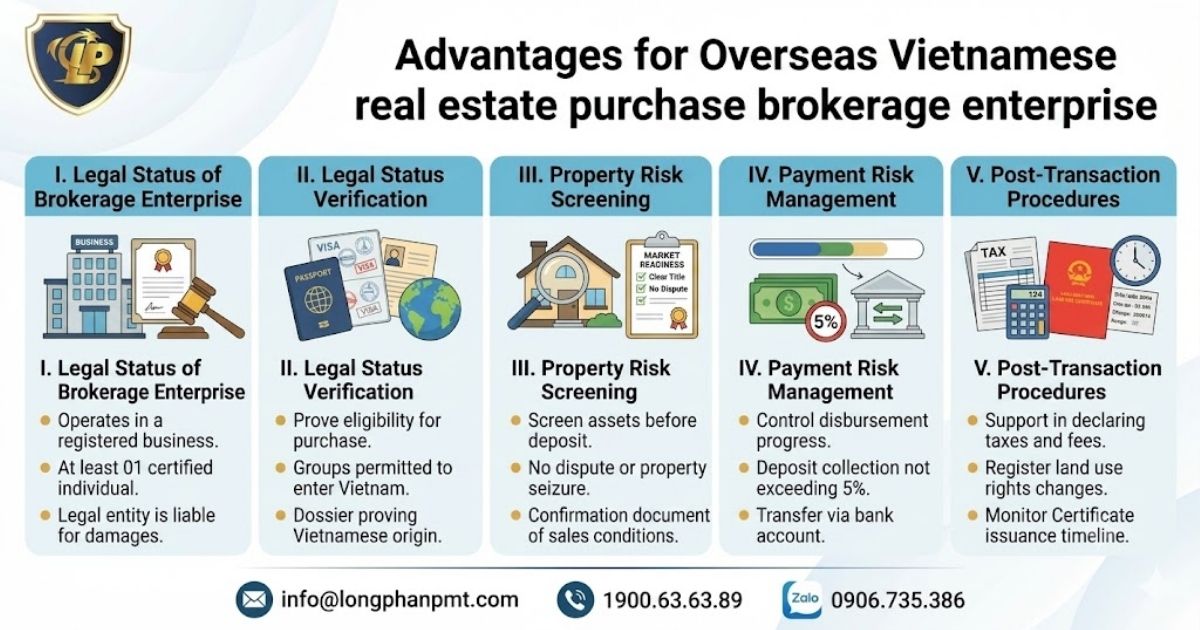
Understanding the legal framework governing brokerage activities is essential when discussing the limitations to consider when using real estate brokerage services. Pursuant to Article 61 of the 2023 Law on Real Estate Business, the conditions for organizations and individuals conducting real estate brokerage are as follows:
For Organizations:
For Individuals Practicing Real Estate Brokerage:
>>> See more: Building a Sustainable Brokerage Brand
Another important aspect of the limitations to consider when using real estate brokerage services involves recognizing the actions that real estate brokers are legally prohibited from performing. Based on Rule 9 of the 2024 Vietnam Real Estate Brokerage Code of Ethics and Professional Conduct (VPEC 2024), 17 prohibited acts for brokers include:
In practice, investors and clients should carefully evaluate the limitations to consider when using real estate brokerage services before relying on brokerage assistance. Limitations involve risks regarding information accuracy and the imbalance of economic interests between parties. Clients frequently face information dependency on brokers, leading to erroneous investment decisions. Identifying these limitations helps you build an effective risk control strategy.
One of the key limitations to consider when using real estate brokerage services is that the information provided by brokers may sometimes be inaccurate or incomplete. Brokers often tend to highlight advantages while ignoring legal or infrastructure flaws. You might receive outdated urban planning information or verbal, legally void commitments regarding project progress. A lack of data verification from functional agencies leads to skewed assessments of profitability or liquidity.
Among the limitations to consider when using real estate brokerage services is the potential risk of price manipulation that may distort the actual market value of the property. Some unprofessional brokers often create artificial scarcity or collude to drive up property prices beyond their true value. Clients can easily fall into the trap of herd mentality due to misleading information from intermediaries. This distortion of market value causes direct financial losses and prolongs the client’s payback period.
A conflict of interest between brokers and clients is another important issue within the limitations to consider when using real estate brokerage services. The broker’s goal is to complete the transaction quickly to receive a commission, while the client’s goal is to purchase the best product at the most reasonable price. This conflict sometimes leads brokers to pressure clients into making a deposit without thoroughly researching the legal aspects. Conflicts of interest are most evident during price and payment term negotiations.
The lack of transparency in service fees and commissions is also one of the limitations to consider when using real estate brokerage services. In many cases, clients are not clearly informed about various fees such as appraisal fees, notarization fees, or “grease money.” The lack of specific details regarding commission rates and payment schedules in written agreements often leads to prolonged disputes. This lack of transparency increases the actual transaction costs for clients.
Working with unlicensed individuals represents one of the significant limitations to consider when using real estate brokerage services. These individuals often lack knowledge of land law and real estate business law, leading to incorrect advice. When risks arise, it is very difficult for customers to hold them accountable due to the lack of legal basis and clear residential address.
The inconsistency in professional skills and service quality among brokers is another factor included in the limitations to consider when using real estate brokerage services. The Vietnamese real estate brokerage market is highly diversified in terms of professional expertise and customer service attitudes. Clients may find it difficult to find a professional with in-depth knowledge of legal techniques and real estate feng shui. The lack of professionalism among some brokers diminishes the client’s experience and investment effectiveness.
Another of the limitations to consider when using real estate brokerage services is the possibility that certain legal risks related to the property may not be fully disclosed. Real estate that is mortgaged, disputed, or subject to repossession is often concealed by brokers using sophisticated tactics. Clients without expertise will find it difficult to detect signs of violations in land records. Concealing legal risks is a leading cause of losing all assets after a transaction.
Excessive reliance on brokers’ opinions can also be regarded as one of the limitations to consider when using real estate brokerage services. Many clients tend to completely delegate information verification and negotiation to brokers without independent verification. This dependence deprives buyers of the ability to critically evaluate and make optimal choices. Clients need to remain vigilant and actively participate in every stage of the buying and selling process.
The aforementioned limitations reflect the current reality of the real estate brokerage market in Vietnam. To protect your capital, clients need not only to be aware of these limitations but also to have a thorough understanding of the specific legal risks associated with this service.

Legal risks often stem from loose agreements and non-compliance with standard procedures prescribed by the Ministry of Construction. You may face void brokerage contracts or lose the right to sue if the broker lacks legal standing.
An unclear brokerage contract lacking essential provisions is one of the legal limitations to consider when using real estate brokerage services. A real estate brokerage contract must be established in writing under Clause 9, Article 3 of the 2023 Law on Real Estate Business. However, many clients only make verbal agreements or sign rudimentary minutes lacking clauses on work scope, fees, and compensation responsibilities. This leaves you with no legal basis to hold the broker accountable if their advisory info is flawed.
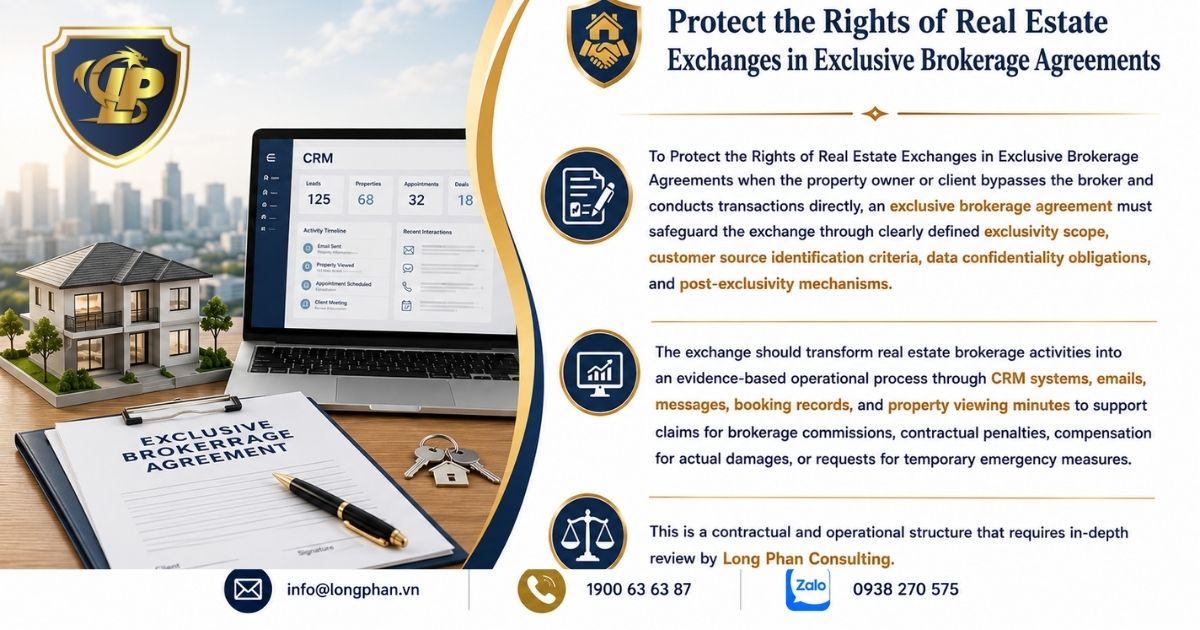
Disputes related to payment obligations and contractual rights are common issues among the limitations to consider when using real estate brokerage services. Disputes usually occur when a transaction fails or the client finds another buyer/seller without the broker. If the contract doesn’t clearly state the conditions for receiving commissions, you easily get dragged into civil lawsuits demanding service fees. Defining rights among multiple brokers participating in a single transaction is also a major conflict hotspot.
Another serious issue among the limitations to consider when using real estate brokerage services arises when transactions facilitated by brokers fail to comply with legal regulations. When transacting via an uncertified broker or an unregistered enterprise, the brokerage contract may be declared void. You will struggle to verify the real estate documents provided by the broker. Any legal support commitments from these subjects hold no guaranteed value in court.
Brokers are obligated to provide truthful records and bear responsibility for the accuracy of the info provided to you. Conversely, you are responsible for paying service fees on time and providing truthful information about your needs. A lack of understanding regarding each party’s liability limits leads to blame-shifting when the transaction results in bad debt or planning entanglements.
>>> See more: When is a broker considered to have completed their obligations
To optimize efficiency and minimize limitations, you must implement a multi-layered control process. Proactivity in verification and negotiation helps you maintain dominance in every transaction.
To address the limitations to consider when using real estate brokerage services, clients should first verify the broker’s legal status and professional certifications. Request the broker to provide a copy of their practicing certificate and information about their employing enterprise. This ensures the consultant possesses adequate professional qualifications and operates under legal management. A reputable broker will not hesitate to publicly prove their capacity and practical experience.
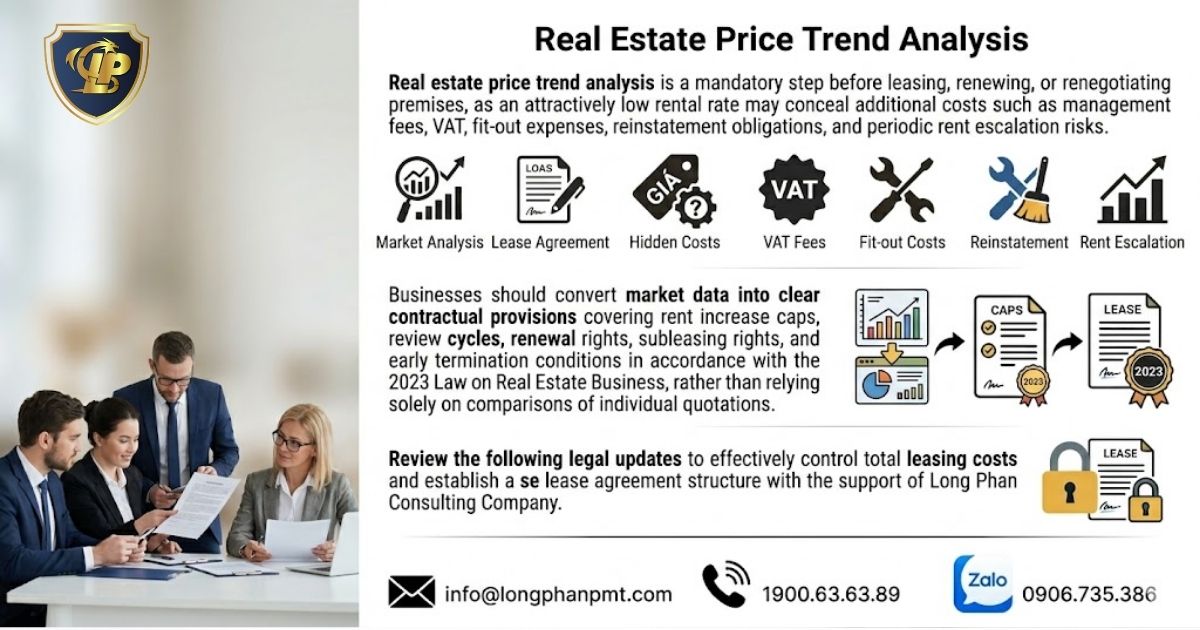
Another effective approach to dealing with the limitations to consider when using real estate brokerage services is to cross-check property information from multiple reliable sources. Do not solely trust the broker’s information; verify it at the Land Registration Office or the commune/district People’s Committee. Cross-referencing prices from neighboring trading floors and reputable real estate portals helps you avoid price traps. Field inspections and talking to local residents provide an objective view of the asset’s current state.
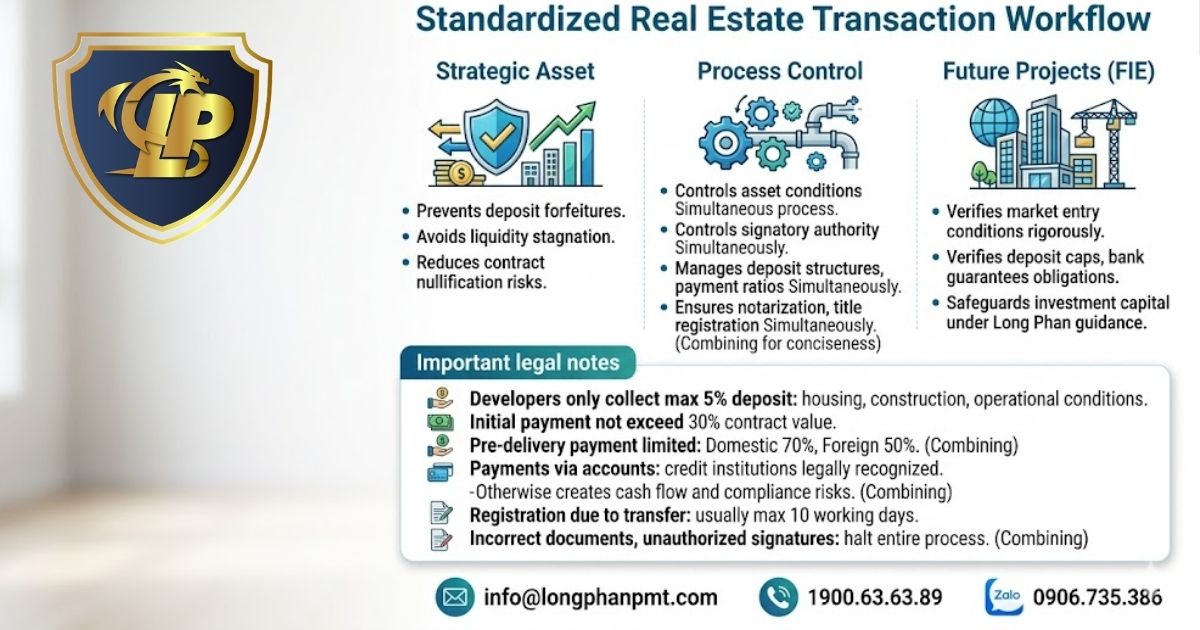
Clearly specifying the service fees and benefits in the contract is an important way to reduce the limitations to consider when using real estate brokerage services. All terms regarding service fees, commissions, payment schedules, and penalty/bonus conditions must be clearly stated in a written contract. Clients should clearly define the broker’s responsibilities in assisting with notarization, transfer of ownership, and tax payments. A well-structured contract is the best way to protect clients from future financial disputes.
Clients should also proactively study relevant legal regulations in order to better manage the limitations to consider when using real estate brokerage services. Customers should take the time to study the basic regulations of the 2024 Land Law and the 2023 Real Estate Business Law. Understanding the buying and selling process and the types of taxes and fees will help prevent customers from being misled by brokers. A good understanding of the law will give customers more confidence in asking questions and refuting the advice of intermediaries.
Finally, avoiding complete dependence on a broker’s advice is a practical strategy for addressing the limitations to consider when using real estate brokerage services. You may seek further advice from lawyers or independent risk consultants for a more comprehensive perspective. Independent thinking and action help you avoid unwanted psychological influences from brokers.
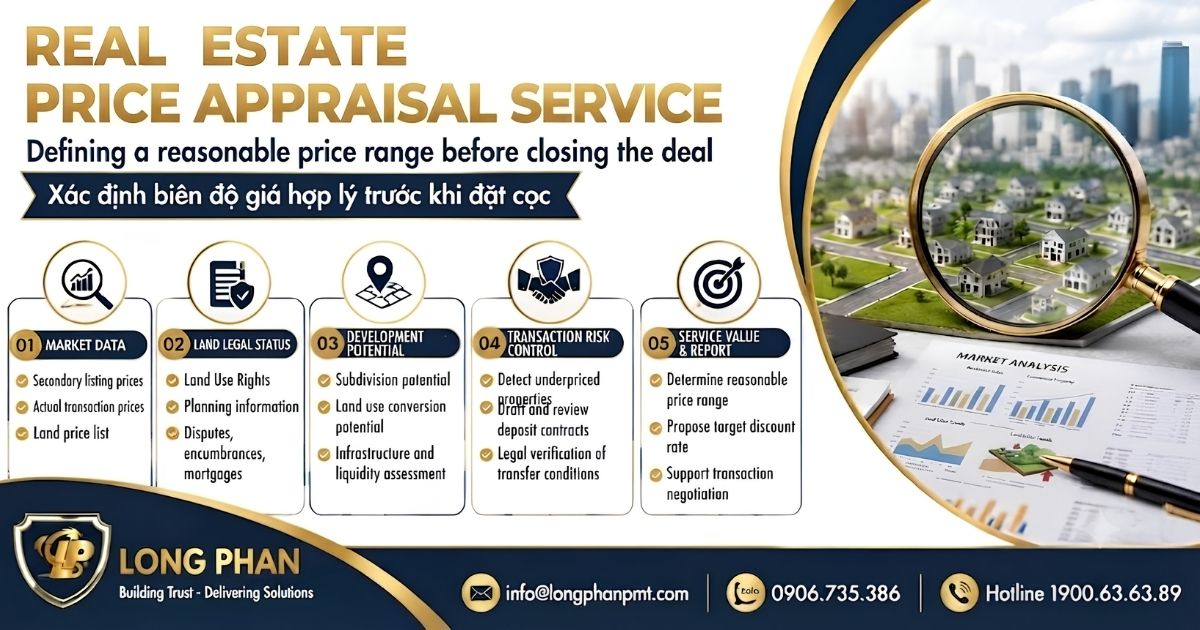
The synchronized application of these solutions will help clients leverage the strengths of brokerage services while ensuring the safety of their assets. For high-value transactions or those with complex legal aspects, using professional consulting services from a law firm is the optimal choice. Below is how Long Phan Consulting Company assists clients in managing brokerage risks.
>>>See more: Role of Real Estate Brokers in Land Transactions
Long Phan Consulting Company provides comprehensive solutions helping you manage and eliminate risks when working with third parties. We act on your behalf to execute in-depth technical tasks, ensuring transactions are completely transparent and safe. We structure our professional support into the following key area:

The following, Long Phan Consulting Company some frequently asked questions regarding the limitations to consider when using real estate brokerage services. We invite interested clients to refer to them:
Clients have the right to sue for damages based on the provisions of Article 65 of the 2023 Law on Real Estate Business, according to which the real estate agent is responsible for the accuracy of the documents and information they provide. If the provision of false information causes actual material damage, the agent must compensate according to the principles of civil liability established in the contract and the provisions of the Civil Code.
According to Clause 2, Article 61 of the 2023 Law on Real Estate Business, individuals practicing real estate brokerage are required to operate within a real estate service business. Individuals practicing independently (freelance brokers) and arbitrarily charging service fees violate the professional requirements and pose significant legal risks to clients in the event of disputes, as such entities lack legal standing.
The obligation to pay service fees depends entirely on the terms and conditions of remuneration in the brokerage contract, as stipulated in Article 64 of the 2023 Law on Real Estate Business. If the contract does not specifically stipulate payment upon failure of the transaction, you are generally not required to pay brokerage fees because the ultimate goal of the service connecting a successful transaction has not been achieved.
Arbitrary price inflation (price manipulation) violates the principles of honesty and professional ethics, and infringes upon the economic interests of our clients. Clients have the right to refuse commission payment and request the cancellation of the brokerage contract if they can prove that the broker was not transparent about the transaction value, as stipulated in Article 65 of the 2023 Law on Real Estate Business regarding the obligations of the broker.
Customers have the right to unilaterally terminate the service contract in accordance with Article 520 of the 2015 Civil Code if continuing to use the service is not beneficial, but must give reasonable notice. However, customers should carefully review the clauses regarding compensation for incurred costs in the contract to avoid unnecessary financial obligations when terminating the agreement early.
According to Article 62 of the 2023 Law on Real Estate Business, brokerage firms must disclose information and ensure objectivity; representing both parties in the same transaction without their consent constitutes a violation of professional ethics and creates a serious conflict of interest. Clients should clearly stipulate in the contract that the brokerage firm is only entitled to a fee from one party to ensure honesty in negotiations.
Identifying the limitations to consider when using real estate brokerage services is the first step toward executing safe and effective transactions. Information transparency and legal rigor are the key elements protecting your assets.
Long Phan Consulting Company is always ready to accompany you in controlling intermediary risks. Contact Hotline 1900636389 to receive in-depth consulting from our experienced team.