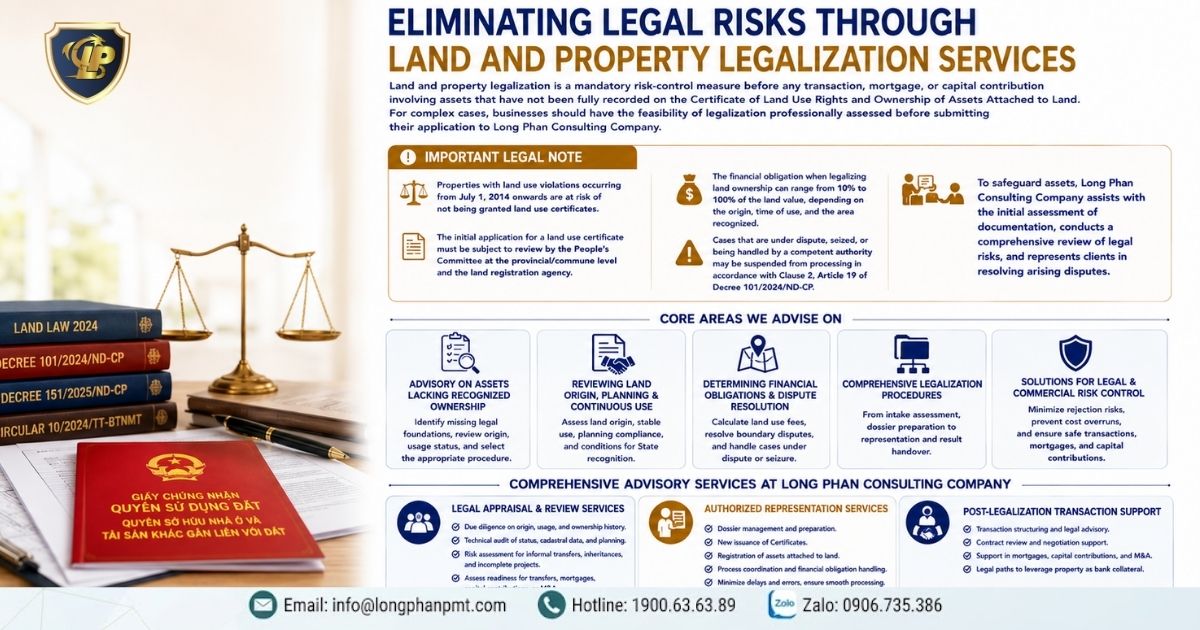

The land price adjustment coefficient is a critical basis for determining land prices for tax calculations, land use fees, and land lease payments. For 2025, this coefficient, known as K, is updated according to the latest legal regulations to align with market conditions and socio-economic development policies. This article provides a detailed technical guide on applying the 2025 land price adjustment coefficient as per current law.

Despite significant changes in the Land Law 2024, the land price adjustment coefficient (Coefficient K) will continue to apply in 2025 for specific transitional cases.
Under Clause 1, Article 257 of the Land Law 2024, the land price adjustment coefficient remains applicable in the following situations:
The Land Law 2024 clearly defines these specific transitional cases for 2025. This provision protects the rights of individuals and businesses with pending land transaction or compensation dossiers before the new law fully takes effect.
>>> See more at: Online Land Registration Changes: A Guide
The land price adjustment coefficient is determined based on the relationship between the market land price and the price in the official land price table. As stipulated in Article 7 of Government Decree 71/2024/ND-CP dated June 27, 2024, each locality, such as the Hanoi People’s Committee through Decision No. 71/2024/QD-UBND, issues its own Coefficient K for 2025. The determination must be accurate and suitable for the specific conditions of each area and land type.
The calculation method is: Coefficient K = Market Land Price / Land Price in the Official Price Table
Where:
Factors influencing the determination of Coefficient K include:
In summary, the land price adjustment coefficient is a critical index derived from the ratio of market land price to the state-prescribed land price. Its determination must comply with current regulations like Decree 71/2024/ND-CP and the Land Law 2024, accurately reflecting market realities and influencing factors.

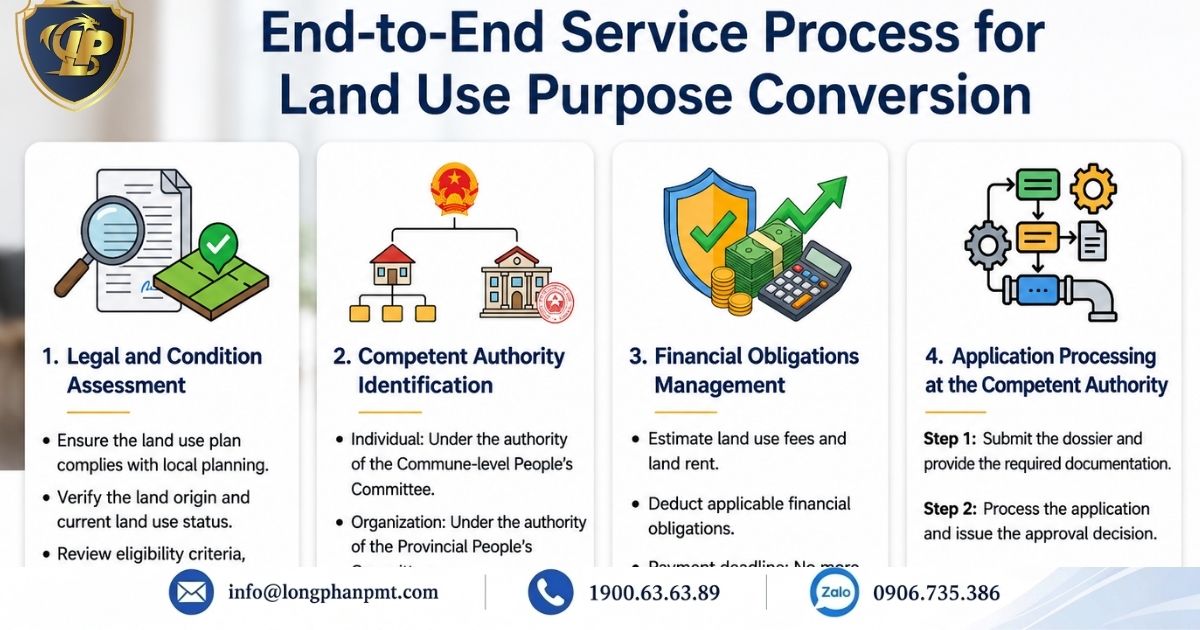
In 2025, determining financial obligations for land allocation, one-time land leases, and change of land use purpose follows a specific 5-step process.
This initial step is foundational.
The land price adjustment coefficient for 2025 is issued by provincial-level People’s Committees, with specific values for different areas, land types, and uses. Users must look up the official decision on the electronic portal of the People’s Committee of the province where the land is located.
After determining the land price adjustment coefficient, the next step is to prepare a dossier to calculate the land use fee or land rent. This dossier must include:
>>> See more at: SAMPLE REPORT ON THE EXPLANATION OF THE LAND PRICE PLAN 2025
The dossier is submitted for approval through a defined process:
This is the final step to secure the Land Use Rights Certificate (Red Book). Financial obligations, including land use fees, land rent, and other related fees, must be paid within 30 days of receiving the tax authority’s notice. Late payments incur penalties as stipulated by the Law on Tax Administration. Retain the payment receipt as crucial proof for completing the land registration dossier.
>>> See more at: A Guide to Financial Obligations for Overseas Vietnamese Selling Property

Applying the land price adjustment coefficient correctly is essential. Note these two key distinctions.
The land price adjustment coefficient is used in two different contexts, which are often confused. They are legally distinct concepts regulated separately under Decree 71/2024/ND-CP.
This distinction is critical. One coefficient serves as a basis for payment to the state budget, while the other ensures fair compensation rights when land is acquired.
From January 1, 2026, all new land dossiers for determining financial obligations will no longer use the land price adjustment coefficient. Instead, they will apply specific land valuation methods: comparison, income, and residual.
This change aims to align administrative land prices more closely with actual market prices, ensuring fairness and transparency. The new official land price tables will be updated annually to reflect market principles. The elimination of the land price adjustment coefficient in favor of market-based valuation methods requires individuals and businesses to stay informed to ensure compliance.
Long Phan Consulting Company provides expert advisory services on applying the 2025 land price adjustment coefficient. Our team has extensive experience in land law and stays current with the latest regulations. Our services include:
With the motto “Trust for Solutions,” Long Phan Consulting Company is committed to delivering optimal solutions for all land-related matters. Contact us for detailed consultation.
Under the transitional rule in Article 257 of the Land Law 2024, the locality will continue to apply the 2024 Coefficient K until the 2025 coefficient is officially issued.
Yes. You have the right to file a complaint against an administrative decision. You can file a complaint with the issuing agency or initiate an administrative lawsuit at the competent People’s Court.
The provincial Department of Natural Resources and Environment leads this process, hiring independent valuation firms to conduct surveys and determine the market price. The results are then submitted to the Provincial Land Price Appraisal Council for review before the Provincial People’s Committee grants approval.
According to the Law on Tax Administration 2019, a late payment penalty of 0.03% per day is applied to the overdue amount. Prolonged delays can lead to enforcement measures such as deduction from bank accounts or seizure of assets.
The most accurate way is to visit the official electronic portal of the People’s Committee or the Department of Natural Resources and Environment of the province where the land is located.
According to the transitional provision in Article 257 of the Land Law 2024, if your dossier for financial obligations was accepted before January 1, 2026, it will still be processed using the 2025 land price adjustment coefficient method.
Applying the 2025 land price adjustment coefficient correctly is essential to protect your legal rights. Adhering to the legal regulations and following the prescribed process is mandatory. Long Phan Consulting Company is ready to assist you in navigating these land procedures efficiently. Contact our hotline at 1900636389 for a free consultation with our experts.