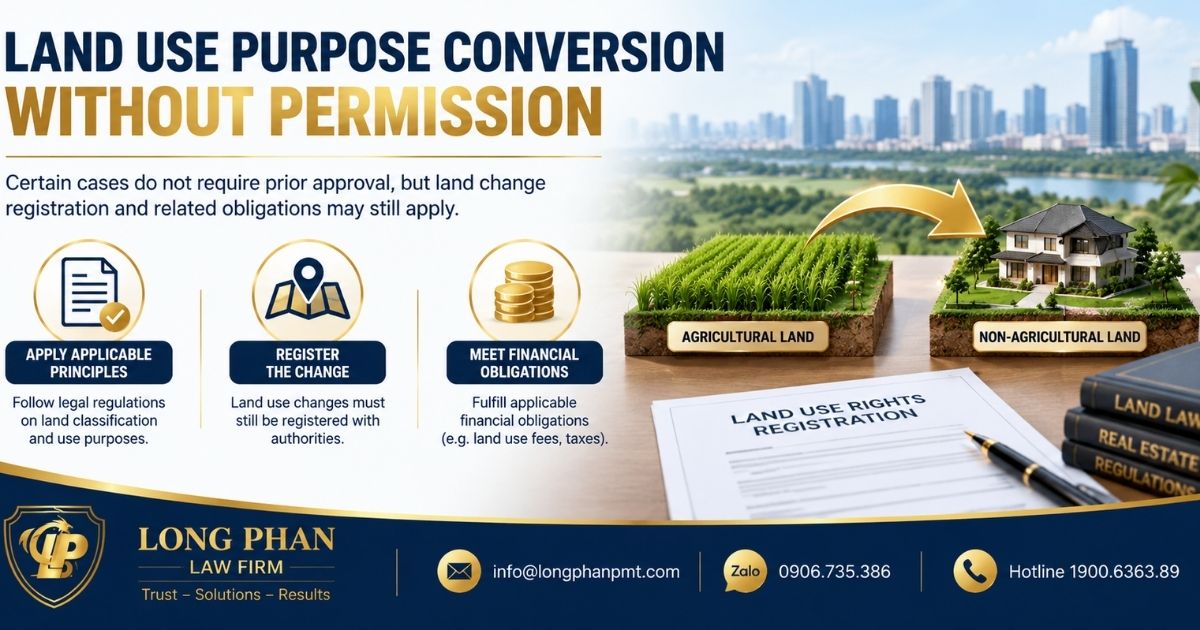

Conversion of Garden Land to Residential Land is a common need for land users to legalize the right to build houses, stabilize value, and increase asset value. Understanding the Dossier for Conversion of Garden Land to Residential Land from January 1, 2026 helps citizens proactively prepare documents, limiting risks or prolonged resolution times. This article analyzes the specific dossier components, legal basis, and important notes when performing the procedure.

What is Garden Land? Currently, the concept of “garden land” is not specifically defined as an independent land type in the Law on Land 2024 but is usually determined through origin and usage status. Clients need to clearly distinguish between garden land attached to residential land and land for perennial crops to apply regulations correctly.
According to current regulations and common understanding in land management practice, garden land is the land area used to grow annual crops, perennial trees, or crops. This area can be located in the same plot as residential land or be separate. In terms of classification under Clause 2, Article 9 of the Law on Land 2024, garden land belongs to the agricultural land group. Therefore, when citizens need to build permanent houses on this area, performing the procedure to change the land use purpose to non-agricultural land (residential land) is a mandatory requirement.
>>> See more: Initial Land Registration Procedure

Not all cases of owning garden land are approved by state agencies for conversion to non-agricultural land for housing construction. Clients must fully meet land use planning criteria to be considered.
Based on Point b, Clause 1, Article 121 of the Law on Land 2024, changing the use purpose of agricultural land (including garden land) to residential land is a case requiring permission from competent state agencies. The prerequisite condition is prescribed in Clause 5, Article 116 of the Law on Land 2024. Specifically, the District-level People’s Committee will base its decision on the land use planning or zoning planning approved by competent state agencies.
This makes the approval process more stable but requires citizens to research planning information thoroughly. The land plot must:
>>> See more: Accurate Land Planning Verification
Currently, according to regulations at Point a, Subsection I, Part III, Appendix I of Decree No. 151/2025/ND-CP, Clients need to prepare the following documents fully and accurately:

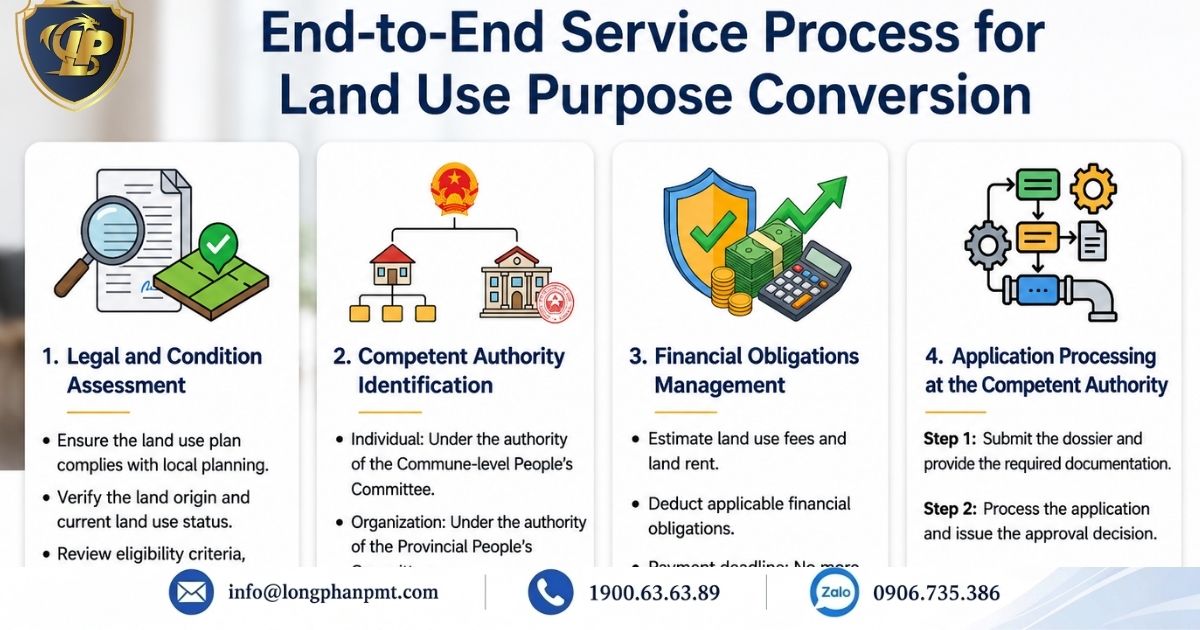
The procedure follows Point a, Subsection I, Part III, Appendix I, Decree No. 151/2025/ND-CP:
Step 1: Submission Submit 01 complete dossier set at the One-Stop Shop or Public Administration Center (according to Point a, Clause 1, Article 12, Decree No. 102/2024/ND-CP). If valid, receive a Receipt with an appointment date.
Step 2: Appraisal and Processing The receiving officer will:
Step 3: Financial Obligation (New from 01/01/2026) According to the Resolution on mechanisms to remove difficulties in implementing the Land Law (Passed on December 11, 2025) and Clause 6, Article 3 amending Decree 103/2024/ND-CP (supplemented by Decree 291/2025/ND-CP), the land use levy calculation changes significantly in favor of citizens:
Step 4: Result Receipt Submit the payment receipt to the receiving agency to collect the Decision on Permission for Change of Land Use Purpose and the updated Certificate of Land Use Rights.
>>> See more at:
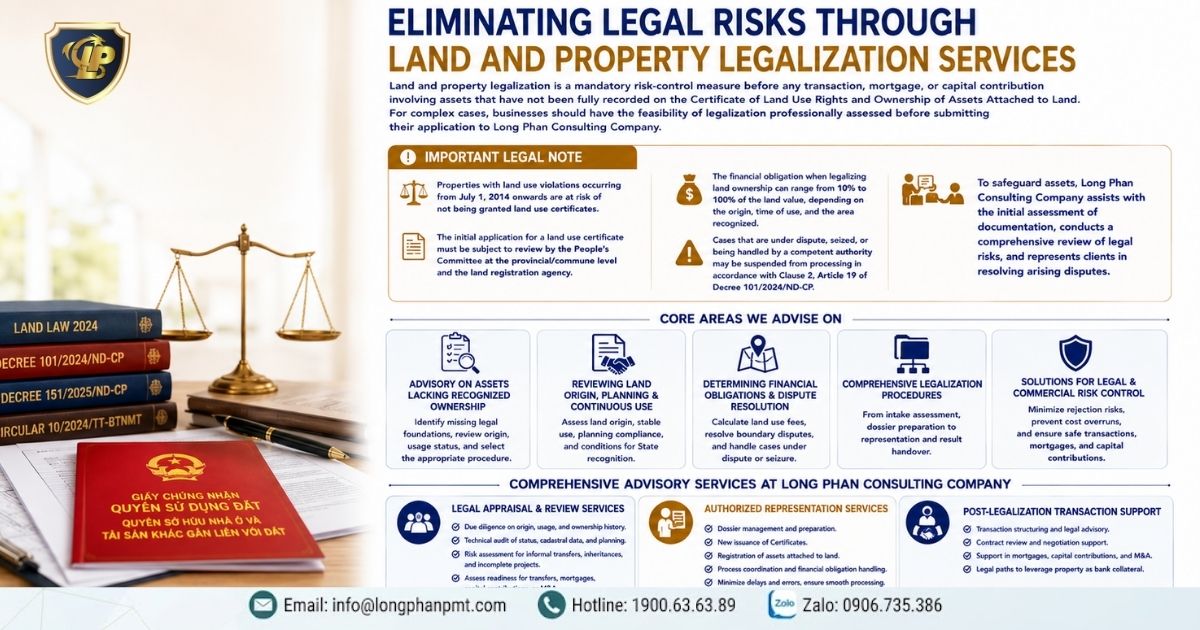
The complex changes in land and tax policies from 2026 require deep legal understanding. Long Phan Consulting Company provides comprehensive solutions:
Yes. Garden land belongs to the agricultural land group. You cannot build a permanent house without performing the procedure to change the use purpose to residential land. (Legal Basis: Clause 2, Article 9 and Point b, Clause 1, Article 121, Law on Land 2024).
The prerequisite is that the land plot’s location must conform to the land use planning or general/zoning planning approved by competent state agencies. (Legal Basis: Clause 5, Article 116, Law on Land 2024).
Use the Application for Change of Land Use Purpose according to Form No. 01 issued with Decree No. 151/2025/ND-CP.
For the area within the residential land allocation quota, you only pay 30% of the difference between the residential land price and the agricultural land price (a reduction compared to previous rates). (Legal Basis: Clause 6, Article 3, Resolution amending Decree 103/2024/ND-CP).
Submit at the One-Stop Shop or Public Administration Center. (Legal Basis: Point a, Clause 1, Article 12, Decree No. 102/2024/ND-CP).
The conversion of land use purpose from 2026 brings significant financial benefits due to the reduced land use levy policy but comes with a stricter appraisal process. To ensure a valid dossier and enjoy new tax incentives, please contact Long Phan Consulting Company via Hotline 1900.63.63.89 for timely and professional support.