
Consulting services for real estate for overseas Vietnamese play a key role in supporting Vietnamese people residing abroad to conduct legal property transactions in Vietnam. Long Phan Consulting Company provides professional solutions, ensuring the rights and legal safety for every transaction. This article will provide a detailed analysis of the conditions and procedures for buying and selling real estate for overseas Vietnamese.
Individuals of Vietnamese origin who no longer hold Vietnamese citizenship must meet strict legal conditions when conducting real estate transactions. Decree 95/2024/ND-CP clearly stipulates the mandatory requirements for this group. Full compliance with these conditions ensures the legality and safety of the property transaction.
According to Decree 95/2024/ND-CP, individuals of Vietnamese origin residing abroad who no longer hold Vietnamese citizenship can only sell real estate if they meet these conditions:
Furthermore, individuals of Vietnamese origin must have full civil act capacity under Vietnamese law and be able to prove their legal financial sources through documents related to income, assets, or bank accounts.
Under Article 44 of the 2024 Land Law, eligible individuals of Vietnamese origin are only entitled to own housing attached to land use rights in commercial housing development projects that are permitted for transfer. Practical experience shows that preparing a complete file proving origin and financial status is a decisive factor for a successful transaction.
Overseas Vietnamese who still hold Vietnamese citizenship are given more favorable conditions by law for buying and selling property in Vietnam. The legal regulations for this group are simpler and less restrictive. Understanding these specific conditions helps overseas Vietnamese proactively prepare documents and conduct transactions efficiently.
Specific conditions include:
Vietnamese citizens must also be able to prove legal financial sources to fulfill financial obligations in the transaction, such as paying taxes and fees.
Vietnamese citizens are not limited in the number of houses they can own and are entitled to long-term, stable land use. Procedures such as tax declaration, contract notarization, and transfer of the Land Use Rights Certificate are carried out in the same manner as for domestic Vietnamese citizens. This creates significant advantages for overseas Vietnamese in investing and owning property in their homeland. However, compliance with regulations on entry, exit, and financial declarations with tax authorities remains a mandatory requirement.
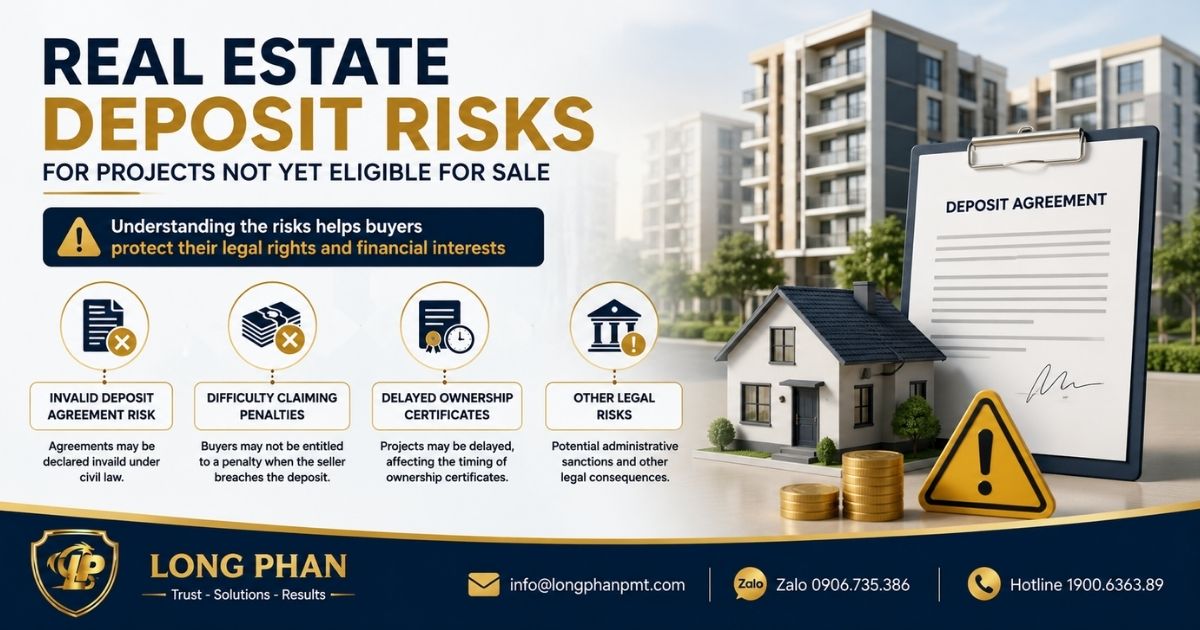
Under current law, a deposit in a real estate transaction for overseas Vietnamese is not mandatory but is an encouraged measure to ensure the commitment of all parties. In practice, a deposit is considered an effective method to bind responsibility and create a clear legal basis for negotiation and signing the official contract.
Given that overseas Vietnamese often have short stays in Vietnam, a deposit is crucial for expediting the transaction, avoiding interruptions due to travel schedules, and providing the seller with peace of mind while preparing transfer procedures.
According to Article 328 of the 2015 Civil Code, a deposit is a measure to secure the performance of a civil obligation. The deposit amount typically ranges from 10% to 30% of the transaction value. The deposit agreement should be in writing, can be notarized or authenticated, and must clearly state:
For overseas Vietnamese, a deposit is not just a legal measure but also clear evidence of the buyer’s good faith, helping to minimize the risk of either party changing their mind or failing to fulfill commitments.
Signing the real estate sales contract is a critical and decisive step in the transaction process for overseas Vietnamese. The sales contract must be in writing, clearly expressing the voluntary, honest, and unified will of all parties. Careful preparation of the contract content not only secures the legal rights and interests of the parties but also minimizes the risk of future disputes.
The contract for the transfer of land use rights and assets attached to land must include the following core contents:
If an overseas Vietnamese cannot be present in Vietnam to sign the contract, they can legally authorize another person to act on their behalf through a Power of Attorney (PoA). The authorization process includes:
The authorized person must have full civil act capacity and not be subject to any restrictions on civil rights under Vietnam’s Civil Code.
Notarization of the contract for the transfer of land use rights and attached assets is a mandatory procedure in Vietnam’s real estate transaction process. It is a prerequisite for ensuring the legality and enforceability of the transaction.
Under current law, the transfer contract must be:
The notarization process requires the direct presence of the parties or their legally authorized representatives. The notary is responsible for verifying legal documents, the identity and capacity of the parties, and ensuring the contract complies with the law.
Registering the transfer of land use rights is the final and most important step. This procedure officially marks the transfer of ownership from the seller to the buyer, completing the legal protection of the buyer’s rights.
After notarization and handover, the buyer must register the change at the local Land Registration Office. The registration file includes:
The processing time is typically 15 to 20 working days. Upon completion, the buyer receives a new Certificate of Land Use Rights and Ownership of Housing in their name. This concludes the legal process of real estate for overseas Vietnamese transactions.
Fulfilling financial obligations is mandatory. Only after all taxes and fees are paid will the state agency approve the ownership transfer.
The seller (overseas Vietnamese) is responsible for:
The buyer is responsible for:
Overseas Vietnamese should note the tax policy distinction between resident and non-resident individuals, as different tax rates may apply.
See more at:

Long Phan Consulting Company provides consulting on real estate for overseas Vietnamese to help clients save time and costs.
If you require consultation on Real Estate Services for Overseas Vietnamese, please contact Long Phan Consulting Company through the following channels:
Our team of experts is ready to advise and support you, ensuring all your questions are answered and providing complete information on Real Estate Consulting Services for Overseas Vietnamese.

Partnering with a professional legal consulting firm is the optimal solution to protect your rights. Long Phan Consulting Company is a trusted legal partner for many overseas Vietnamese.
Can overseas Vietnamese own all types of real estate in Vietnam?
No. Individuals of Vietnamese origin without Vietnamese citizenship are generally restricted to owning housing in commercial housing development projects. Overseas Vietnamese who retain their citizenship have broader rights, similar to domestic citizens.
What if an overseas Vietnamese cannot return to Vietnam to sign the contract?
They can use a Power of Attorney (PoA) that has been legally prepared and consularly legalized abroad, then authenticated in Vietnam.
What document is needed to prove one is of Vietnamese origin?
A “Certificate of Vietnamese Origin” issued by a competent Vietnamese authority is the key legal document.
What is the personal income tax rate when selling property for an overseas Vietnamese?
The seller pays 2% of the transfer value or 20% of the taxable income, depending on their residency status and declaration method.
How long does it take to complete the title transfer for an overseas Vietnamese?
The process typically takes 15 to 20 working days, depending on the locality and the complexity of the file.
Should an overseas Vietnamese buy property that is under dispute?
Absolutely not. This carries significant legal risks, potentially leading to financial loss or the inability to complete the title transfer.
Do I need to prove legal financial sources when buying property in Vietnam?
Yes, overseas Vietnamese need to be able to prove their financial sources are legitimate to comply with anti-money laundering regulations.
The process of handling real estate for overseas Vietnamese requires deep legal knowledge and practical experience. Long Phan Consulting Company is committed to accompanying you through every transaction, ensuring full compliance and maximum protection of your rights. Contact our hotline at 1900 6363 89 for a free consultation.