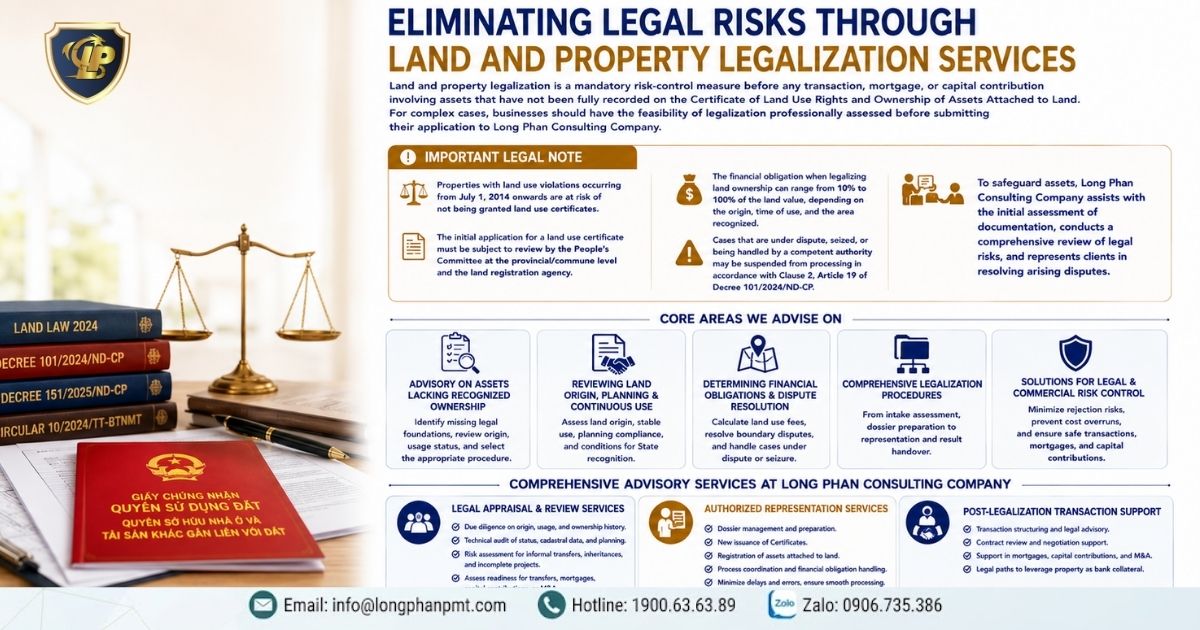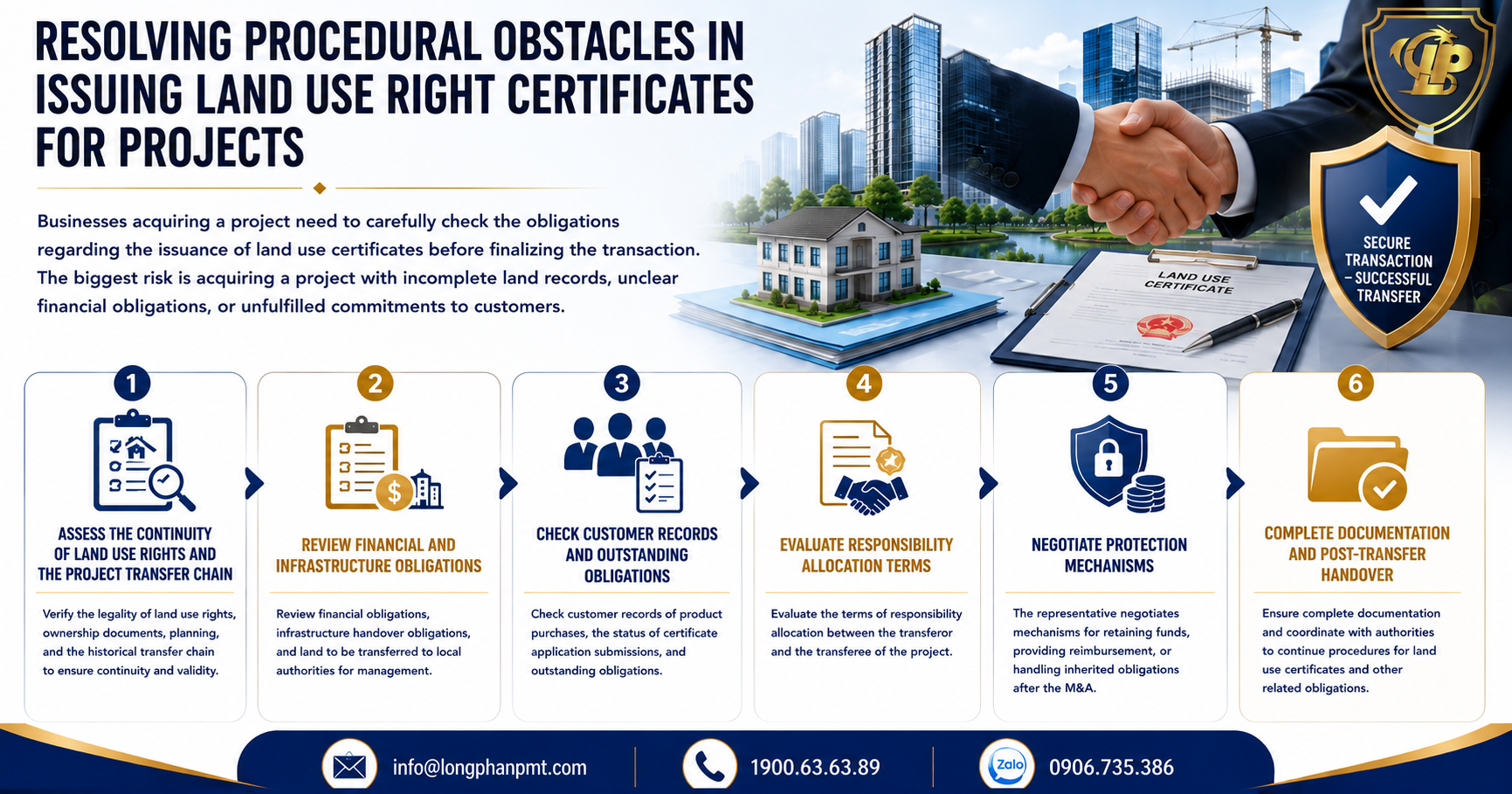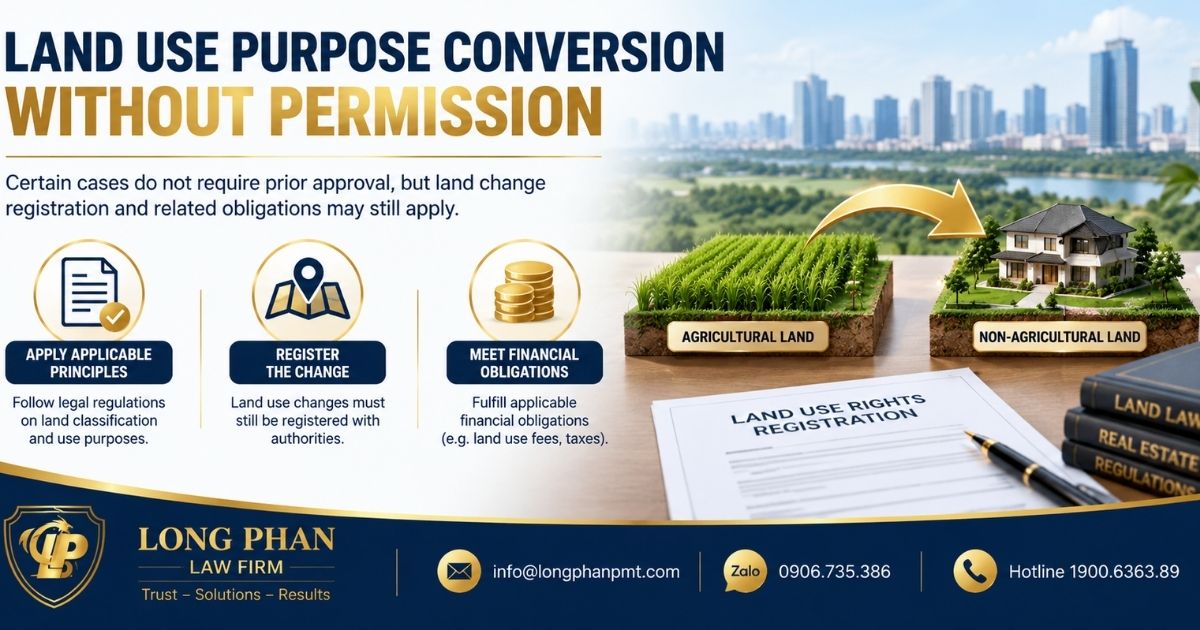

Interspersed land, though not officially defined in the land law system, is common in real estate transactions, particularly in urban areas. These land parcels, often originating from agricultural land or leftover areas after zoning, exist between residential plots. The incomplete legal status of interspersed land creates numerous legal issues and risks for users. This analysis by Long Phan Consulting Company examines the legal regulations, evaluates the benefits and risks, and provides relevant legal solutions.
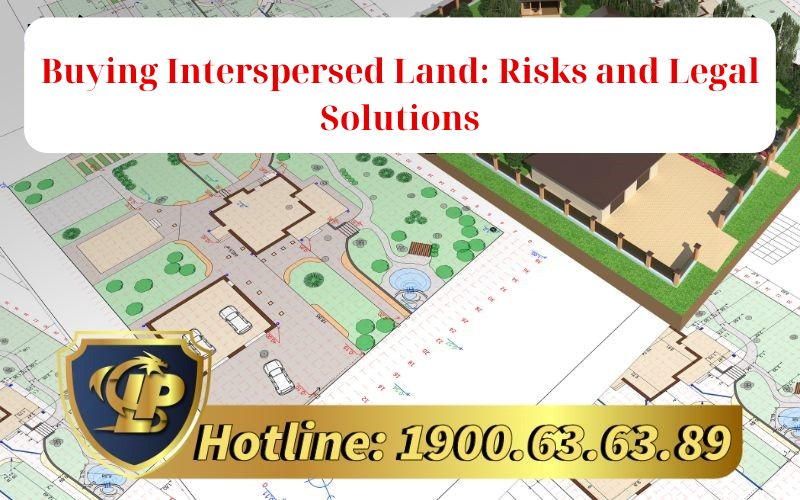
Current land laws do not provide a specific legal definition for “interspersed land.” Under Article 9 of the Land Law 2024, land is classified into three main groups: agricultural land, non-agricultural land, and unused land. The term “interspersed land” does not appear in this classification.
However, the term is widely used in practice to refer to leftover parcels of land located within residential areas or planned projects. These are typically agricultural plots (garden or pond land) or residual land areas remaining after infrastructure projects. Identifying a parcel as interspersed land relies on its physical characteristics rather than a legal basis.
You can identify interspersed land based on these basic features:
These characteristics complicate the management, use, and transaction of interspersed land, requiring a deep understanding of applicable laws.
The issuance of a Certificate for interspersed land is a legally conditioned process; not all such parcels are eligible for legal recognition. The state has policies to manage and consider issuing Certificates for small, narrow, state-managed interspersed parcels. You must compare the actual status of the land against legal criteria to assess the likelihood of obtaining a Certificate.
According to Clause 1, Article 47 of Decree 102/2024/ND-CP, a state-managed interspersed land parcel must meet all the following criteria to be considered for land allocation, lease, and subsequent issuance of a Certificate:
Furthermore, Clause 2, Article 47 of Decree 102/2024/ND-CP outlines the principles for allocating or leasing interspersed land. The law prioritizes using these parcels for public purposes. Only when it cannot be used for public purposes will the state consider allocating it with the collection of a land use fee or leasing it to an adjacent landowner.
After allocation or lease, the land user must merge the parcel with their adjacent land. The land use term will be unified with that of the adjacent parcel, as stipulated in Clause 3, Article 47 of Decree 102/2024/ND-CP and Articles 171 and 172 of the Land Law 2024.

The decision to invest in interspersed land requires a careful analysis of potential returns versus the associated legal risks. This type of property has its attractions but also involves complex issues. A thorough evaluation of both benefits and risks will help you make a sound and safe investment decision.
Despite legal issues, interspersed land attracts investors due to significant advantages. These benefits should be considered objectively within the context of the local market and zoning. You may find investment opportunities from the following factors:
Alongside the benefits, buying interspersed land carries serious legal risks that you must anticipate. These risks can lead to financial loss and prolonged disputes. Early identification of these issues is the first step toward effective prevention.

Practice shows that transactions involving interspersed land contain many complex legal factors and hidden risks that are difficult for individuals to assess and control. Investing without a solid legal foundation can lead to severe financial and legal consequences.
Recognizing these challenges, Long Phan Consulting Company offers a specialized consulting package designed to protect your interests when buying, selling, or legalizing interspersed land.
We provide a comprehensive solution, including these core services:
With the support of Long Phan Consulting Company, you can be more confident in your decision to invest in interspersed land, minimizing risks and maximizing profit potential.
Below are answers to common questions to provide more specific and in-depth information.
The main difference lies in location and planning context. Interspersed land refers to small, isolated agricultural parcels surrounded by or mixed with established residential plots. In contrast, agricultural land within a residential area might be a larger, contiguous area that could be part of a master plan for a future agricultural project or residential development, rather than just a leftover piece.
A bailiff’s deed only records the occurrence of an event or an act (such as the exchange of money or land papers) at a specific time. It does not replace a notarized transfer contract and is not a basis for registering land use rights. Therefore, even with a bailiff’s deed, the transaction carries a very high legal risk.
The most critical information to check is the district-level land use plan and the annual land use plan. You can request this information directly from the district’s Land Registration Office or the Department of Natural Resources and Environment. This helps determine if the land is zoned for other purposes (e.g., a park, school, or road).
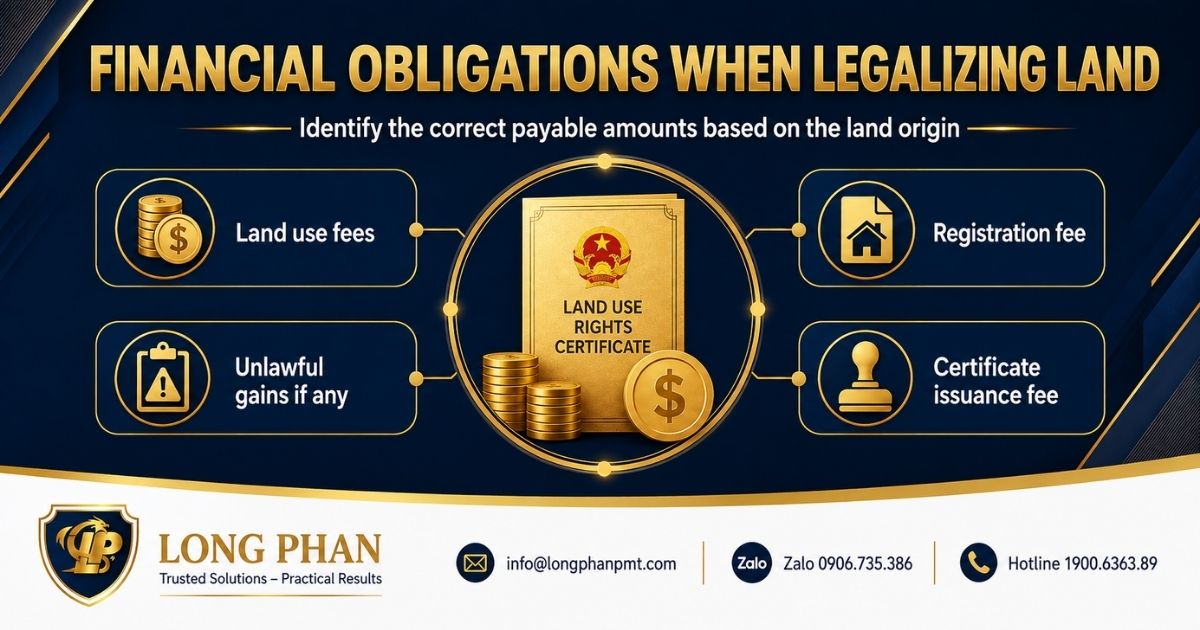
The main costs include the land use fee for converting from agricultural to residential land (the largest expense), a registration fee (0.5% of the land value), a file appraisal fee, and the fee for issuing the Certificate.
According to regulations, the land use fee payable is 50% of the difference between the land value calculated at the residential land price and the land value calculated at the agricultural land price at the time of the conversion decision. The calculation is based on the official price list issued annually by the provincial People’s Committee.
The provincial People’s Committee issues specific regulations on the conditions for land subdivision and consolidation, particularly the minimum area allowed for subdivision. If the interspersed land parcel is smaller than this minimum, legalizing it as a standalone residential plot is impossible unless it is merged with an adjacent plot.
The Land Law 2024 emphasizes the principle of not leaving land unused and provides a clearer mechanism for managing small, narrow parcels under state control (Article 47, Decree 102/2024/ND-CP). This raises expectations that the state will take more decisive action to resolve the status of these parcels, either by putting them to public use or by allocating/leasing them to adjacent landowners.
If legalization is unsuccessful, the parcel’s legal status will remain as agricultural land. This means you cannot build permanent structures, can only use it for agricultural purposes, will face difficulties in mortgaging it for bank loans, and its liquidity (resale potential) will be very low, posing a risk of losing your investment.
Transactions involving interspersed land present both opportunities and risks, requiring investors to have a deep understanding of the law and professional assessment skills. To ensure legal safety and optimize investment value, you should seek support from professional legal consulting firms. Please contact Long Phan Consulting Company via our hotline at 1900 636 389 for comprehensive advice and support.