
Selecting an appropriate real estate distribution strategy plays a pivotal role in optimizing the capital turnaround cycle and ensuring liquidity for investment projects. This activity requires a seamless combination of profound understanding of current legal regulations and the ability to analyze actual market fluctuations. In the following article, Long Phan Consulting Company provides detailed insights into distribution models and optimal implementation roadmaps.

A real estate distribution strategy is a system of methods and channels that transmit products from the developer to the end customer or secondary investor. Within the structure of the Vietnamese market, this involves the process of organizing the sales apparatus, establishing agencies, and managing the flow of product information. Determining the distribution model directly impacts the inventory absorption rate and the enterprise’s reputation in a competitive market.
In the real estate ecosystem, participating subjects in a distribution strategy include:
The core components of the strategy involve defining the target client segment, establishing ceiling price lists, and formulating sales discount policies. Enterprises must balance operating an internal sales team versus authorizing professional real estate trading floors. Each choice affects profit margins and the ability to control the project’s brand image in the long term.
Understanding the nature of the distribution strategy helps developers proactively regulate supply to match actual market demand.
>>>See more: Accurate Real Estate Valuation Before Listing
Consulting on selecting an appropriate real estate distribution strategy is the process of analyzing the market, product structure, and sales models to determine the optimal distribution channel. This activity is typically performed by consulting units, brokerage organizations, or the developer’s internal strategy department. The goal is to establish a distribution system that aligns with the project scale, financial structure, and commercial strategy.
This consulting process requires the developer to clearly categorize the product’s characteristics, such as apartments, land plots, or resort real estate. Each type possesses a distinct target client base and purchasing behavior, necessitating highly compatible approach methods. Clients must evaluate their financial capacity and distribution system management experience before deciding on the level of intervention in the sales process.
The consulting process is generally based on analyzing several criteria:
Market research organizations often use transaction data, absorption rates, and market demand structures to evaluate distribution strategies. Currently, the three most popular distribution models in Vietnam are: Exclusive distribution, selective distribution, and intensive (widespread) distribution. Exclusive distribution is usually applied to high-end projects requiring highly specialized consulting units and abundant affluent client data. Conversely, intensive distribution through multiple trading floors rapidly increases brand coverage but poses challenges in managing prices and media information.
The process of building an effective real estate distribution strategy is a system of steps involving analysis, design, and implementation of sales activities. This process ensures that the distribution strategy is aligned with the project structure and target market. In practice, when advising on the selection of a suitable real estate distribution strategy, the process often includes multiple management stages.
Step 1: Market Analysis
This phase involves collecting market data from research organizations such as CBRE Vietnam, Savills Vietnam, and the Vietnam Real Estate Association. Commonly analyzed indicators include supply, absorption rate, customer structure, and transaction prices.
Step 2: Determine the distribution model
Based on market analysis results, the developer chooses a distribution model such as direct sales, brokerage, or a distribution alliance. The choice of model depends on the project scale, human resources, and financial strategy.
Step 3: Establish the dealership system
The developer signs distribution contracts with real estate agencies. The contracts specify the scope of distribution, commission structure, and information provision obligations.
Step 4: Set up the data management system
A CRM and customer management system was implemented to control transaction data and avoid customer conflicts between agents.
Step 5: Transaction Control
A precise process helps minimize errors but cannot completely eliminate potential risk variables in real estate transactions. Factors such as overlapping zoning plans, legal changes, or dishonesty from brokerage firms can cause significant losses. Therefore, clients need to clearly identify common risks when choosing a real estate distribution strategy in order to have contingency plans.

Risks of Selecting Unqualified Distribution Units: The greatest risk arises from choosing distribution units lacking legal capacity or professional reputation. Unofficial trading floors often provide misleading information regarding project legalities, leading to prolonged client lawsuits and severe damage to the developer’s brand. Additionally, inconsistent price management across agencies causes price dumping, creating chaos in the distribution ecosystem.
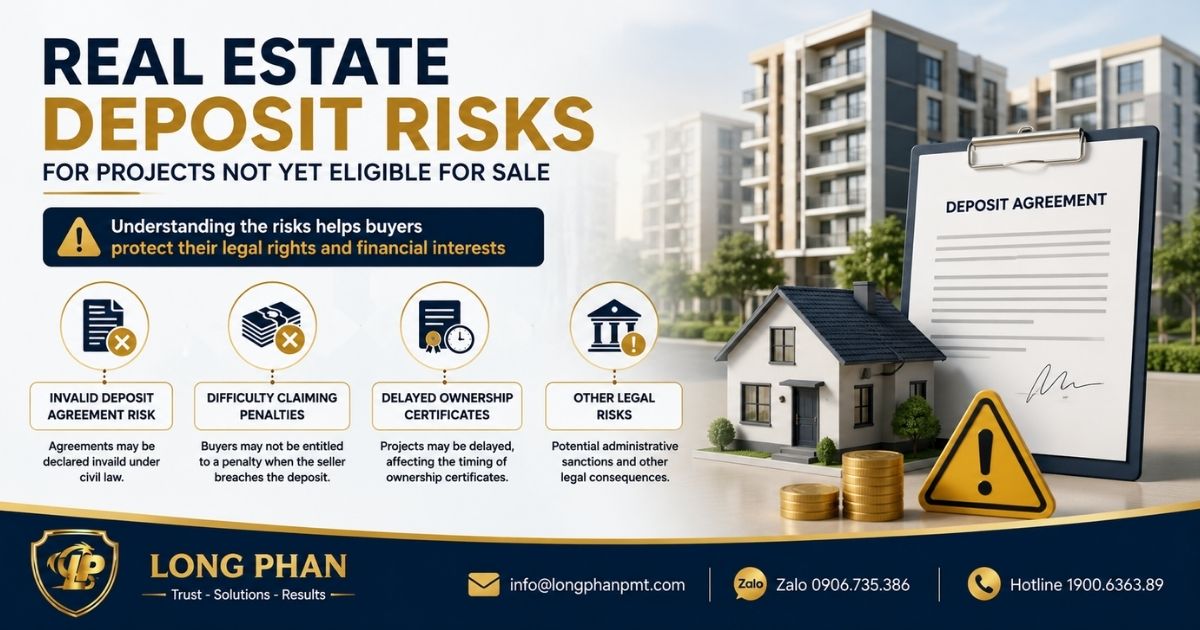
Legal Risks: These emerge when agreement documents between the developer and the distribution unit are loosely drafted regarding rights and obligations. A critical violation is the illegal mobilization of capital through reservations or placeholder deposits when the project is not yet legally eligible for sale under the current Law on Real Estate Business. These violations can lead to administrative fines or the suspension of the project’s business activities, fracturing the investment cash flow.
Unexpected Market Fluctuations: External risks, such as the tightening of real estate credit, can bankrupt a distribution strategy. When liquidity drops, agencies tend to withdraw or reduce the resources prioritized for the project, leaving the developer with massive inventory.
>>>See more: Role of Real Estate Brokers in Land Transactions
To optimize distribution efficiency, developers should implement the following solutions:
In Long Phan Consulting Company are provide practical legal and business solutions to investors through the following tasks:

The following, Long Phan Consulting Company are some frequently asked questions regarding the selection of a suitable real estate distribution strategy. We invite interested clients to refer to them:
The investor must ensure that the real estate offered for sale meets the conditions stipulated in Article 12 or Article 24 of the 2023 Law on Real Estate Business, and that the trading floor is legally established and has operating regulations in accordance with Article 54 of the 2023 Law on Real Estate Business.
According to Clause 5, Article 23 of the 2023 Law on Real Estate Business, the investor of a real estate project is only allowed to collect a deposit of no more than 5% of the selling price or lease-purchase price of housing, construction works, or the floor area within the construction works from the depositor for purchase or lease-purchase when the housing or construction works have met all the conditions for being put into business as prescribed by law. Real Estate Business Law 2023 The deposit agreement must clearly state the selling price, lease-purchase price of the house, construction project, or the floor area within the construction project. Authorization must be clearly stipulated in the brokerage contract.
According to Article 63 of the 2023 Law on Real Estate Business, the brokerage fee is agreed upon by the parties in the contract and is independent of the price of the brokered transaction, unless the parties agree otherwise.
The optimal time is before signing the deposit contract or before notarizing the transfer contract. Early checking helps detect risks related to mortgages, zoning, or disputes. This ensures the property fully meets the transfer conditions according to Article 45 of the 2024 Land Law.
According to Clause 2, Article 44 of the 2023 Law on Real Estate Business, a real estate service business contract (including brokerage contracts) is a written agreement between organizations and individuals engaged in real estate business who meet the conditions specified in Clause 8, Article 3 of the 2023 Law on Real Estate Business. Notarization or certification of a real estate brokerage contract is at the discretion of the parties and is not mandatory.
For housing projects under construction, according to point d, clause 2, Article 24 of the 2023 Law on Real Estate Business, a construction permit and approved project documents are required before a business contract can be signed. Therefore, the investor is not allowed to distribute real estate without a construction permit.
Consulting on selecting an appropriate real estate distribution strategy requires a serious investment of intellectual and legal resources to ensure safety for every transaction. We are committed to accompanying clients in building a transparent, effective, and legally compliant distribution system, please contact Long Phan Consulting Company via Hotline 1900636389 for professional advice on selecting an appropriate real estate distribution strategy.