Sectors encouraged for investment in high-tech zones are among the key contents reflecting the State’s direction for scientific, technological development, and innovation in the current period. In the following article, Long Phan Consulting Company will provide detailed information about these sectors.
Regulations for Sectors encouraged for investment in high-tech zones.
Scientific research and high-tech development
Scientific research and high-tech development play a key role in promoting innovation, enhancing competitiveness, and creating a foundation for sustainable national development in the context of deep international integration.
According to Article 29 of Decree 10/2024/ND-CP, high-tech research and development activities in high-tech zones include:
Researching and mastering transferred or imported high technologies; decoding high technologies.
Researching to exploit inventions, implementing experiments, and trial production to create new technologies replacing imported ones.
Researching to perfect and develop high technologies applied in producing new products, high-tech products, providing high-tech services, and technology transfer.
High-tech human resource training associated with the above activities.
Criteria for R&D Projects: Besides meeting principles in Article 28, projects must:
Have short-term and long-term R&D goals, plans, and roadmaps; plans for transfer, cooperation, commercialization, and application.
Technology/products must belong to the List of High Technologies Prioritized for Investment Development or the List of High-Tech Products Encouraged for Development (issued by the Prime Minister). If not listed but are new/advanced, the Management Board reports to the Ministry of Science and Technology for PM approval.
Create high technologies replacing imports; create key products replacing imports.
Comply with quality management standards and environmental technical regulations.
Meet criteria on human resources, spending rates for R&D, and machinery as per Ministry of Science and Technology regulations.
Investment projects applying high technology to produce high-tech products must meet the following criteria (in addition to Article 28 principles):
Technology belongs to the List of High Technologies Prioritized for Investment Development.
Use energy economically and efficiently.
The quality management system meets international specialized standards.
Comply with environmental standards (encourage ISO 14000).
Meet criteria on revenue ratio from high-tech products, human resources, R&D spending, and technology lines as per regulations.
Export Processing Enterprises (EPEs) in High-Tech Zones: Enterprises established in the zone specializing in producing products for export, separated from the outside area, enjoying non-tariff zone regulations.
Key Priority Sectors (Decision 38/2020/QD-TTg):
Information technology – electronics – semiconductor circuits.
The government encourages foundational high-tech services. According to Article 33 of Decree 10/2024/ND-CP, projects must meet principles on objectives, environmental friendliness, planning conformity, and financial capacity.
Application of high technology in socio-economic sectors
Investment is not limited to production but extends to smart technology applications:
High-tech agriculture.
High-tech healthcare.
Smart cities, digital infrastructure.
Smart logistics, FinTech.
Green manufacturing, circular economy.
Training and developing high-tech human resources.
According to Article 30 of Decree 10/2024/ND-CP, training activities include:
Training staff with qualifications/skills for R&D and high-tech application; building strong research groups.
Cooperating with universities/institutes for Master’s/PhD training in priority sectors.
Training high-level personnel for operating high-tech production lines and managing high-tech activities.
Project Criteria:
Training researchers, managers, and technicians; attracting foreign/overseas Vietnamese experts.
Specific roadmap and plan for HR development; compliance with Vietnamese regulations.
Orientation to form strong scientific research collectives and international-level training facilities.
High-Tech Agriculture Training (Article 37): Similar criteria apply for training in high-tech agricultural zones, focusing on mastering and applying technology in agricultural production.
Supporting projects serving the high-tech zone.
The State encourages supporting industries serving high-tech zones:
Technical infrastructure construction projects.
Factories, clean rooms, testing centers.
Logistics services (specialized warehousing).
High-tech enterprise support services.
Important note
Not all sectors are allowed. Only projects meeting development goals, belonging to priority lists, and conforming to planning are considered. Investors must verify sectors and market access conditions before investing.
Long Phan Consulting Company provides consulting services on investment-stimulated sectors within high-tech zones.
In the context of Vietnam expanding its investment market, Long Phan Consulting Company provides comprehensive and flexible solutions for investors wishing to access Vietnam’s high-tech zones. We structure our support into the following key areas:
Providing investment strategy advice tailored to the investor’s objectives;
Providing advice on the conditions and procedures for obtaining investment incentives;
Providing consultancy services during project implementation and operation.
Providing advice on choosing a suitable investment model;
Assisting in preparing the application for an investment registration certificate in accordance with regulations;
Answering questions about investment law;
Review and support transactions;
Authorized representatives will contact the relevant government agencies on behalf of the client.
Long Phan Consulting Company provides consulting services on investment-stimulated sectors within high-tech zones.
Frequently Asked Questions about Investment Promotion Areas in the High-Tech Park
Below, Long Phan Consulting Company provides some frequently asked questions related to investment areas encouraged in high-tech zones. We invite interested clients to refer to this information:
Are investors allowed to transfer projects within the high-tech industrial park?
Yes. According to Clause 1, Article 46 of the 2020 Investment Law, the investor has the right to transfer all or part of an investment project when the investment project or the transferred part of the investment project is not terminated in accordance with Article 48 of the 2020 Investment Law.
In the case of a foreign investor acquiring the entire or a part of an investment project, the following conditions must be met:
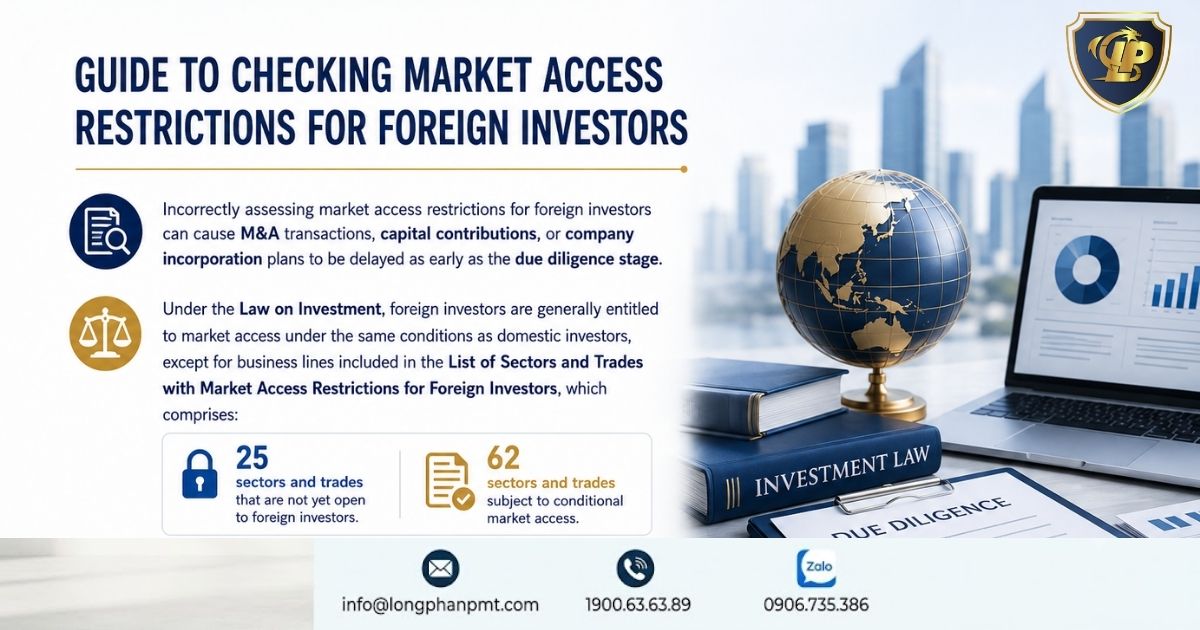
Foreign investors shall be subject to the same market access conditions as domestic investors, except in cases where the industry or profession is not yet open to market access or where market access is conditional;
Ensuring compliance with defense and security regulations;
Comply with legal regulations regarding land matters, conditions for receiving land use rights, and conditions for land use in islands, border communes, wards, and towns, and coastal communes, wards, and towns;
Meeting other conditions stipulated by law regarding: land, housing, and real estate business in the case of transferring investment projects for housing construction, real estate projects, etc.;
Implement the contents of the investment policy approval document, investment registration certificate, or other relevant regulations (if any);
For state-owned enterprises, when transferring investment projects, they must comply with the regulations of the law on the management and use of state capital invested in production and business at the enterprise before making any adjustments to the investment project.
What is the land lease term in the High-Tech Park?
According to Article 204 of the 2024 Land Law, which regulates land use for high-tech zones, the State leases land and collects annual rent or a lump-sum rent for the entire lease period for investment in the construction and operation of high-tech zone infrastructure. The land use term in a high-tech zone is based on the operating term of the investment project but not exceeding 70 years.
What are the specific corporate income tax (CIT) incentives in high-tech zones?
According to the provisions of Articles 13 and 14 of the Corporate Income Tax Law 2025, amended and supplemented by Point d, Clause 7, Article 25 of the High-Tech Law 2025, new projects in high-tech zones typically enjoy extremely competitive incentives:
Preferential tax rate of 10% for 15 years.
A tax rate of 10% will be applied for 25 years.
Tax exemption for the first four years from the date taxable income is generated.
A 50% reduction in taxes payable for the next 9 years. Some exceptionally large-scale projects may be eligible for special incentives for up to 30 years.
What are the policies to encourage investment and construction in high-tech zones?
To promote the development of high-tech zones, the State has stipulated many policy mechanisms to encourage investment in the construction and business of technical infrastructure in Article 13 of Decree 10/2024/ND-CP.
Accordingly, organizations and individuals with sufficient experience and capacity are encouraged by the State to invest in the construction and operation of high-tech park infrastructure, including investing in the construction and operation of the entire technical infrastructure system of the high-tech park or a part of the technical infrastructure system of the high-tech park as prescribed.
Investment projects for the construction and operation of infrastructure are entitled to the following incentives:
Land rent, compensation, and site clearance fees will be waived and reimbursed according to regulations on land rent collection in high-tech zones.
Priority is given to borrowing state-funded investment credit, and all other legal forms of capital mobilization are permitted in accordance with the laws on enterprises, credit, and other regulations.
Other incentives as stipulated by laws on investment, taxation, and land.
Priority is given to participation in pilot programs and projects for smart city development.
Other support policies as prescribed by law.
In addition to tax incentives, the government also prioritizes the streamlining of administrative procedures. The High-Tech Park Management Board is responsible for prioritizing the processing of procedures related to infrastructure investors and investment projects within the infrastructure development project area.
How many types of high-tech activities are there in the high-tech zone?
According to Article 27 of Decree 10/2024/ND-CP, the types of high-tech activities in high-tech zones include: research and development of high technology; application of high technology; incubation of high technology, incubation of high-tech enterprises; training of high-tech human resources; high-tech fairs, exhibitions, and demonstrations; demonstrations of high-tech products resulting from research, application, and transfer of high technology; production and trading of high-tech products; and provision of high-tech services.
Conclusion
Investing in high-tech zones is a sustainable strategy. Clients need to master the encouraged sectors to enjoy optimal incentives. Long Phan Consulting Companyis ready to provide legal solutions and professional representation. Contact Hotline 1900636389 today.
Facebook
Linkedin
Twitter
Pinterest
Luật sư Nguyễn Thu Hương
Lawyer Nguyen Thu Huong is a leading expert in the field of investment and licensing for foreigners. With extensive knowledge of investment laws and the complex regulations related to licensing procedures, she has successfully assisted numerous businesses and foreign investors in establishing their operations in Vietnam.