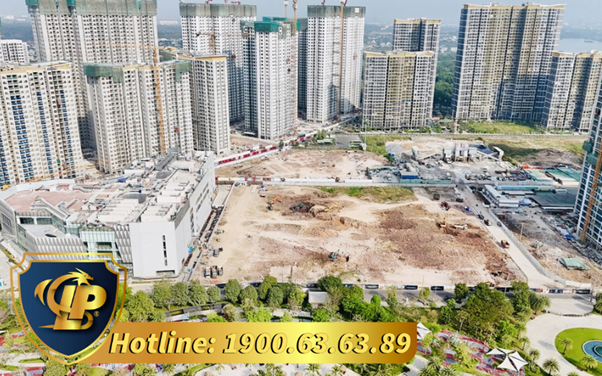
Pros and cons of investing in future-formed housing are always a matter of concern for investors in a diverse real estate market. Alongside significant opportunities, this investment form also carries many risks. In this article, Long Phan Consulting Company analyzes the advantages and disadvantages of such transactions in detail.
Pros and cons of investing in future-formed housing
The concept of future housing
Based on Clause 5, Article 3 of the Law on Real Estate Business 2023, future-formed housing is housing that is in the process of construction or has not yet been accepted for use according to construction laws. Unlike existing land or housing, its value is tied to construction progress and the investor’s commitment.
The concept of future housing
Advantages of investing in properties under construction.
Investing in this segment offers optimizing cash flow and profitability potential if implemented by capable investors:
Price & Accessibility: The initial price is often significantly lower than completed housing, reflecting “expected value”. This allows entry with lower capital and potential profit growth upon completion.
Flexible Payment: Payments are split into installments based on construction progress, reducing financial pressure and serving as leverage for borrowers.
Value Appreciation: Value tends to increase with project completion, infrastructure synchronization, and regional development.
Modern Standards: New projects often feature modern designs, new technologies, and better amenities compared to older buildings.
Bank Guarantee: Under Article 26 of the Law on Real Estate Business 2023, sales are only permitted with a bank guarantee for financial obligations, protecting buyers if the investor fails to hand over on time.
Disadvantages of investing in properties under construction.
Investors often face passive risks due to the non-existence of the asset at the time of transaction:
Progress & Handover Delays: The most common risk. Lack of investor capacity or legal issues can lead to prolonged delays or project suspension, burying capital.
Legal & Ownership Risks:
Sales without meeting conditions (foundation not done, no guarantee).
Signing incorrect contract types (“capital contribution”, “reservation”) leads to invalidity.
Projects mortgaged at banks without release prevent the issuance of Pink Books (LURC) to buyers.
Discrepancy Risks: The actual handover may differ from the design, model house, or advertisements regarding quality, materials, area, or amenities, leading to disputes.
Disadvantages of investing in properties under construction.
Real estate investment consulting services at Long Phan Consulting
Long Phan Consulting Company provides comprehensive investment consulting to control risks:
Project Due Diligence: Checking project dossiers, capital mobilization conditions, and investor capacity/reputation.
Negotiation: Proposing adjustments to protect buyer rights.
Monitoring: Tracking the investor’s fulfillment of obligations.
Frequently Asked Questions about the Advantages and Disadvantages of Investing in Off-Building Homes
Below are some frequently asked questions about the advantages and disadvantages of investing in off-plan housing when making investments in the real estate sector. Please refer to them:
What is the payment limit before handover?
First installment: Not exceeding 30% (including deposit).
Before handover: Total payments not exceeding 70% (or 50% if the seller is an FDI enterprise).
Retained amount: Buyers retain 5% until the Certificate (Pink Book) is issued. (Legal Basis: Clause 1, Clause 3, Article 25, Law on Real Estate Business 2023).
How to check for a bank guarantee?
Buyers should request the investor to provide the Bank’s commitment to issue a guarantee letter. A copy must be included in the sales contract. (Legal Basis: Article 26, Law on Real Estate Business 2023).
Is placing a deposit before sales eligibility risky?
Yes. Investors can only collect a deposit of not more than 5% when the housing is eligible for business. Signing “capital contribution” or “reservation” agreements for large sums before eligibility (no Department of Construction notice) carries high risk. (Legal Basis: Clause 5, Article 23, Law on Real Estate Business 2023).
What document proves sales eligibility?
The Notice from the Provincial Department of Construction confirming the future-formed housing is eligible for sale/lease-purchase. (Legal Basis: Clause 4, Article 24, Law on Real Estate Business 2023).
When is trading prohibited?
If the housing is under dispute, distrained for enforcement, prohibited by law, or under transaction suspension. (Legal Basis: Clause 1, Article 14, Law on Real Estate Business 2023).
Conclusion
Objectively assessing the Pros and Cons of Investing in Future-Formed Housing helps Clients make safe decisions. Long Phan Consulting Company is ready to assist in appraising dossiers and reviewing contracts. Contact Hotline 1900636389 for immediate support.
Lawyer Nguyen Thu Huong is a leading expert in the field of investment and licensing for foreigners. With extensive knowledge of investment laws and the complex regulations related to licensing procedures, she has successfully assisted numerous businesses and foreign investors in establishing their operations in Vietnam.