The process of legalizing unpermitted construction on residential land is a significant concern for property owners seeking to avoid legal risks and secure asset rights. Understanding current legal regulations helps individuals know the conditions and procedures for obtaining a building permit or adjusting construction documents. This legalizes the structure, protects lawful ownership, and facilitates transactions, transfers, or mortgages.

Legalizing unpermitted construction refers to the process where a structure built without a permit can still receive a certificate of ownership without being demolished.
According to Articles 81 and 84 of Decree No. 16/2022/ND-CP, construction without a permit, where a permit is required, is subject only to an administrative penalty and the disgorgement of illegal profits if it meets all the following conditions:
If these conditions are met, the owner must pay the administrative fine for building without a permit. The owner then needs to complete the procedure for a new building permit, a permit adjustment, or a design adjustment with the competent authority. Upon completion, the state agency will consider issuing a certificate of ownership for the house/structure.
To have the structure legally recognized and receive a Certificate of Ownership (pink book), the owner must follow the correct process, from preparing a complete legal dossier to complying with the steps required by the competent state agency.
Article 81, Clause 1 of Decree 16/2022/ND-CP states that the application dossier for a building permit follows legal provisions on licensing and appraisal, with the addition of documents proving the completion of the administrative fine payment.
In this case, where a residential house was built without a permit and is not exempt, you must apply for a new building permit for the purpose of legalizing unpermitted construction.
Based on Article 58 of Decree 175/2024/NĐ-CP, the application dossier for a building permit for a private house includes:
Households may self-design private houses with a total floor area of less than 250m², under 3 stories, or less than 12 meters in height, consistent with approved urban and rural planning. The household is legally responsible for the design quality, environmental impact, and safety of neighboring structures.
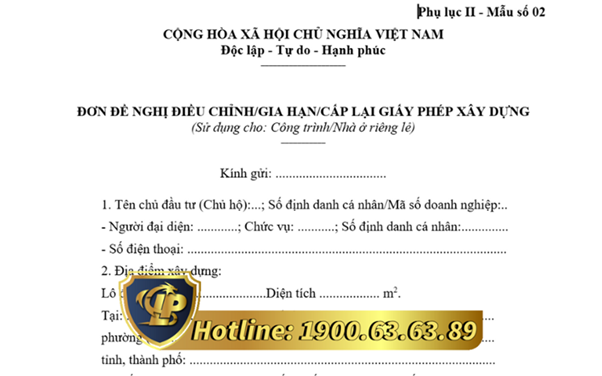
Based on Article 81 of Decree 16/2022/ND-CP, for the act of constructing a building without a required permit but which is eligible for one, the process is as follows:
Note: If the violator continues construction while applying for a permit or permit adjustment, they will be penalized under Article 16, Clause 13 of Decree 16/2022/ND-CP. Failure to comply with a demolition order will result in enforced demolition according to the law on handling administrative violations.
>>> See more at: Issuing construction permits for a limited period of time for projects and individual houses
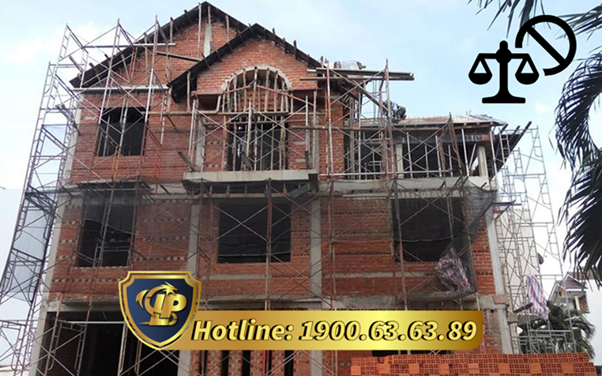
According to Article 16, Clauses 7 and 15 of Decree 16/2022/ND-CP regarding violations of construction order:
Note: This fine applies to organizations. For individuals committing the same violation, the fine is half the amount for an organization (as per Article 4, Clause 3, Point c of Decree 16/2022/ND-CP).
Long Phan Consulting Company provides expert consulting services for legalizing unpermitted construction on residential land. Our services include:
We commit to supporting you until all procedures are complete. Long Phan Consulting Company ensures the protection of your rights and your satisfaction throughout the entire process of legalizing unpermitted construction. You can trust the effectiveness of our services.
Here are common questions and answers to clarify the process of legalizing unpermitted construction.
Construction law does not formally define these terms; they are common descriptions for two types of violations: “Unpermitted construction” is starting construction without a permit from a competent authority when one is required. This is a primary issue in legalizing unpermitted construction. “Non-compliant construction” is building differently from the issued building permit (e.g., changing the design, increasing area or floors). Penalties and remedies vary based on the violation’s nature.
According to Article 16 of Decree 16/2022/ND-CP, if the construction is complete, it must be demolished. If it is not yet complete, you have 30 days to apply for a permit. If a permit is granted, demolition is not required.
Article 139, Clause 1 of the 2023 Law on Housing states that if a house must be demolished and the owner does not voluntarily comply, a competent state agency will issue a forced demolition decision.
Based on Article 81, Clause 1 of Decree 16/2022/ND-CP, the 30-day period for legalizing unpermitted construction starts from the date the administrative penalty decision is issued, not from the date the violation is recorded. Failure to obtain a permit within this period will result in a demolition order.
According to Article 84, Clause 3 of Decree 16/2022/ND-CP, the illegal profit from unpermitted construction of a private house is 50% of the value of the violating construction part. This value is calculated by multiplying the violating area by the unit construction cost issued by the provincial People’s Committee at the time of the violation.
Legalizing unpermitted construction on residential land is a comprehensive legal process that extends beyond paying an administrative fine. Success depends on accurately assessing planning conditions under Decree 16/2022/ND-CP, fulfilling financial obligations, and preparing a complete building permit application. Long Phan Consulting Company is ready to provide fast and effective support for legalizing unpermitted construction. Contact us via our hotline at 1900636389 for detailed advice.