
Key points for new businesses to know: setup & operation requires more than obtaining an Enterprise Registration Certificate; it demands immediate control over tax, labor, and governance risks within the first 30 days. When business Registration, many startups face operational delays, tax arrears, or internal deadlocks due to improper capital structuring or operating conditional business lines without the requisite sub-licenses. To mitigate the risk of void contracts and administrative penalties, investors must establish a synchronized legal roadmap for legal compliance for enterprises in Vietnam, spanning from initial dossiers to recurring internal audits. The following analysis outlines a strategic operational framework developed by the legal experts at Long Phan Consulting Company.

Important legal note:
Many new enterprises fail not due to market conditions, but because of flawed legal structures established at the outset. The choice of corporate form, capital contribution ratios, and governance mechanisms dictates a founder’s ability to raise funds, maintain executive control, and limit asset liability throughout the business lifecycle. For startups planning multiple funding rounds or strategic partnerships, the legal architecture must be flexible yet robust regarding voting rights. This stage requires rigorous due diligence on headquarters compliance, conditional business lines, and founder eligibility under the Law on Enterprises 2020.
The decision to establish a Limited Liability Company (LLC) or a Joint Stock Company (JSC) should be driven by capital-raising strategies and internal control requirements rather than initial setup costs. Founders must simultaneously evaluate exit mechanisms, transferability of interests, and liability exposure before filing the registration dossier.
| Entity Type | Number of Members | Liability Regime | Capital Raising Capability | Governance Complexity |
| Single-member LLC | 01 Owner | Limited to contributed capital | Limited | Low |
| Multi-member LLC | 02 – 50 Members | Limited to contributed capital | Moderate | Moderate |
| Joint Stock Company | Min. 03 Shareholders | Limited to contributed capital | High | High |
| Partnership | Min. 02 General Partners | Unlimited for General Partners | Limited | Moderate |
| Sole Proprietorship | 01 Individual | Unlimited personal liability | No capital mechanism | Low |
A Joint Stock Company is ideal for models requiring multiple investment rounds or equity issuance. Conversely, an LLC typically suits family-owned businesses or startups seeking tight control over capital transfers. These legal frameworks are primarily governed by the Law on Enterprises 2020.
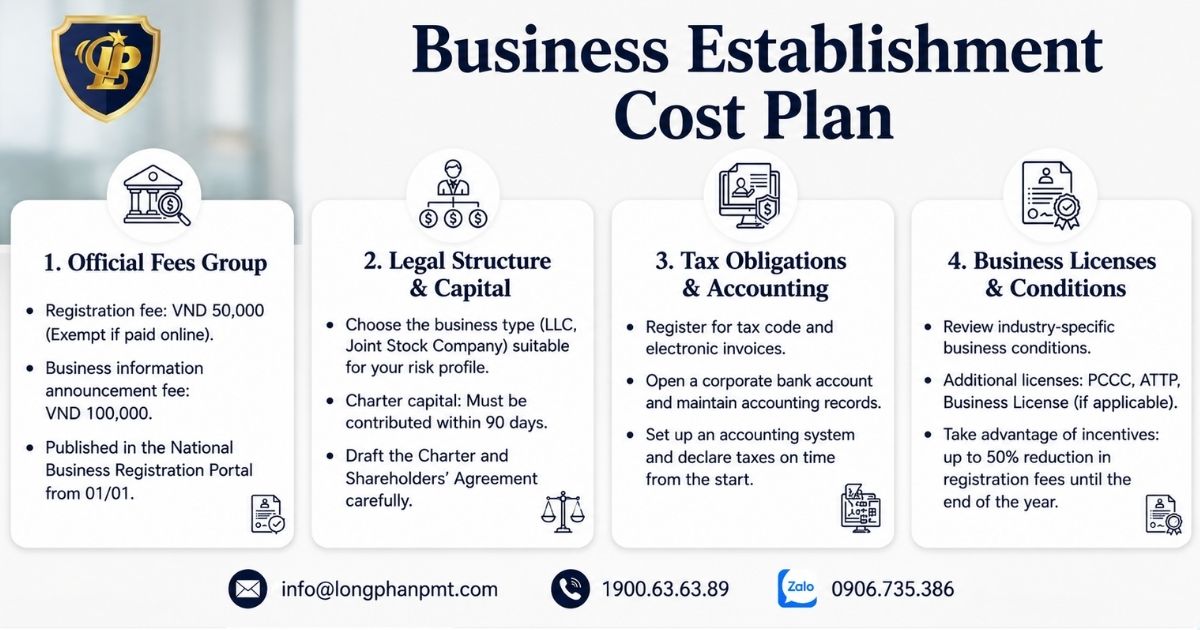
Registered capital not only affects financial liability but also directly impacts voting rights, the right to appoint management personnel, and business license fees. Many founders register excessively high capital to create a financial image but are unable to contribute the full amount in reality, leading to prolonged legal risks.
For a single-member limited liability company, the owner must contribute the full amount of capital within the specified timeframe 90 days. From the date of issuance of the Business Registration Certificate under Article 75 of the 2020 Enterprise Law, intentionally inflating the value of contributed assets or failing to complete the transfer of ownership of contributed assets is an act strictly prohibited by law.
Common risks when establishing charter capital and capital contribution ratios include:
For multi-founder startups, the Company Charter must explicitly detail voting thresholds, veto rights, and equity transfer conditions to prevent disputes during future restructuring.
A large percentage of business registration applications require amendment due to duplicate names, incorrect industry codes, or the use of inappropriate addresses. These errors can cause delays in opening plans, signing contracts, or opening bank accounts.
Before submitting an application, businesses should perform at least the following three review steps:
The final decision on name approval rests with the Business Registration Authority under the 2020 Enterprise Law. For conditional business sectors such as logistics, education, e-commerce, or real estate, obtaining a Business Registration Certificate does not automatically mean permission to operate immediately.
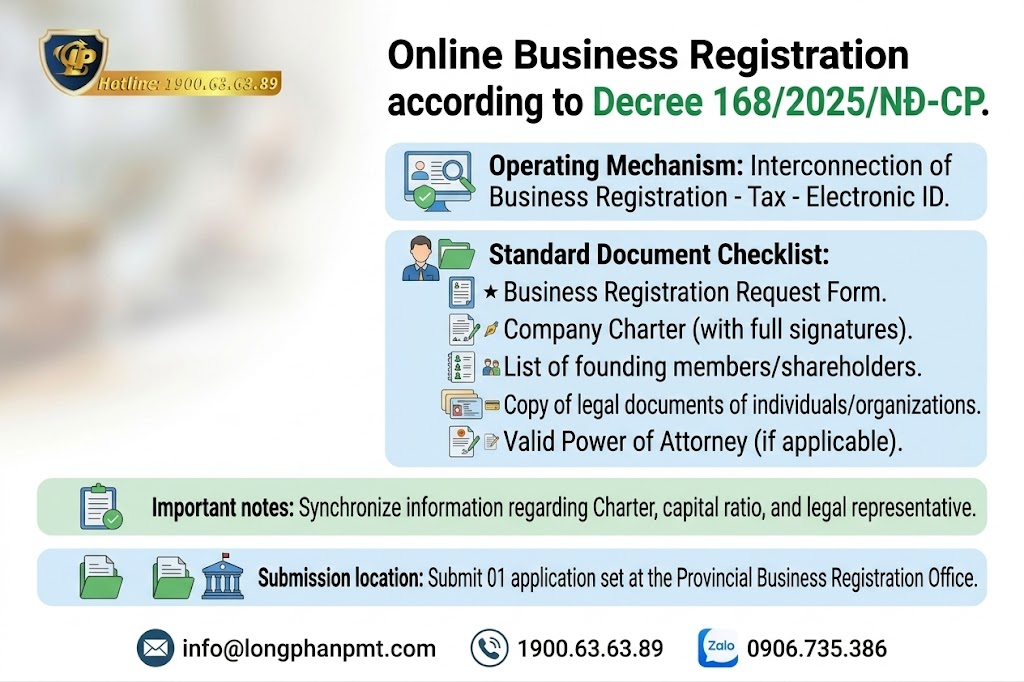
Business registration is no longer a mere filing of establishment documents. Enterprises must understand the integrated mechanism between business registration, tax registration, and electronic identification to avoid dossier rejection. For startups requiring a rapid launch, standardizing dossiers and following the online submission process under Decree No. 168/2025/ND-CP significantly reduces processing times and limits the risk of multiple revisions.
Incomplete information or incorrect signatory status can stall the entire registration process. Pursuant to Chapter III of Decree No. 168/2025/ND-CP, a standard business registration dossier must include:
The Enterprise Code serves simultaneously as the Tax Identification Number (TIN) due to the data integration between business registration and tax management.
Submitting applications online helps businesses shorten processing time and reduce administrative costs. Electronic applications have the same legal validity as paper applications if the process is followed correctly according to Decree No. 168/2025/ND-CP.
The provincial business registration authority has the power to issue, revoke, or reinstate business registration certificates in accordance with Clauses 1 and 8 of Article 15 of Decree No. 168/2025/ND-CP.
The process for registering a business online typically includes:
The business registration number also serves as the tax identification number, thanks to the data linkage mechanism between business registration and tax administration. This helps businesses shorten the time required to set up bank accounts, electronic invoices, and fulfill initial tax declaration obligations.
Many businesses are concerned that ongoing applications or personal documents using old ID cards/citizen identification cards will have to be completely updated when the new regulations come into effect. However, the current transitional mechanism is designed to ensure continuity in investment and business operations.
According to Article 117 of Decree No. 168/2025/ND-CP, applications that have been submitted but not yet processed before the new regulations come into effect will be handled according to the new regulations. At the same time, documents using old ID cards or citizen identification cards will continue to be valid and immediate replacement is not mandatory as stipulated in Articles 118, 119, and 121 of Decree No. 168/2025/ND-CP.
This transitional mechanism helps businesses avoid unnecessary administrative costs and limit the risk of operational disruption during periods of legal and policy changes. It also provides a crucial foundation for startups and investors to continue implementing fundraising or restructuring plans without having to wait for updates to all internal documentation.
After receiving the Business Registration Certificate, the legal risk shifts from “being established” to “operating legally.” This is the stage where businesses need to set up internal records, tax systems, electronic invoices, labor and insurance systems to avoid penalties when regulatory authorities conduct inspections.
Checklist first 30 days This is not just a list of administrative procedures. It’s an operational control map that helps management demonstrate that the business is real, has an accounting system, personnel records, and a valid document archiving mechanism.
Businesses need to complete their internal documentation immediately after receiving their Business Registration Certificate. Without proper governance documentation, businesses will find it difficult to prove the signing authority, ownership percentage, and responsibilities of each member in the event of disputes.
The priorities in the initial phase include:
Business registration information must be published on the National Information Portal within 30 days from the date of public disclosure, as stipulated in Clause 3, Article 32 of the 2020 Enterprise Law.
A lack of internal records makes businesses vulnerable to being perceived as operating merely as a formality, especially when needing to demonstrate legitimate expenses, shareholder status, or representative authority in transactions with partners.
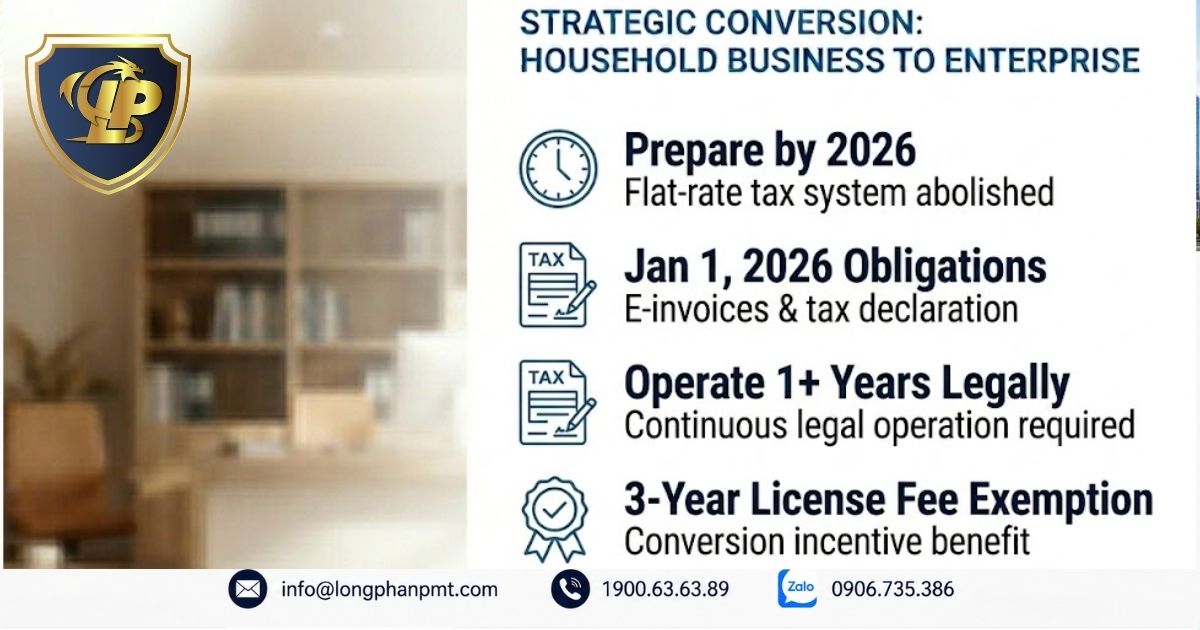
New businesses need to establish a tax system before generating revenue. Not having sold anything yet does not mean they can skip their tax filing obligations, maintain accounting records, or prepare an electronic invoicing system.
| Obligation group | Content that needs to be controlled. | Significant legal risks |
| Electronic bill | Register to use electronic invoices before selling goods or providing services. | Invalid invoices may invalidate the deductible value and affect expense recognition. |
| VAT | Establish the declaration method and submission schedule. | Late or incorrect declarations result in fines and late payment penalties. |
| Corporate Income Tax | Track revenue, expenses, estimates, and final accounts. | Expenses lacking sufficient documentation may be disallowed during the final settlement process. |
| Personal Income Tax | Withholding, declaring on behalf of, and paying on behalf of others when paying income. | Failure to deduct the tax may result in back taxes and penalties. |
| Business license fee | Determine the tax obligations based on charter capital and the status of exemptions or reductions, if any. | Incorrect payment amount results in administrative penalties. |
Underreporting taxes may result in penalties.10% or 20%The penalty for tax evasion varies depending on the amount of under declared tax and the severity of the violation. Tax evasion can result in penalties ranging from…1 to 3 timesThe amount of tax evaded is based on Points a, b, and c of Clause 3, Article 44 of the 2025 Tax Administration Law.
Regarding invoices, businesses must register to use electronic invoices in accordance with Decree No. 123/2020/ND-CP, amended and supplemented by Decree No. 70/2025/ND-CP and Circular No. 32/2025/TT-BTC. In case of handling erroneous invoices from the previous period, businesses must issue new electronic invoices to replace them in accordance with Clause 6, Article 12 of Circular No. 32/2025/TT-BTC.
>>>See more: Guidelines on Invoicing for Transport Services under Official Dispatch 6022/CT-CS (2026)
When starting the recruitment process, businesses need to shift from “verbal agreements” to a standardized labor record system. Employment contracts, salary scales, company regulations, and insurance data are fundamental to managing personnel disputes.
The human resources tasks that need to be implemented include:
Businesses must participate in social insurance for employees working under contracts of one month or more, including business managers who are eligible to participate. The mandatory monthly social insurance contribution rate includes 3% of the salary used as the basis for contribution to the sickness and maternity fund, and 22% to the retirement and death benefit fund, as stipulated in Clause 1, Article 32 of the 2024 Social Insurance Law.
For unemployment insurance, employers contribute 1% of the monthly wage fund of insured employees according to Article 33 of the 2025 Employment Law. Late payment or evasion of social insurance and unemployment insurance contributions may result in an additional charge of 0.03% per day calculated on the amount and number of days of violation, as stipulated in Clause 1, Article 40 and Clause 1, Article 41 of the 2024 Social Insurance Law.
Many businesses with good revenue still experience internal disputes, invalid contracts, or suspensions due to a lack of governance and transaction control mechanisms. This risk often arises when a company expands, hires more middle managers, or enters a regulated industry.
For startups and fast-growing businesses, company bylaws, authorization mechanisms, and transaction approval systems are just as important as revenue or cash flow. These layers of control help businesses avoid conflicts of interest, exceeding their signing authority, and the risk of industry-specific penalties.
Many businesses view the company charter merely as a document for filing incorporation documents, neglecting its role in controlling internal power. In reality, most founder disputes arise because the charter does not clearly define the voting mechanism, capital transfer, or the authority of the executive.
The company’s articles of incorporation need to clearly state:
According to Clause 3, Article 12 of the 2020 Enterprise Law, businesses must always have at least one legal representative residing in Vietnam. If only one legal representative remains residing in Vietnam, that person must authorize another individual residing in Vietnam in writing to exercise related rights and obligations upon leaving the country.
For joint-stock companies, shareholders or groups of shareholders owning more than 10% of the charter capital of another enterprise must fulfill the obligation to declare related interests according to Point b, Clause 2, Article 164 of the 2020 Enterprise Law. This is an important mechanism to control conflicts of interest and insider trading.
A contract with all the necessary signatures and seals is not necessarily legal if the signatory lacks the proper authority or exceeds internal approval limits. This is a common reason why businesses lose the ability to recover debts or have transactions declared invalid.
Before signing a commercial contract, businesses need to check at least three things:
For joint-stock companies, the Board of Directors may only approve contracts or transactions with a value less than 35% of the company’s total assets, unless the Articles of Association stipulate a different percentage. Transactions exceeding this threshold must be approved by the General Meeting of Shareholders in accordance with the 2020 Enterprise Law.
If a transaction is signed without proper authority or without following the correct approval process, the contract may be declared invalid by the Court. The breaching party shall be jointly liable for compensation and return of benefits obtained in accordance with Clause 5, Article 77 and Clause 5, Article 167 of the 2020 Enterprise Law.
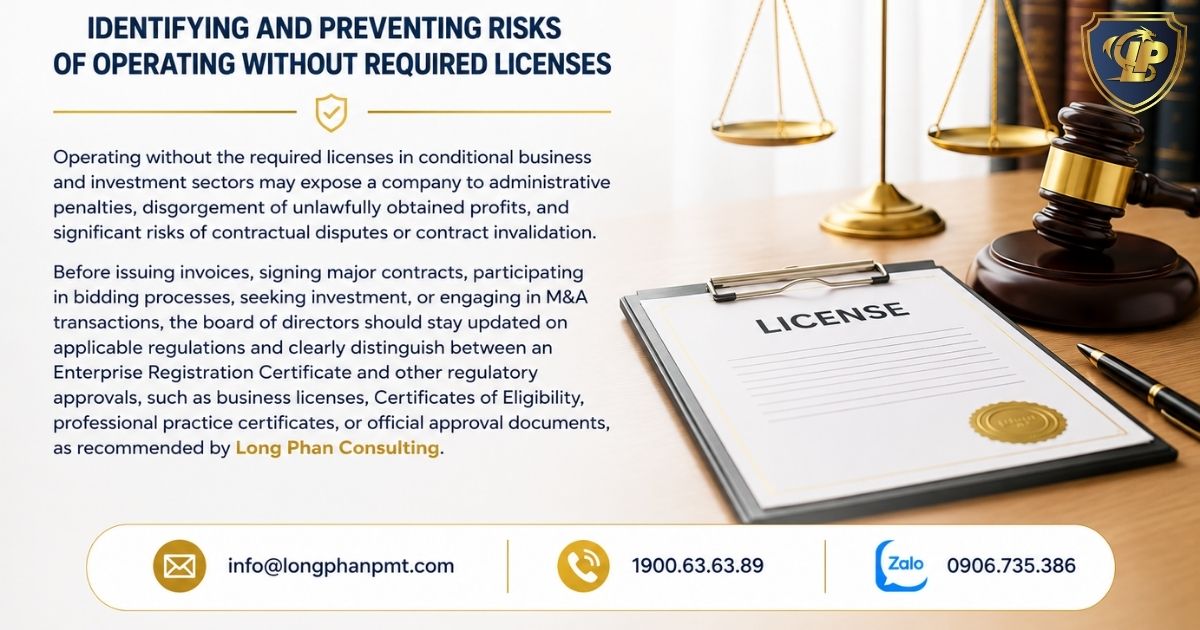
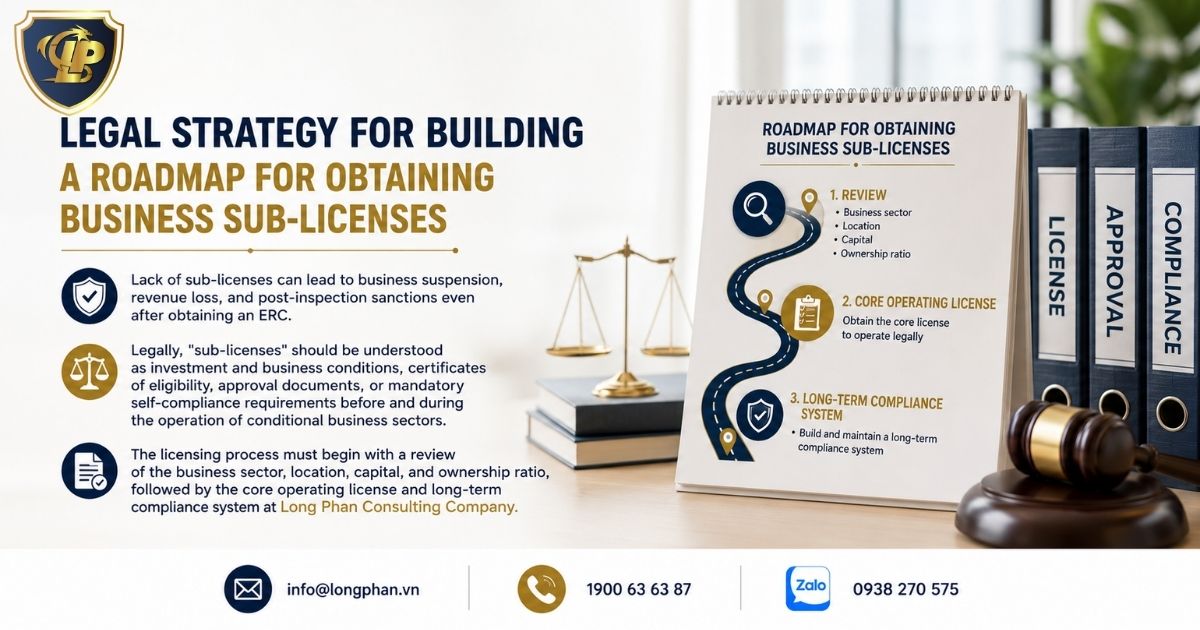
Many businesses mistakenly believe that simply obtaining a business registration certificate is sufficient to begin operations immediately. In reality, for conditional business sectors, businesses must also meet additional specialized licenses, certificates, or specific operating conditions.
Areas that commonly require sub-licenses include:
Clause 1, Article 7 of the 2025 Investment Law defines conditional investment and business sectors as those whose operation requires meeting necessary conditions for reasons of national defense, security, social order, or public health.
The new list of conditional investment and business sectors will take effect from July 1, 2026, according to Clause 2, Article 51 of the 2025 Investment Law. For licenses or certificates issued previously, businesses may continue to use them until the expiration date stated on the document, as per Clause 15, Article 52 of the 2025 Investment Law.
Businesses need to conduct due diligence on business conditions before signing lease agreements, hiring staff, or launching marketing campaigns. Operating a regulated industry without sufficient permits can lead to business suspension, administrative penalties, or the invalidation of transactions with customers.
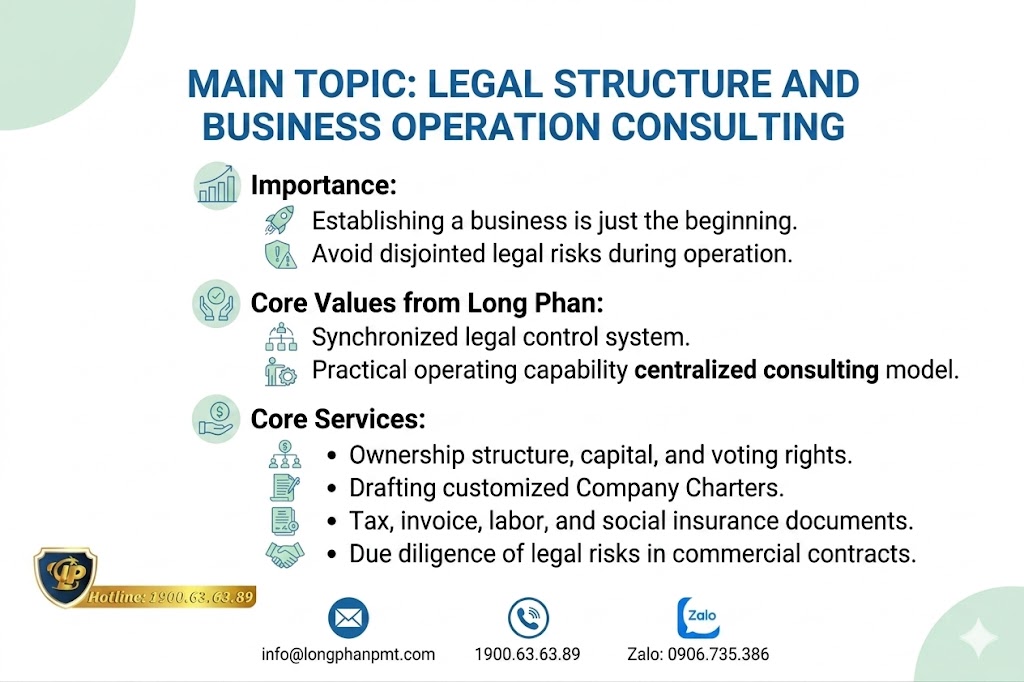
Establishing a business is just the beginning of a long series of legal obligations throughout its operation. As regulations on taxes, labor, electronic invoices, and business conditions become increasingly interconnected, businesses need a comprehensive legal control system instead of handling each issue separately.
Long Phan Consulting we supports businesses in designing their legal structure from the setup phase to the scaling-up phase, helping management control governance, transaction, and industry compliance risks from the outset. Our consulting model focuses on practical operational capabilities, not just completing administrative paperwork.
Our core business services include:
To conduct a preliminary assessment of legal risks and compliance capabilities before commencing operations or scaling up, your company can submit your application via email to info@longphanpmt.com or contact us directly via Zalo at 0906.735.386.
Mastering “essential information for new businesses when establishing and operating” is fundamental for management to effectively address risks arising in commercial practice. Accurately handling specific legal issues not only helps businesses avoid administrative penalties but also protects their capital structure. The following in-depth strategic guidance system will clarify even the most complex compliance situations.
Yes, economic organizations are required to meet the conditions and follow investment procedures like foreign investors if they have foreign investors holding more than 50% of their charter capital. This compliance is mandatory for business expansion, except for sectors on the list of restricted market access, as stipulated in Point a, Clause 1, Article 20 of the 2025 Investment Law.
Contracts signed without proper authority or without valid approval will be invalidated by court decision. The violating business manager shall be jointly liable for compensation and return of profits to the company in accordance with Clause 5, Article 77 and Clause 5, Article 167 of the 2020 Enterprise Law. Economic organizations need to strictly control the limits of authorization to protect assets.
Businesses that delay or evade mandatory social insurance and unemployment insurance contributions must pay an additional charge of 0.03% per day, calculated on the overdue or evaded amount and the number of days of violation. This sanction applies under Clause 1, Article 40 and Clause 1, Article 41 of the 2024 Social Insurance Law.
Businesses that delay or evade mandatory social insurance and unemployment insurance contributions will be required to pay an additional penalty of 0.03% per day calculated on the amount of overdue or evaded contributions and the number of days of violation. This financial penalty is strictly applied to protect the rights of employees in accordance with Clause 1, Article 40 and Clause 1, Article 41 of the 2024 Social Insurance Law.
Businesses are required to issue a new electronic invoice to replace an incorrectly issued invoice, along with a note indicating the replacement. Before issuing the new invoice, the seller and buyer must create a written agreement clearly stating the error, as stipulated in Clause 6, Article 12 of Circular No. 32/2025/TT-BTC. The tax authorities will not accept simply using an adjustment record for these cases involving old documents.
Yes, businesses are absolutely permitted to continue using existing licenses, certificates, or confirmation documents until their expiration date. This is a transitional provision aimed at creating stability and protecting the legitimate rights of investors, in accordance with Clause 15, Article 52 of the 2025 Investment Law, for previously conditional business sectors that have now been abolished.
When a business has only one legal representative residing in Vietnam, this person must authorize another individual residing in Vietnam in writing upon leaving the country. The authorized individual will exercise the rights and obligations of the legal representative to ensure continuity in management activities, as stipulated in Clause 3, Article 12 of the 2020 Enterprise Law.
The critical points for new enterprises extend far beyond initial registration to the entire compliance chain. Selecting the appropriate corporate form, establishing a robust Company Charter, and conducting due diligence on business conditions are decisive factors in mitigating the risks of tax arrears or operational suspension. For a comprehensive review and customized operational structure, please contact Long Phan Consulting Company via our Hotline at 1900636389.
📚 This article is provided with professional consultation based on the following legal framework: