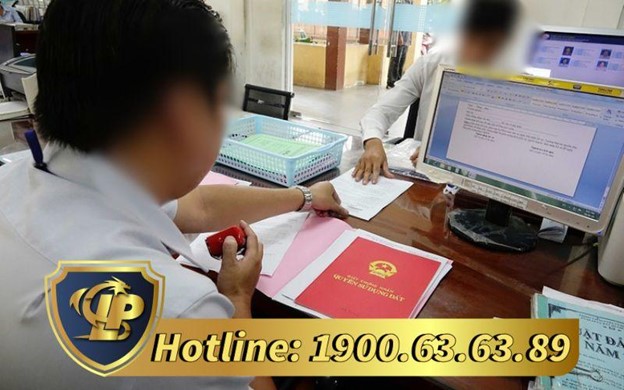
The foreign investor property transfer process from 2025 includes clear changes to procedures, competent authorities, and required dossiers. Parties must understand this process for a legal, safe, and effective transaction. This guide provides a detailed, clear, and compliant overview of the title transfer process for foreign investors.
Process of Pink Book Transfer for Foreign Investor Property Transfer
Conditions for Foreign Investor Property Transfer
The Law on Housing 2023 and the Law on Real Estate Business 2023 specify regulations for foreign property ownership in Vietnam. To successfully transfer a Certificate of House Ownership (the “sổ hồng”), both the transferor and transferee must meet specific conditions.
For the Transferor
The transferring party must meet all conditions stipulated in Clause 1, Article 45 of the Land Law 2024:
Have full civil act capacity.
Possess a legitimate land use rights certificate (LURC or “sổ đỏ/sổ hồng”), with exceptions for cases like inheritance or land consolidation.
The land must be free from disputes, or any disputes must have been resolved by a competent state authority with an effective court judgment.
The land use rights must not be subject to seizure or interim measures for civil judgment enforcement and must be within the designated land use term.
The land use rights must not be subject to any emergency interim measures under the law.
Failure to meet any of these conditions can render the transfer contract void.
For the Foreign Investor (Transferee)
According to the Law on Housing 2023, foreign organizations and individuals can own housing in Vietnam through specific forms:
Foreign-invested economic organizations can own housing by developing housing construction projects in Vietnam.
Foreign organizations and individuals with lawful entry into Vietnam can own housing by purchasing or lease-purchasing commercial housing from a project developer, or by receiving as a gift or inheritance commercial housing in a project located outside areas designated for national defense and security.
Foreign organizations and individuals can also acquire housing by purchasing or lease-purchasing from another foreign entity that already owns housing in Vietnam.
Additionally, these entities must meet the conditions in Article 18 of the Law on Housing 2023:
Foreign-invested economic organizations must be the developer of a housing construction project.
Foreign organizations must have an Investment Certificate or other document permitting their operation in Vietnam, which must be valid at the time of the transaction.
Foreign individuals must be permitted to enter Vietnam and not be entitled to diplomatic or consular privileges and immunities.
Therefore, a successful foreign investor property transfer requires the transferee to be an eligible entity and meet all statutory conditions.
The Foreign Investor Property Transfer Process
Understanding the title transfer process is essential for a secure and lawful transaction. The foreign investor property transfer involves the following steps:
Step 1: Sign the Purchase/Transfer Agreement
The parties negotiate and agree upon the terms of the transfer contract. The contract must include:
Party Information: Full names, dates of birth, ID/passport numbers, contact details for individuals; and organization name, business code, address, and legal representative details for legal entities. Marital status must be declared to determine property ownership status (separate or common).
Subject Matter of the Contract: A detailed description of the property, including land use rights (map sheet number, plot number, address, area) and assets attached to the land (house type, construction area, condition).
Transfer Price and Payment Method: The total contract value in Vietnam Dong (VND), written in both numbers and words, along with the payment schedule.
Deposit (if any): The deposit amount, payment time, and conditions for handling the deposit must be specified. The contract must also detail handover terms, tax and fee obligations, rights and obligations of each party, breach of contract liabilities, and dispute resolution methods. A detailed contract is the best protection for all parties.
Step 2: Notarize the Transfer Agreement
For the foreign investor property transfer to be valid, the contract must be notarized, unless one party is a real estate business organization (Clause 3, Article 27, Land Law 2024). According to Article 42 of the Law on Notarization 2024, one set of the dossier must be submitted to a notary office, including:
The draft transfer contract.
A copy of the transferor’s personal identification documents.
A copy of the Certificate of House Ownership (sổ hồng).
For the foreign investor:
Foreign passport and a written commitment of not being entitled to diplomatic/consular privileges (Decree 95/2024/NĐ-CP).
A valid passport with an entry stamp into Vietnam (Decree 95/2024/NĐ-CP).
For foreign organizations developing housing projects: an Investment Registration Certificate.
For other foreign organizations: an Investment Certificate or a document from a competent Vietnamese authority permitting its operation in Vietnam.
The notary public will:
Verify the legal capacity of the parties and the legality of the transaction, paying special attention to the foreign investor’s eligibility to own housing in Vietnam under the Law on Housing 2023.
Review the dossier for completeness and compliance.
Explain the rights, obligations, and legal consequences to all parties.
Ensure all parties understand the contract before they sign each page.
Notarized documents for transferring the pink book to foreign investors.
Step 3: Register the Land Title Change
After notarization, the final step in the foreign investor property transfer is registering the title change at the competent state agency. The registration dossier, according to Decree 151/2025/NĐ-CP, includes:
An application for registration of land changes (Form No. 18).
The original issued Certificate.
The notarized transfer contract and documents proving the foreign investor’s eligibility to own housing.
Submit the dossier to the local Land Registry Office or the One-Stop Shop department.
The receiving authority checks the dossier’s completeness and provides a receipt with a return date.
The processing authority sends a request to the tax department to determine the financial obligations. The main financial obligations are:
Personal Income Tax: 2% of the transfer price (paid by the transferor).
Registration Fee: 0.5% of the transfer price (paid by the transferee).
Appraisal Fee: Varies by province.
After all taxes and fees are paid, the authority updates the cadastral records and issues a new Certificate or updates the existing one. The processing time for a transfer is not more than 8 working days, according to Decree 151/2025/NĐ-CP.
Steps to register the transfer of ownership for the pink book.
Key Considerations for Foreign Investor Property Transfer
Verify Legal Status: Thoroughly check the foreign investor’s eligibility to own property in Vietnam.
Document Legalization: The foreign investor’s documents must be translated and consular legalized as required.
Transfer Price: The declared price must be consistent with market value to avoid legal risks.
Contract Terms: The contract must be clear, with specific terms on payment deadlines and currency (VND only).
Registration Deadline: The application for title change must be filed within 30 days of the notarization date (Clause 3, Article 133, Land Law 2024).
Consulting and Authorization Services at Long Phan Consulting Company
Long Phan Consulting Company offers professional consulting and authorization services for the foreign investor property transfer process. Our experienced team supports clients from dossier preparation to the final registration.
Our services include:
Verifying the foreign buyer’s eligibility.
Conducting legal due diligence on the property (zoning, disputes, mortgages).
Advising on all applicable taxes, fees, and charges.
Drafting bilingual Power of Attorney and sales contracts.
Guiding clients through the consular legalization process abroad.
Representing clients at notary offices and state agencies.
Filing and managing the land registration (title transfer) dossier.
Monitoring progress and handling any arising issues.
Receiving the new Certificate on the client’s behalf.
Delivering the original Certificate and all related documents to the client.
Long Phan Consulting Company guarantees high-quality service, timely execution, and reasonable costs for every foreign investor property transfer.
Frequently Asked Questions
What is the property ownership term for foreign individuals, and can it be extended?
The ownership term is a maximum of 50 years from the date the Certificate is issued. It can be extended once for a period not exceeding 50 years upon request before the initial term expires (Clause 2, Article 20, Law on Housing 2023).
Are there limits on the number of properties a foreign individual can own?
Yes. A foreign individual may not own more than 30% of the apartments in one apartment building, or more than 250 individual houses in an area equivalent to a ward-level administrative unit (Clause 1, Article 19, Law on Housing 2023).
Must property payments be made in VND?
Yes. All real estate transactions in Vietnam must be conducted in Vietnam Dong (VND). Foreign investors must transfer foreign currency to a bank account in Vietnam to make payments (Article 22, Ordinance on Foreign Exchange 2005, amended 2013).
How is property ownership defined if a foreigner marries a Vietnamese citizen?
If a foreigner marries a Vietnamese citizen residing in Vietnam, they are entitled to stable, long-term ownership rights, similar to a Vietnamese citizen (Point c, Clause 2, Article 20, Law on Housing 2023).
What types of real estate can foreign investors acquire in Vietnam?
Foreign investors are permitted to own houses, including apartments and individual houses (villas, townhouses), within commercial housing development projects. They are not allowed to purchase land plots for self-construction.
Conclusion
The foreign investor property transfer process requires a deep understanding of the law and sequential execution of each step. If you require professional assistance, contact Long Phan Consulting Company via our hotline 1900636389 for a free initial consultation and a detailed service quote.
Facebook
Linkedin
Twitter
Pinterest
Phan Mạnh Thăng
Mr. Phan Manh Thang, CEO, is the founder of Long Phan Investment Consulting and Legal Services Company Limited. With over 13 years of experience in the fields of land and corporate law, CEO Phan Manh Thang has been advising and partnering with numerous clients throughout their business operations and enterprise expansion. Concurrently, he serves as the Managing Lawyer of Long Phan PMT Law Firm, established in 2019.
His specialized expertise and practical experience have consistently earned him the trust and high regard of his clients.