Capital contribution assets are an important factor in the process of establishing and developing a business. When individuals or organizations want to find a company, they need to contribute assets to form the company’s charter capital. Capital contribution assets are not simply cash, but can also be other assets that can be converted into money such as land use rights, intellectual property rights, technology, or other intangible assets.
Classification of capital contribution assets
What are capital contribution assets? How are capital contribution assets classified?
According to Article 34 of the Law on Enterprise 2020, capital contribution assets include assets that can be converted into money such as Vietnam Dong, freely convertible foreign currencies, gold, land use rights, intellectual property rights, and technology, technical know-how and other assets that can be valued in Vietnamese currency. However, the assets contributed as capital must belong to the legal ownership of the individual or organization contributing capital. This is the first requirement for that asset to be legally used in establishing a business.
Types of capital contribution assets include:
Currency: Vietnamese Dong and freely convertible foreign currencies.
Gold: Gold can be used as a capital asset, but must ensure feasibility in valuation.
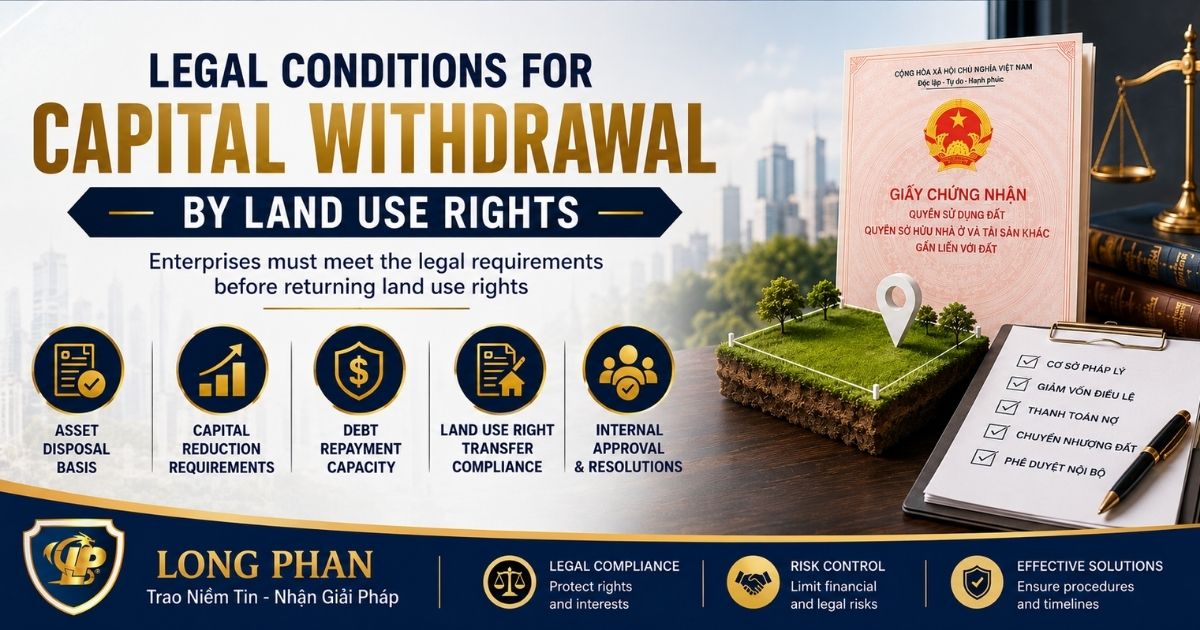
Land use rights: Used as capital assets but need to comply with regulations on land use rights transfer.
Intellectual property rights: Includes patents, trademarks, copyrights and other intellectual properties.
Technology, technical know-how: Innovative technologies or technical know-how can be of great value in capital contributions.
Other assets that can be valued: Includes types of assets that are not in the above list but can be valued in money.
Accurate classification of capital contribution assets is very important, because only assets that can be converted into money or have a clear quantifiable value are allowed to be used in capital contribution activities to establish a business.
Regulations on transferring property ownership after capital contribution
When contributing capital to a company, according to Article 35 of the Law on Enterprise 2020, the individual or organization contributing capital must transfer ownership of that asset to the company. Transfer of ownership of contributed assets must be carried out according to specific legal procedures, and there may be differences between types of assets:
Assets with registered ownership or land use rights: When contributing capital to assets that have registered ownership rights (such as vehicles, houses) or land use rights, the capital contributor must go through procedures to transfer ownership rights to the company according to the provisions of law.
Assets without ownership registration: If the assets contributed as capital do not have ownership registration (for example, technology, technical know-how), the capital contribution only needs to be done by the asset delivery record, with full confirmation of the property and its value.
The special thing is that when transferring ownership of contributed assets, there is no registration fee for contributed assets with ownership or land use rights.
Additionally, if the property is used for the sole proprietor’s business, there is no requirement to transfer ownership to the corporation.
Principles of contributing capital and assets to the company
Principles for asset valuation when making capital contributions
Principles for asset valuation when contributing capital are specifically stipulated in Article 36 of the Law on Enterprise 2020 as follows:
Non-monetary assets: Assets such as land use rights, intellectual property rights, gold or technology must be valued by competent valuation organizations or agreed upon by the company’s founding members on the basis of consensus.
Consensus or valuation: In case capital contribution assets are valued through a valuation organization, the asset value must be approved by more than 50% of the company’s founding members.
Liability for contributed assets: If the contributed assets are valued higher than their actual value, the founding members will be responsible and contribute additional money to cover the difference between the assessed value and the actual value.
The valuation of contributed assets has a direct impact on the company’s charter capital, so it needs to be done carefully and comply with legal regulations.
Notes when making capital contributions to the company
The process of contributing capital to establish a company not only includes transferring property ownership but also requires ensuring other legal procedures. Things to note when making capital contributions to the company include:
Verify asset ownership: Only assets with legal ownership can be used to contribute capital. Therefore, capital contributors need to ensure that ownership of assets has been legally proven before transferring assets to the company.
Minutes of handover of contributed assets: For assets without registered ownership, capital contribution must have a full minutes of handover of assets, including information about the assets, value of contributed assets and capital contribution ratio.
Correctly follow the asset valuation process: Asset valuation needs to comply with the principle of consensus or go through a valuation organization, ensuring the value of contributed assets is clearly determined.
Support for capital contribution asset appraisal services
Consulting on assets contributed as capital and asset valuation when contributing capital to the company
Implementing procedures for contributing capital to a company requires an in-depth understanding of regulations. At Long Phan, we support customers in the process of contributing capital to the company as follows:
Consulting on regulations and procedures related to capital contribution activities.
Assist customers in preparing necessary documents related to capital contribution.
Consulting on determining the types of assets that can be contributed as capital, ensuring legality.
Guide the process of transferring property ownership in accordance with regulations.
Consulting and supporting the valuation of contributed assets and selecting a reputable valuation organization.
Understanding and properly implementing regulations on contributed assets is an important factor in the process of establishing a company. If customers have any questions about capital contribution procedures or need detailed advice, please contact us via the hotline 0906735386 for support and answers to all questions.
Facebook
Linkedin
Twitter
Pinterest
Dương Thị Kim Ngân
Jurist Ngan Duong Thi Kim - Partner of Long Phan, Ms. Ngan possesses profound knowledge in business consulting, labor, and contracts. With dedication and creativity, Ms. Ngân has achieved significant success in advising and supporting businesses in critical areas such as legal matters, finance, management, and contracts. She is committed to providing optimal solutions and helping clients succeed in the business environment.